
Traditional process to discover new materials is complex, time-consuming, and costly, which often requires years of a sustained effort. Recent advances in large language models (LLMs) have demonstrated powerful capabilities in information processing, offering new opportunities for intelligent and autonomous materials research.
In a study published in Matter, a research team led by Prof.YU Xuefeng from the Shenzhen Institute of Advanced Technology (SIAT) of the Chinese Academy of Sciences developed a knowledge-driven multi-agent and robot system (MARS) for end-to-end autonomous materials discovery.
MARS is a knowledge-driven hierarchical architecture coordinating 19 LLM agents with 16 domain-specific tools organized into functional modules, achieving closed-loop autonomous materials discovery by integrating robotic experimentation. It features distinct functional groups, which enables specialized reasoning and mirrors the workflow of a human-led laboratory.
The groups include an Orchestrator for task coordination; a Scientist Group for knowledge retrieval and solution design; an Engineer Group that translates designs into executable protocols; an Executor Group controlling robotic platforms; and an Analyst Group for data interpretation and optimization strategy.
MARS offers professional guidance for materials development and relieves the hallucination inherent to current LLMs through hybrid retrieval-augmented generation. In experimental validation, the system optimized perovskite nanocrystal synthesis within 10 iterations. Besides, it designed a biomimetic "core-shell-corona" structure for water-stable perovskite composites in just 3.5 hours
This study develops an integrated artificial intelligence (AI)-driven framework MARS which helps to accelerate materials innovation.
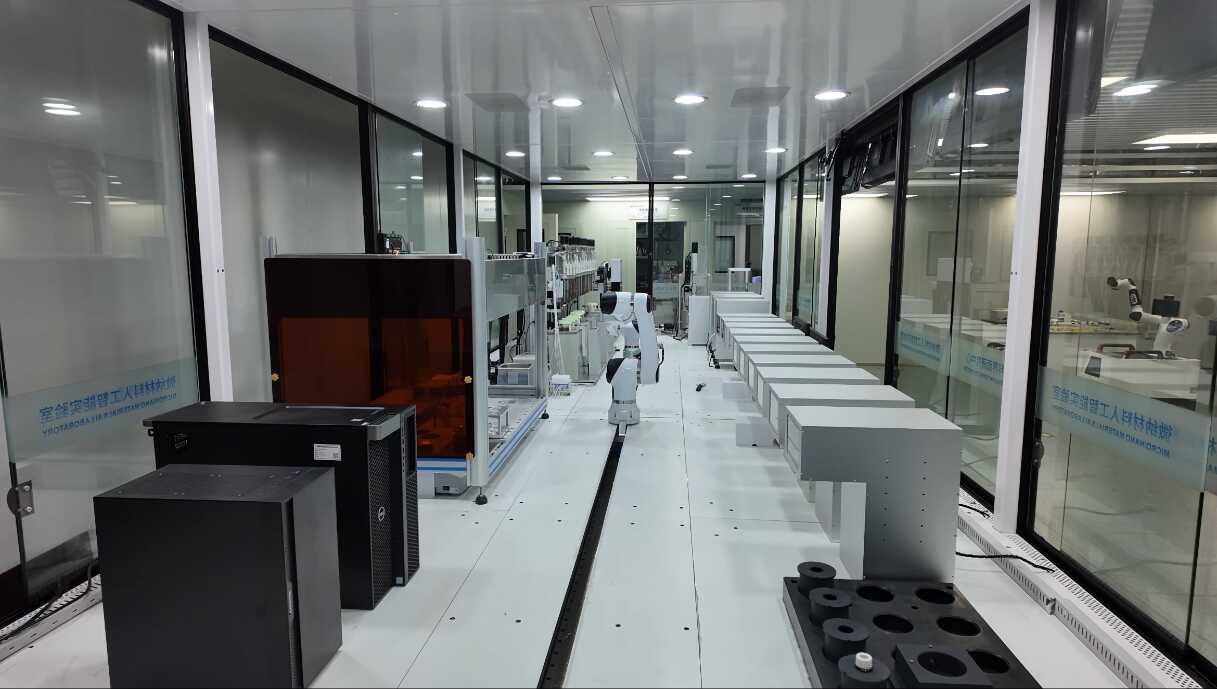
Knowledge-driven multi-agent and robot system. (Image by SIAT)
A research team led by ZHENG Mingyue from Shanghai Institute of Materia Medica of the Chinese Academy of Sciences conducted a comprehensive study to explore the capabilities of various large language models (LLMs) on five key chemical text mining tasks. This work demonstr...
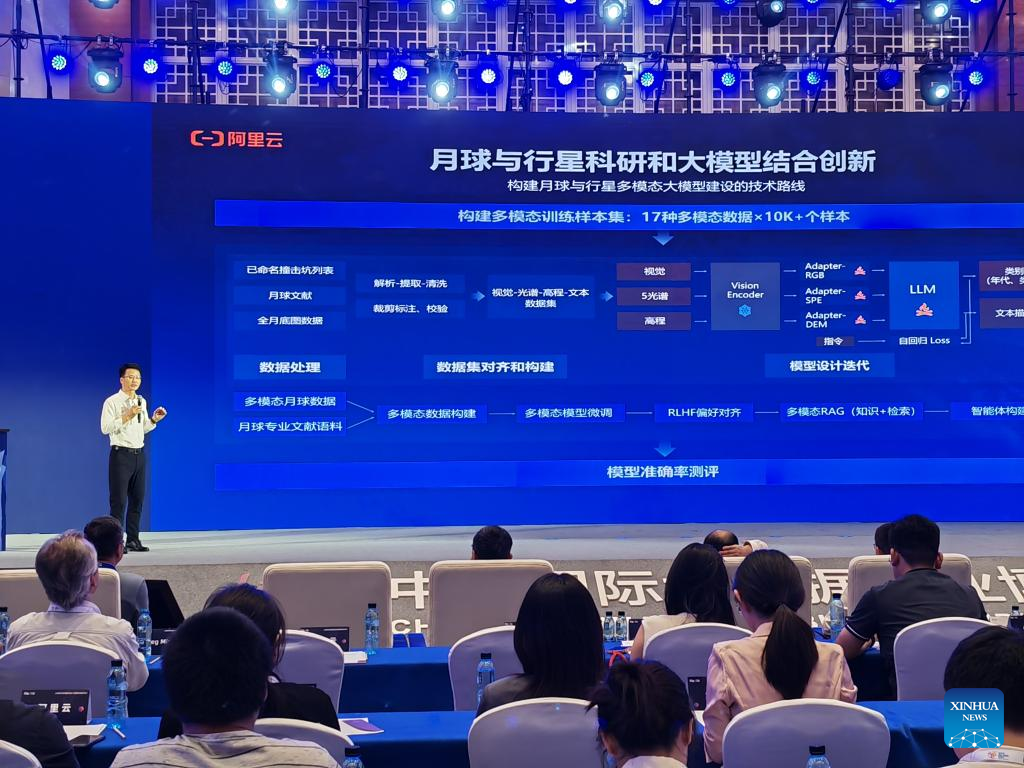
The world's first professional, multimodal large language model (LLM) for the field of lunar science was debuted at the China International Big Data Industry Expo in Guiyang, the capital of southwest China's Guizhou Province, by the Chinese Academy of Sciences' Institute ...

86-10-68597521 (day)
86-10-68597289 (night)

52 Sanlihe Rd., Xicheng District,
Beijing, China (100864)
Copyright © 2002 - Chinese Academy of Sciences


