Visual adaptation is a vital function of human sights. It allows people to process visual information under drastic changes in light intensities, from dim starlight to bright sunlight. Recreating visual adaptation with electronic devices is vital for developing novel artificial perception systems.
Complementary metal-oxide-semiconductor (CMOS) circuits have exhibited great potential for in mimicking visual adaptation since the 1990s, but they face the challenge of bulky size of large-scale integrated systems with complicated logic design.
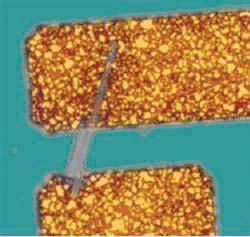
In a study published as a cover story in Nature Electronics, scientists from the Institute of Chemistry of the Chinese Academy of Sciences created an organic active adaptation transistor (OAAT) to overcome the limitation and enable active-adaptation upon varied light intensities.
They introduced two functionally complementary bulk-heterojunctions (BHJs) in the active and composite dielectric layers, which serve as the photoresponsive active layer and a floating gate, respectively. The two BHJs initiate a photovoltaic effect-induced photoexcitation, as well as dynamic charge trapping-dominated inhibition, which couple together to modulate carrier concentration in the conductive channel.
This device exhibits phototriggered active adaptation behaviors for light intensities ranging over six orders of magnitude (1 to 106 cd m-2), and negligible changes were observed in output current after 1,000 repeated tests. The extracted active adaptation index (AAI) shows high similarity to that of human beings.
An article published in News & Views ofNature Electronics said that in the longer term, such active adaptation transistors could potentially generate output signals that allow them to interface with the nervous system and used to create biomimetic visual prosthetics.

86-10-68597521 (day)
86-10-68597289 (night)

52 Sanlihe Rd., Xicheng District,
Beijing, China (100864)
Copyright © 2002 - Chinese Academy of Sciences