
Cananga odorata,commonly known as ylang–ylang and the "king of floral scent", is a perennial tropical evergreen tree of the Annonaceae family in Magnoliales. It is widely used in the perfume and essential oil industries due to its unique floral scent. However, the phylogenetic position and molecular mechanisms underlying the biosynthesis of its floral scent volatile organic compounds (VOCs) are not well understood.
In a study published in New Phytologist, researchers from the Xishuangbanna Tropical Botanical Garden (XTBG) of the Chinese Academy of Sciences generated a high-quality chromosome-level assembly for C. odorata. This is the first telomere-to-telomere (T2T) genome in magnoliids and provides a valuable genomic basis underlying the phylogenetic position of magnoliids.
The researchers combined a variety of sequencing platforms and generated a high-quality T2T genome of C. odorata with 735.83 Mb. It represents the highest integrity and assembly quality of genome in magnoliid plants reported to date.
"This nearly complete genome assembly of C. odorata will undoubtedly be regarded as a benchmark for genetic research on C. odorata and Annonaceae plants," said YANG Yongping, corresponding author of the study and a researcher at XTBG.
The research team used high-throughput sequencing technology and comparative genomics to identify evolutionarily conserved regions and differences. They also adopted functional genomics approaches to identify genes related to terpenoid biosynthesis.
Comparative genomic and phylogenetic analyses with other angiosperms have contributed to figuring out the phylogenetic position of magnoliids. Results showed that C. odorata is the sister of eudicots, after their divergence from monocots.
Metabolomic studies of VOCs in essential oils and floral scents showed that the complex, rich aroma of C.odorata flowers is a mixture of chemical compounds dominated by sesquiterpenes and aromatic esters, especially β-caryophyllene. This indicated that these main compounds potentially contributed to the distinct floral scent in C. odorata.
Furthermore, the team found remarkable duplication and expansion of TPS-a genes, which are involved in the production of major sesquiterpene components.Functional experiments showed that CoTPS21.2 and CoTPS21.3, which likely encode a kind of sesqui-TPSs, can specially generate only one major product, β-caryophyllene. And this is the main compound of sesquiterpenes in C. odorata flowers.
The two CoTPS21 genes may have co-evolved and both have been retained to contribute to the floral metabolism of C. odorata.
In addition, researchers identified CoSPL3 and CoSPL9 as the potential upstream transcription factors for the CoTPS21 gene expression.
"Our results reveal the molecular mechanism of unique floral scent biosynthesis in C. odorata and provide new insights into the phylogenetic position of magnoliids," said YANG.
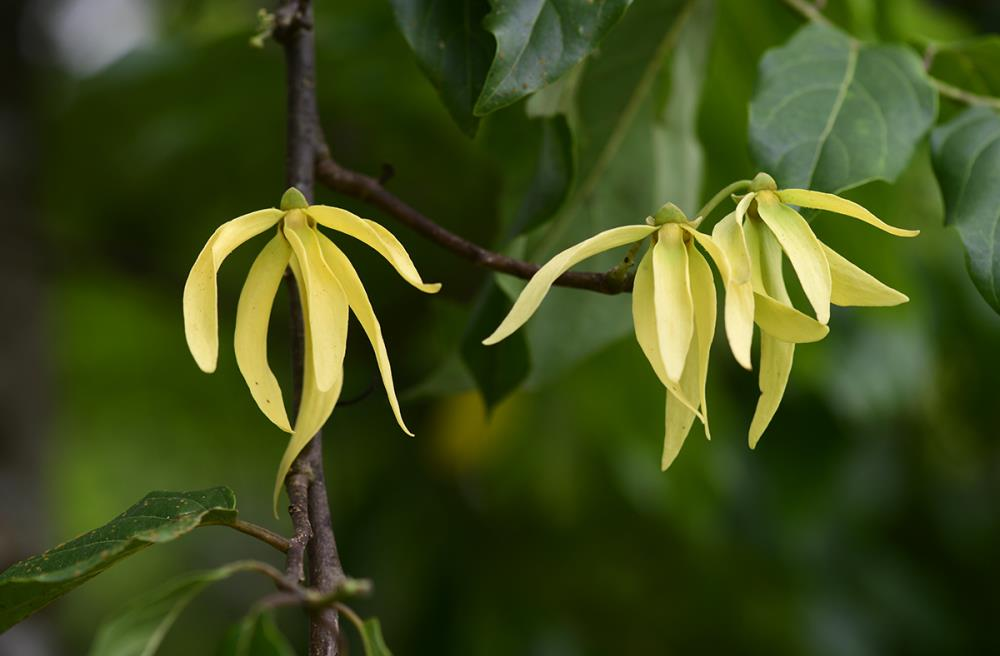
Flowers of Cananga odorata (Image by ZHU Renbin)
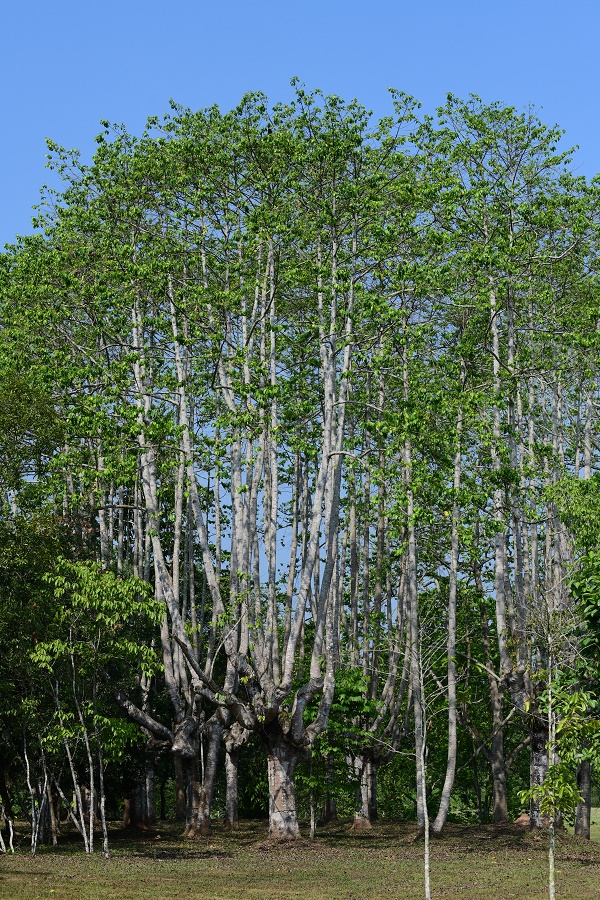
Cananga odorata (Image by ZHU Renbin)

86-10-68597521 (day)
86-10-68597289 (night)

52 Sanlihe Rd., Xicheng District,
Beijing, China (100864)
Copyright © 2002 - Chinese Academy of Sciences


