
A recent study by Dr. DING Qiurong’s group from the Shanghai Institute of Nutrition and Health (SINH) of the Chinese Academy of Sciences (CAS) and the collaborators discovered that the transient accumulation of liver lipids during liver regeneration serves as a regeneration and repair signal that promotes liver cell proliferation. This study was published in Nature Communications.
Healthy liver tissue has a great regenerative capacity after injury. However, the regenerative capacity is significantly weakened in liver with lipid metabolism disorders, such as fatty or aging liver.
It has been well recognized that hepatic lipid homeostasis is critical for maintaining the liver regenerative capacity. For example, there exists an obvious acute lipid accumulation at the early phase of liver regeneration, and inhibition of this can seriously affect regeneration. However, how lipid homeostasis regulates regeneration and why the regenerative potential of livers with lipid metabolism disorders decreases are not clear.
In order to identify potential key regulators during liver regeneration, researchers constructed an in vivo CRISPR screening platform, and identified mesoderm induction early response 1 (MIER1) as a key regeneration regulator.
Through partial hepatectomy, they found that MIER1 plays an epigenetic "brake" role during liver regeneration. After hepatectomy, acute liver lipid accumulation induces a transient stress response in hepatocytes, resulting in an acute inhibition of ribosomal translation, thereby affecting MIER1 translation and causing dynamic downregulation of MIER1. MIER1 downregulation further promotes chromatin opening, cell cycle gene expression and liver regeneration.
Interestingly, the researchers found that this physiological regulatory process was significantly impaired in aging and high-fat diet-induced fatty livers, resulting in a consistently high expression of MIER1, thereby continuously suppressing cell cycle gene expression.
This study revealed an underlying mechanism of how lipid homeostasis regulates liver regeneration, and identified the epigenetic factor MIER1 as a key "bridge" factor that mediates the transition of lipid signals to repair and regeneration capacity.
A study led by Prof. LI Yixue from the Shanghai Institute of Nutrition and Health indicated an intrinsic epigenetic basis underlying hepatocyte competence in responding to regenerative signals in injury, which may help us to understand cell plasticity in other epithelial ...
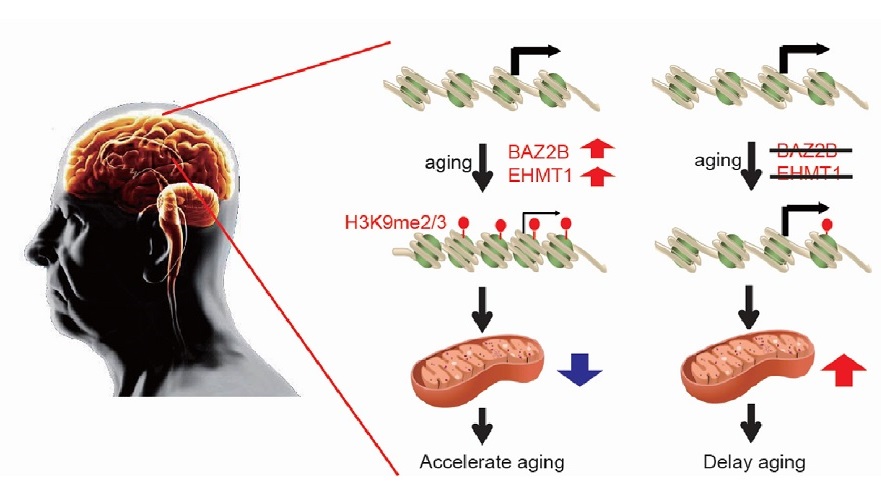
A recent study published in Nature has reported two conserved epigenetic regulators as novel anti-aging targets. The research, by scientists from Dr. CAI Shiqing's Lab at the Center for Excellence in Brain Science and Intelligence Technology, Institute of Neuroscience of ...

86-10-68597521 (day)
86-10-68597289 (night)

52 Sanlihe Rd., Xicheng District,
Beijing, China (100864)
Copyright © 2002 - Chinese Academy of Sciences


