Newsroom


In a new study published in the Journal of the American Chemical Society, researchers have developed a dual-interface coordination orchestration strategy to enable high-energy aqueous zinc-iodine batteries, providing a new pathway toward safe, durable, and Ah-level aqueous Zn||I2 pouch cells.
Aqueous Zn||I2 batteries are promising for large-scale energy storage because of their high safety and high theoretical capacity. However, the four-electron I-/I0/I+ conversion chemistry faces challenges from the unstable high-valence iodine species, polyiodide shuttling, and parasitic side reactions at the Zn anode, which severely limit the practical applications of these batteries.
To address these challenges, a research team led by Prof. CHEN Zhongwei and Prof. WANG Dongdong from the Dalian Institute of Chemical Physics (DICP) of the Chinese Academy of Sciences (CAS) identified N-methylimidazolium chloride (MImCl) as a multifunctional electrolyte additive through systematic screening of nitrogen-containing cationic ligands. The MIm+ cations dynamically migrate between the cathode and anode interfaces, enabling simultaneous regulation of iodine chemistry and Zn deposition.
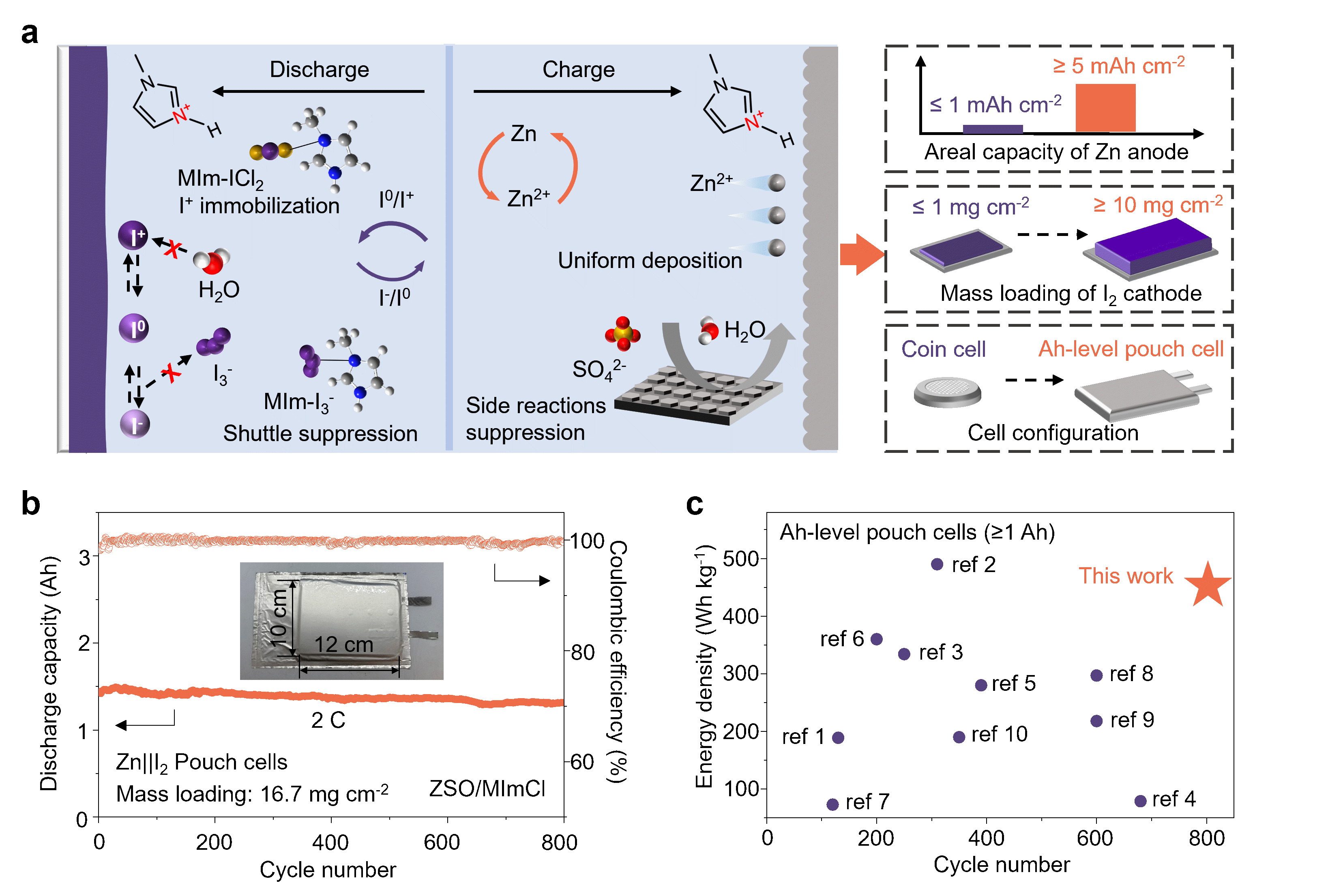
Dual-interface coordination orchestration strategy for Ah-level four-electron aqueous Zn||I2 pouch cells (Image by CHEN Yufeng and WANG Dongdong)
At the cathode interface, MIm+ coordinates with iodine intermediates, stabilizing high-valence iodine species and suppressing polyiodide migration. At the Zn anode, it regulates Zn2+ deposition and promotes uniform Zn plating and stripping. According to the researchers, this dual-interface coordination improves the reversibility of the four-electron iodine chemistry while stabilizing the Zn electrode.
Based on this strategy, the researchers constructed high-loading Zn||I2 batteries and further demonstrated an Ah-level pouch cell with a capacity of 1.4 Ah. The pouch cell delivered stable cycling over 800 cycles and achieved an energy density of 455 Wh kg-1 based on the mass of the active cathode material.
"Our study provides new insights into electrolyte-mediated interface regulation and offers a promising pathway toward high-energy and durable aqueous Zn metal batteries," said Prof. CHEN.