Newsroom


A research team from the South China Botanical Garden (SCBG) of the Chinese Academy of Sciences has recently investigated the fully mycoheterotrophic species Burmannia nepalensis. By integrating plastomes, nuclear microsatellite data, and species distribution modelling, they comprehensively examined its genetic structure, demographic history, and the key drivers shaping its phylogeographic patterns across subtropical China.
The research highlighted the combined roles of geographic isolation and historical climate dynamics in shaping the genetic structure of B. nepalensis, and provided empirical evidence for the presence of multiple northern glacial refugia in subtropical China.
The findings have been published in Biological Diversity. Dr. SHI Miaomiao from SCBG serves as the first author, with Prof. TU Tieyao and Prof. ZHANG Dianxiang as corresponding authors.
Subtropical evergreen broad-leaved forests represent one of the world's major biodiversity hotspots. Compared with trees and shrubs, however, the evolutionary history of understory herbs remains poorly understood, particularly for mycoheterotrophic plants that rely on fungi for nutrition.
These plants lack photosynthetic capacity and depend heavily on specific fungal partners and intact forest ecosystems, making them highly sensitive to environmental changes. Despite their ecological and evolutionary significance, the processes shaping their population history and genetic structure have long remained unclear.
This research has addressed the knowledge gap. The findings demonstrate that B. nepalensis features low genetic diversity within populations yet strong genetic differentiation among populations, which is primarily driven by geographic isolation and historical climatic fluctuations.
The study also revealed that both molecular data and species distribution models support the existence of multiple glacial refugia during the Last Glacial Maximum, mainly located in the Nanling Mountains, Wuyi Mountains, and southwestern karst regions, thereby challenging the classical model of "southward contraction during glaciations followed by northward expansion."
Further demographic analyses indicate post-glacial population expansion, followed by a marked decline in effective population size around 3,000 years ago, likely associated with human-induced habitat fragmentation.
Researchers suggest that understory herbs dependent on stable forest habitats are highly vulnerable to environmental changes and anthropogenic disturbance, underscoring the urgent need for habitat conservation to ensure their long-term persistence.
This work was supported by the National Natural Science Foundation of China, the Guangdong Provincial Special Fund for Natural Resource Affairs on Ecology and Forestry Construction, and the Guangxi Key Laboratory of Plant Conservation and Restoration Ecology in Karst Terrain.
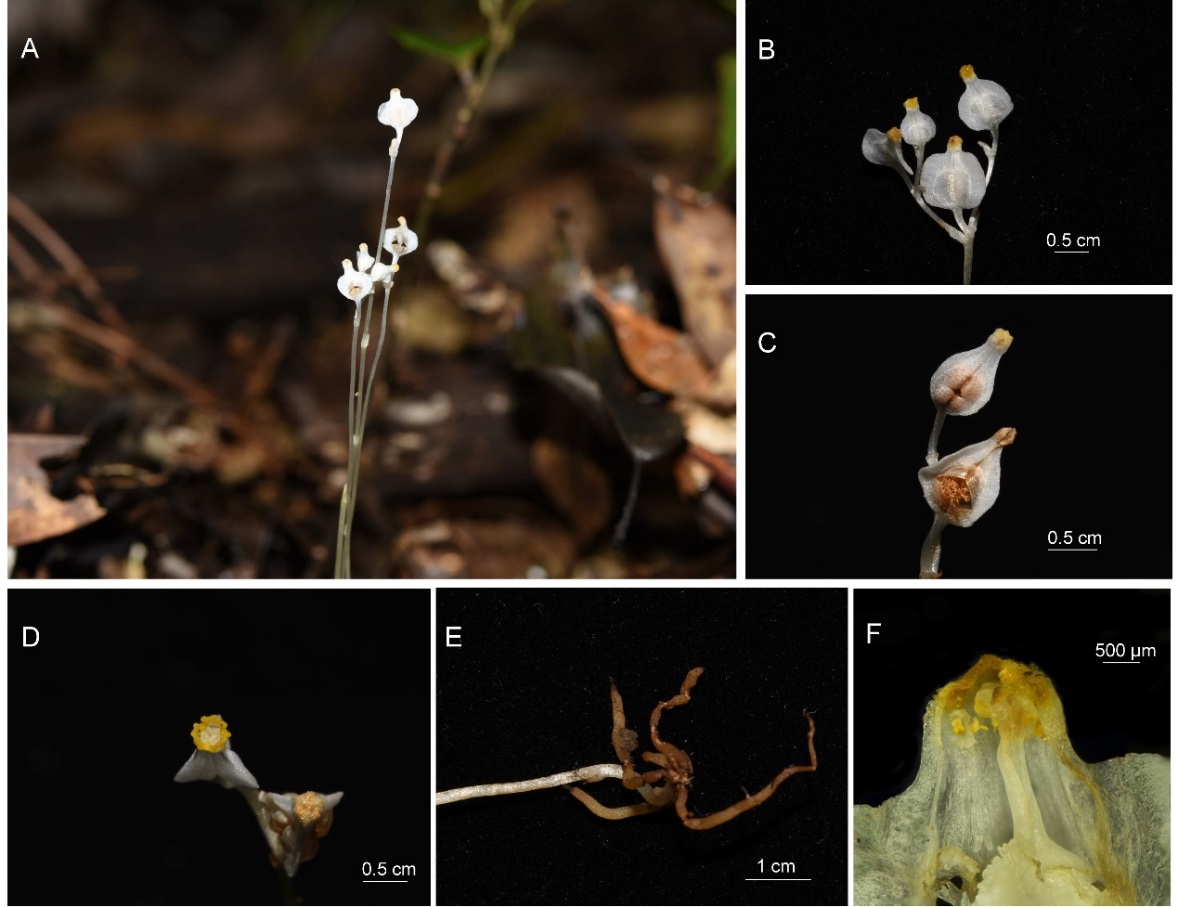
Habitat and morphology of Burmannia nepalensis.(Image by SHI et al.)
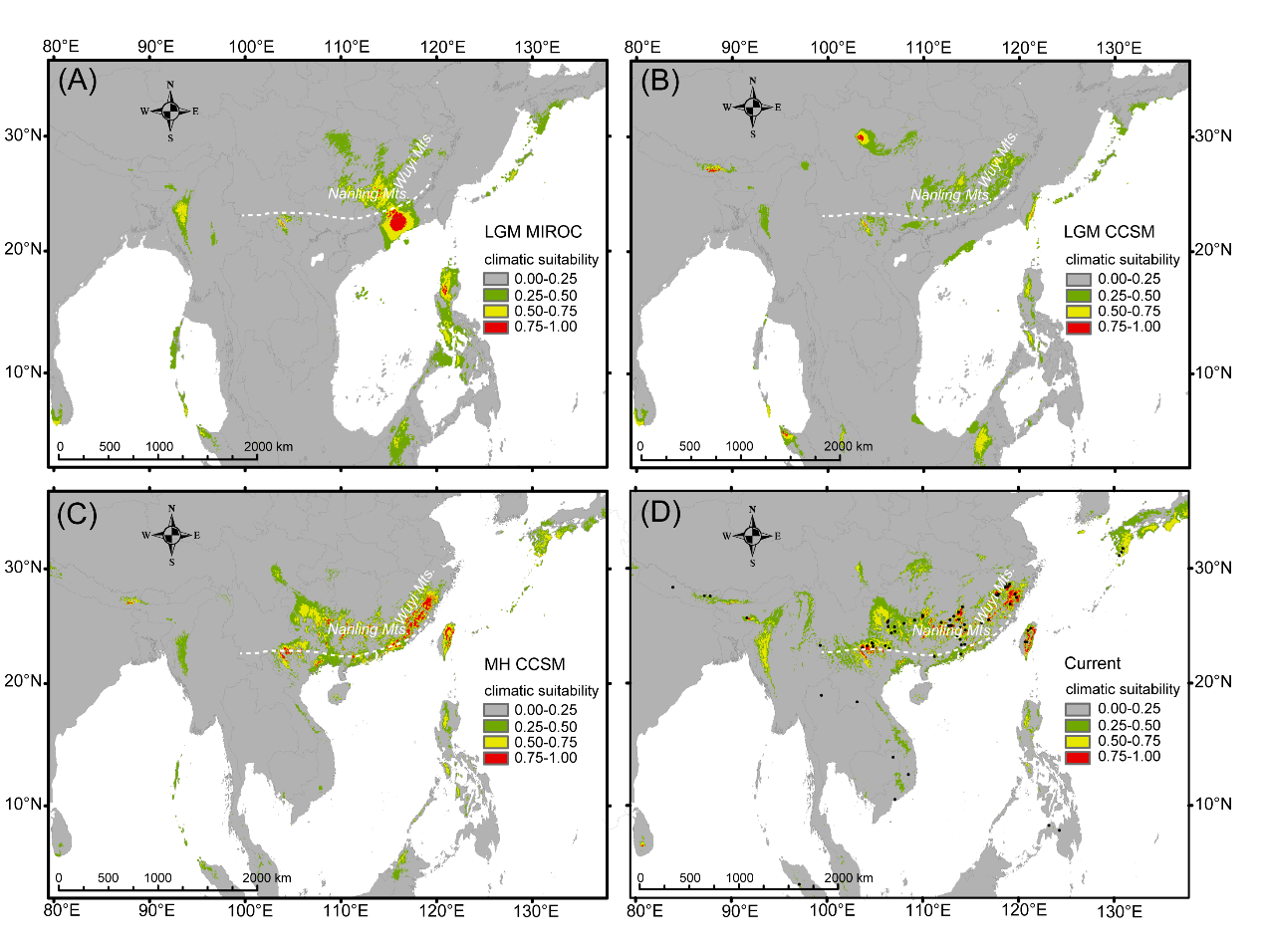
Predicted potential distribution of suitable habitats for Burmannia nepalensis during the Last Glacial Maximum (LGM), the mid-Holocene (MH), and the present.(Image by SHI et al.)