
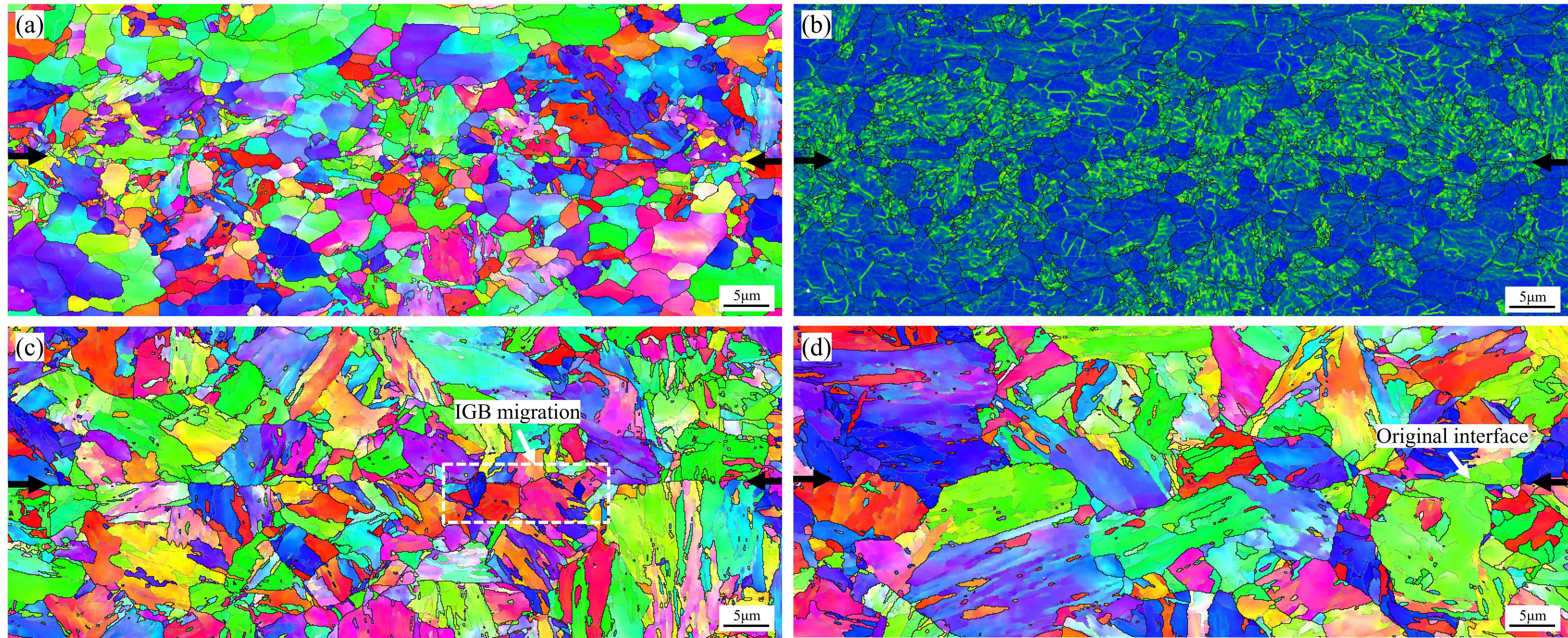
A research team from the Hefei Institutes of Physical Science, in collaboration with researchers from the Institute of Metal Research, has conducted a study on the evolution of interfacial microstructure and oxides in China low activation martensitic steel by hot compression bonding.
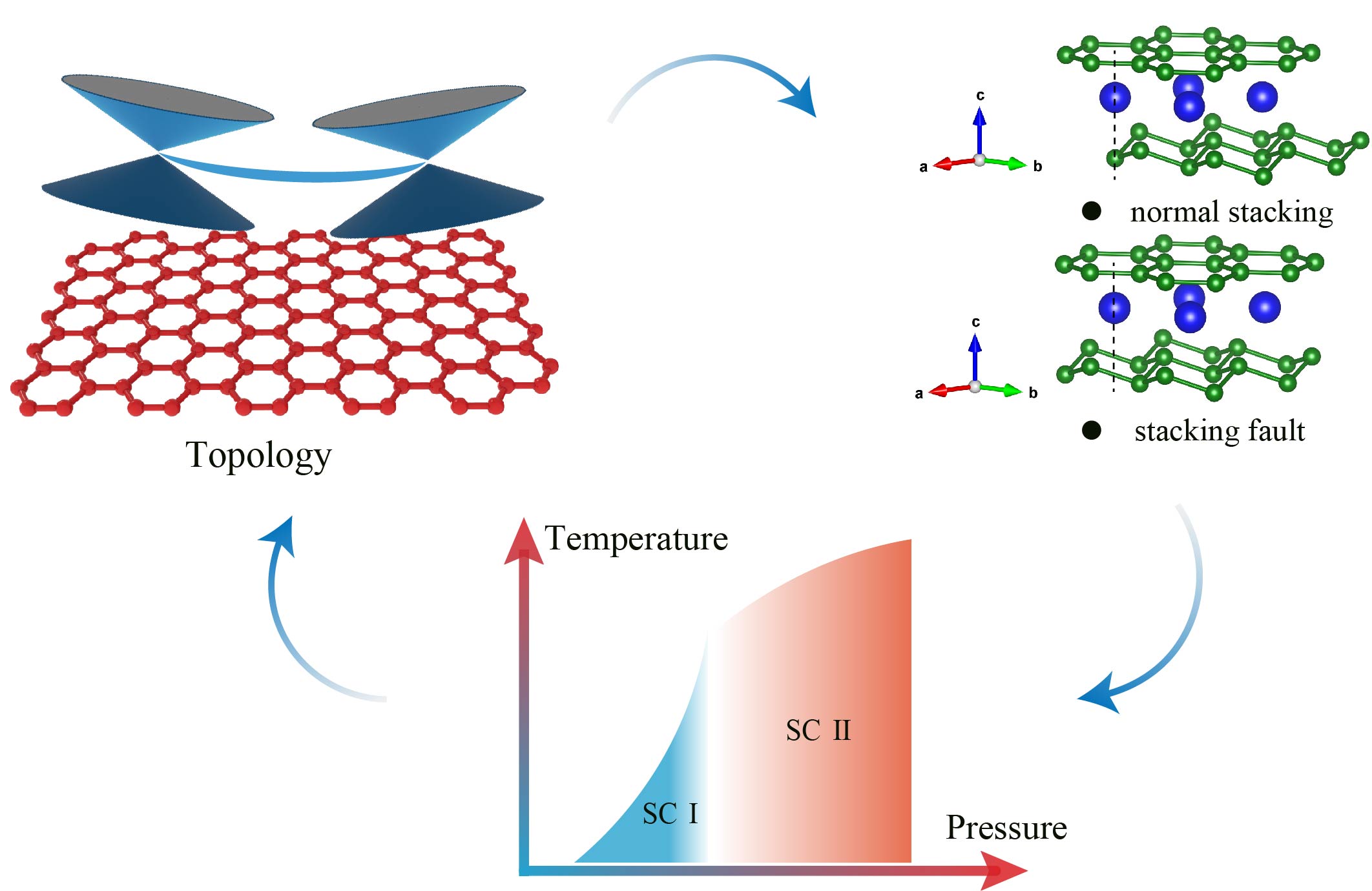
A research team led by Prof. LUO Xuan from the Hefei Institutes of Physical Science discovered the existence of stacking faults in the lattice structure of topological phononic β-MoB2 single crystal.
Ph.D. candidate GUO Shuaishuai at the Yunnan Observatories of the Chinese Academy of Sciences, and the collaborators, focusing on the phase in the evolution of hot Jupiters around stars where a long-term synchronization phenomenon occurs between the stellar rotation rate and the planetary orbital rate, proposed evolutionary mechanism for long-term double synchronization in hot Jupiter systems.
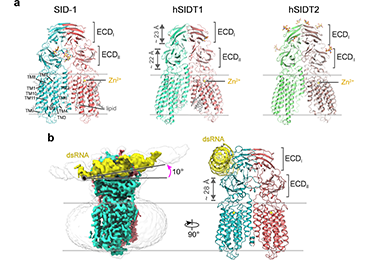
Dr. ZHANG Jiangtao in Prof. JIANG Daohua's group from the Institute of Physics, has demonstrated how systemic RNA interference defective protein 1 (SID-1) specifically recognizes dsRNA and provided important insights into the internalization of double-stranded RNA by SID-1 by combining cryo-EM, in vitro, and in vivo experiments.
Dilda Berdikhan, a PhD student from the Xinjiang Astronomical Observatory of the Chinese Academy of Sciences, and her collaborators, using the NanShan 26-meter Radio Telescope (NSRT), observed NH3 (1,1) and (2,2) inversion transitions in the Planck cold core Milky Way.
WANG Shuangqiang at the Xinjiang Astronomical Observatory of the Chinese Academy of Sciences, and the collaborators, using the data obtained from FAST, carried out a study of white noise in millisecond pulsars (MSPs).

86-10-68597521 (day)
86-10-68597289 (night)

52 Sanlihe Rd., Xicheng District,
Beijing, China (100864)
Copyright © 2002 - Chinese Academy of Sciences


