
Imagine being able to control a computer or smart device with just a movement of your shoulder. While this might sound like something out of a science fiction movie, it has now become a reality.
A team led by Prof. SONG Quanjun from the Hefei Institutes of Physical Science of the Chinese Academy of Sciences has developed a non-invasive body-machine interaction method using soft sensors.
This innovative technology, published in Journal of Neural Engineering, is designed to help individuals with upper-limb disabilities and quadriplegia control external devices through subtle muscle movements in their shoulders.
The system, named Soft Body-Machine Interface (SoftBoMI), uses soft strain sensors to detect residual muscle activity and convert it into control signals for devices such as computers, mice, and joysticks.
The research team has developed two decoding methods—one based on predefined rules and the other inferring user intent—for more intuitive control. Additionally, an adaptive switching method enables users to smoothly transition between tasks, enhancing overall efficiency.
Initial tests with participants, including individuals with upper-limb amputations and spinal cord injuries, have yielded promising results.
"We will continue to refine and expand the capabilities of this innovative system," said LIU Rongkai, a member of the team, "Our goal is to help individuals use various devices and collaborate with brain-machine interfaces to enhance assistive technology."
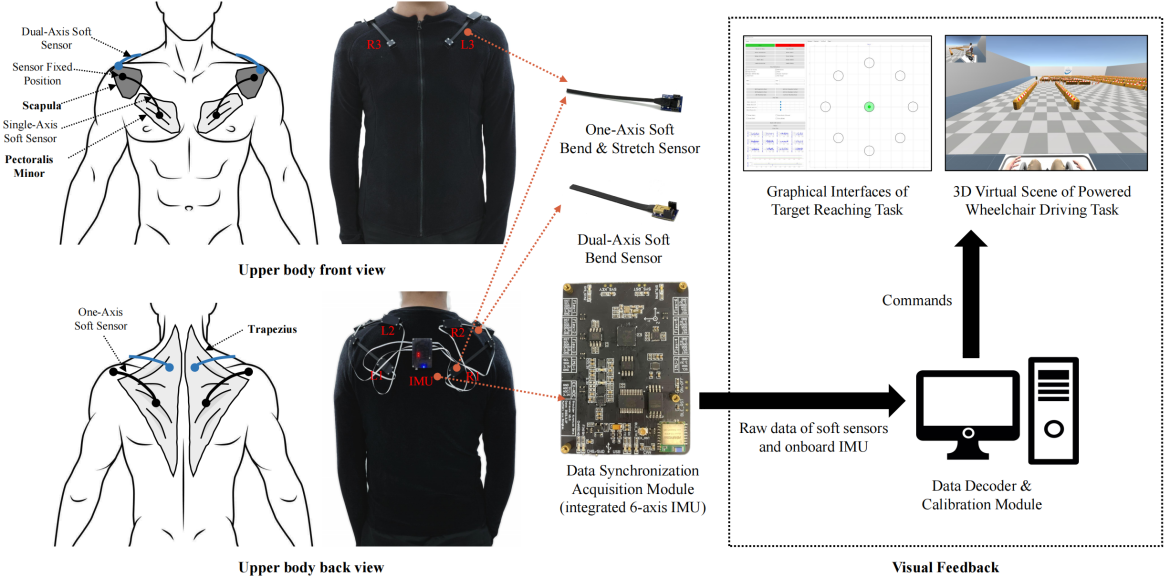
Soft Body-Machine Interface System (Image by LIU Rongkai)
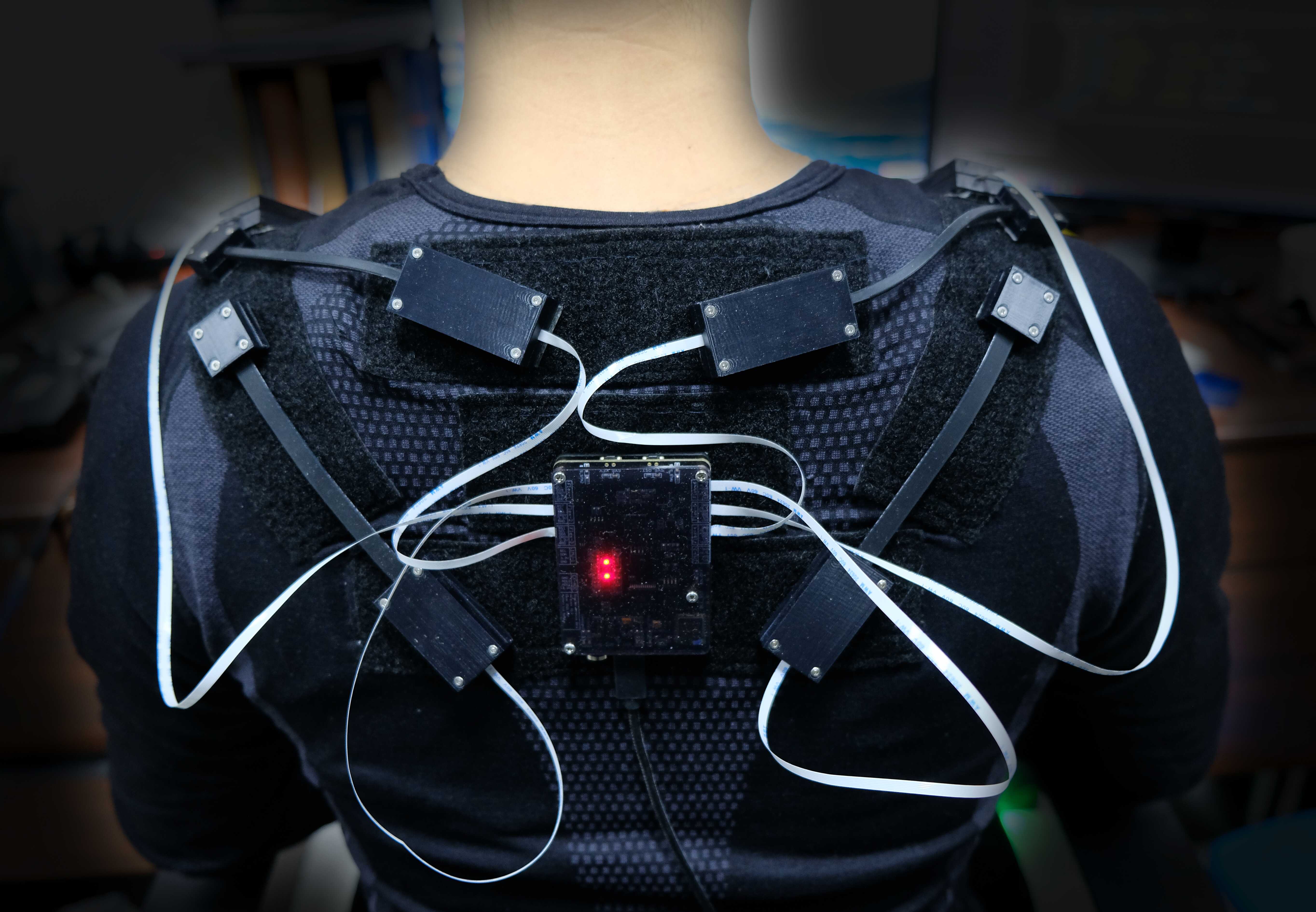
Soft Body-Machine Interface (Image by LIU Rongkai)

86-10-68597521 (day)
86-10-68597289 (night)

52 Sanlihe Rd., Xicheng District,
Beijing, China (100864)
Copyright © 2002 - Chinese Academy of Sciences


