
A research group led by Prof. HAN Yuncheng from the Hefei Institutes of Physical Science of the Chinese Academy of Sciences has developed a novel 3D 63Ni-SiC-based betavoltaic nuclear battery with high power output.
The results were published in Nuclear Science and Techniques.
Betavoltaic nuclear batteries, known for their long life, high energy density, compact size and resistance to interference, are considered a promising power source for microelectromechanical systems (MEMS). However, the planar configuration of conventional batteries limits the use of the radioisotope source by exploiting the decay energy emitted from only one side of the radioisotope source, resulting in limited output power, typically in the nanowatt range, ehich does not meet the power requirements of MEMS systems (~microwatts).
To overcome these limitations, the researchers proposed a novel three-dimensional (3D) battery design based on 63Ni-SiC material using a P+PNN+ multi-groove structure. This design innovation eliminates the need for epitaxial PN junctions within the semiconductor device grooves, thereby reducing power loss due to leakage current.
Using advanced Monte Carlo simulation methods and fully coupled physical models, the team successfully extended the electron-hole pair generation rate (G(x)) to the 3D structure, enabling efficient design and development of betavoltaic batteries with complex 3D structures.
The results demonstrate the superior performance of the newly proposed 3D battery over conventional planar batteries in terms of maximum output power density.
Furthermore, in-depth analyses of carrier transport and collection characteristics using COMSOL Multiphysics elucidated the performance enhancement mechanism of the betavoltaic batteries and revealed discrepancies between ideal and simulated performance.
This study provides novel insights for the design and optimization of high-output betavoltaic nuclear batteries, according to the team.
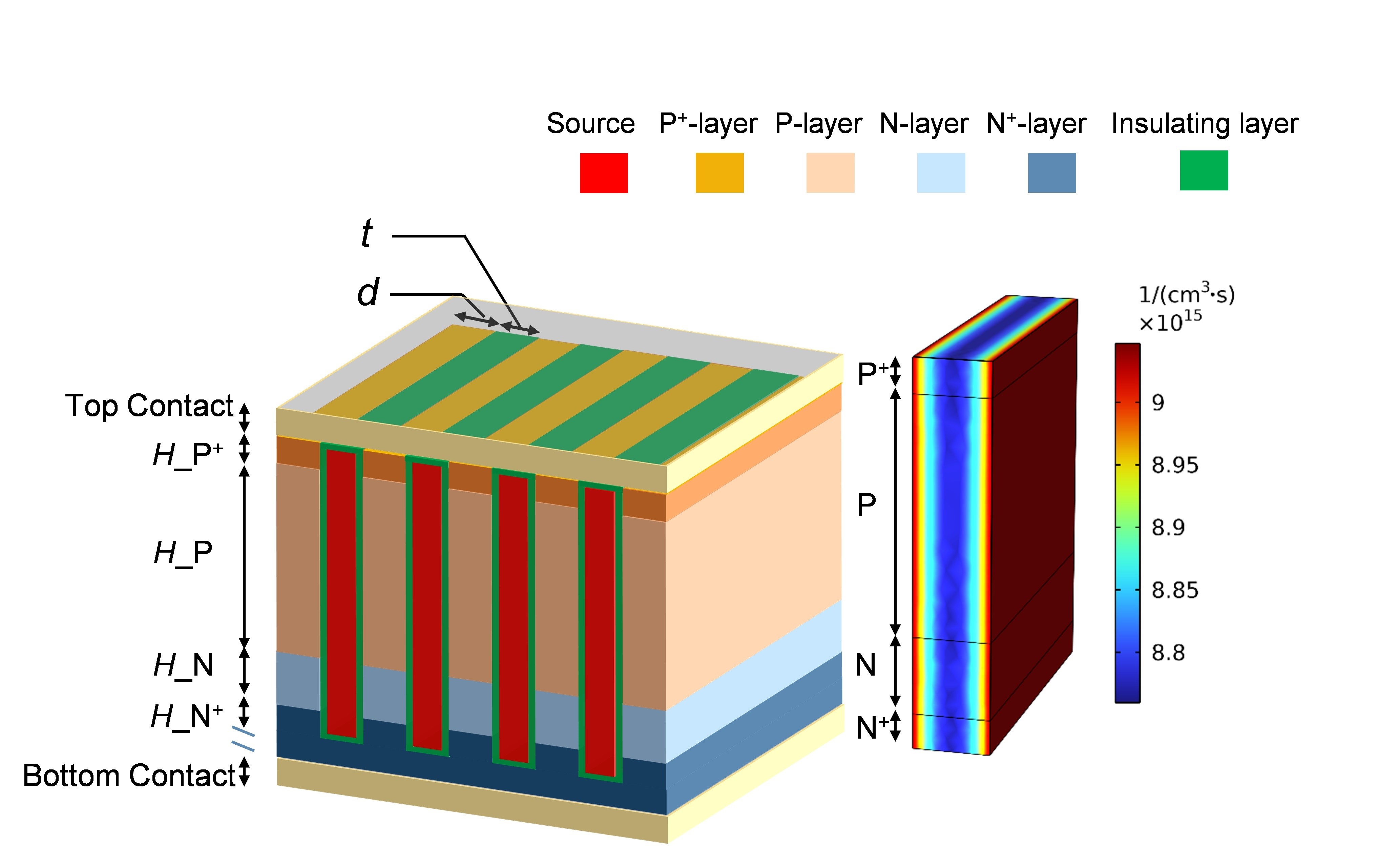
Schematic 3D diagram showing part of the proposed battery and the distribution of the electron–hole pair generation rate in the innermost ridge. (Image by HE Houjun)
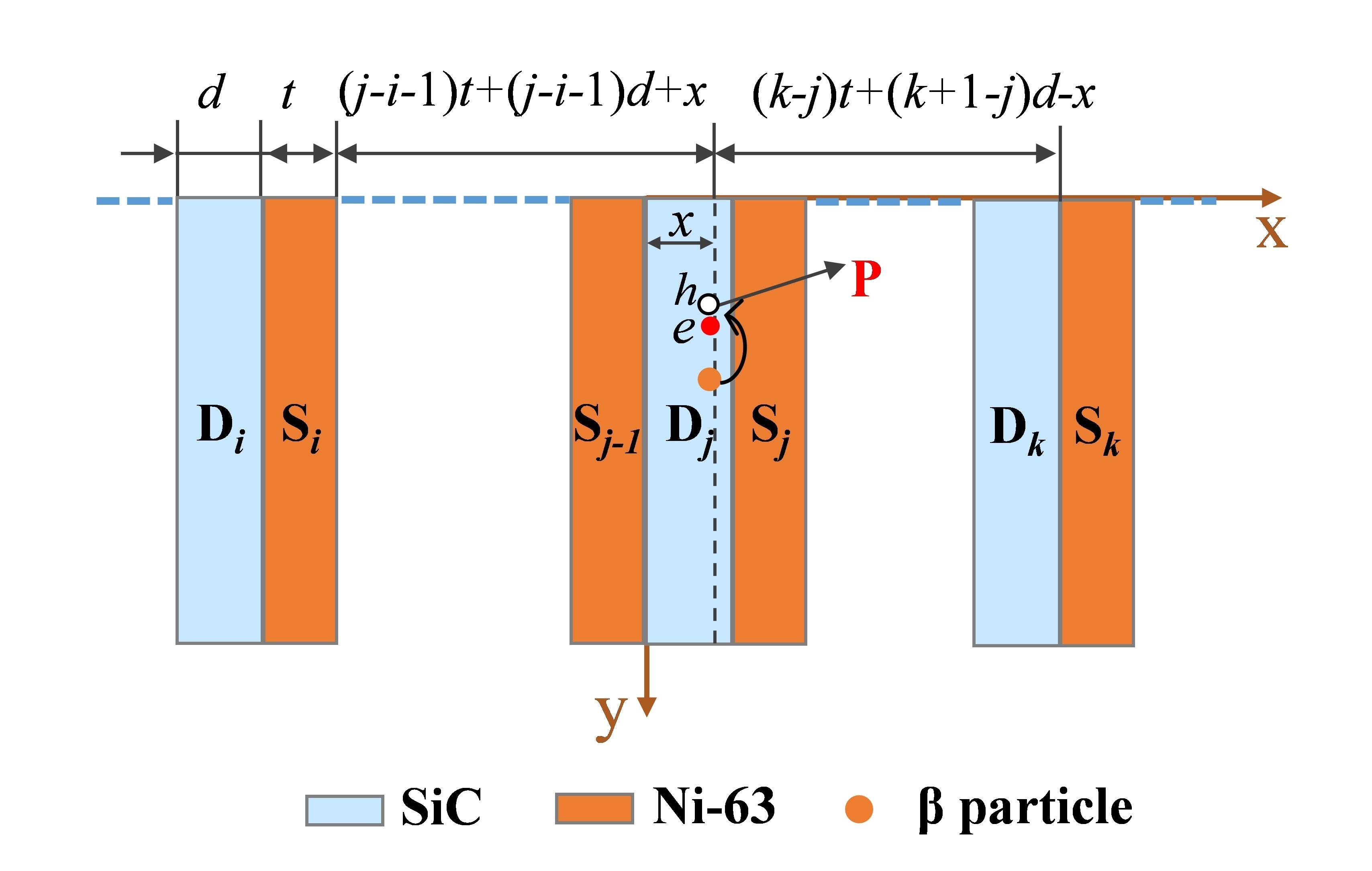
The G(x) model for 3D P+PNN+ multi-groove structure. (Image by HE Houjun)
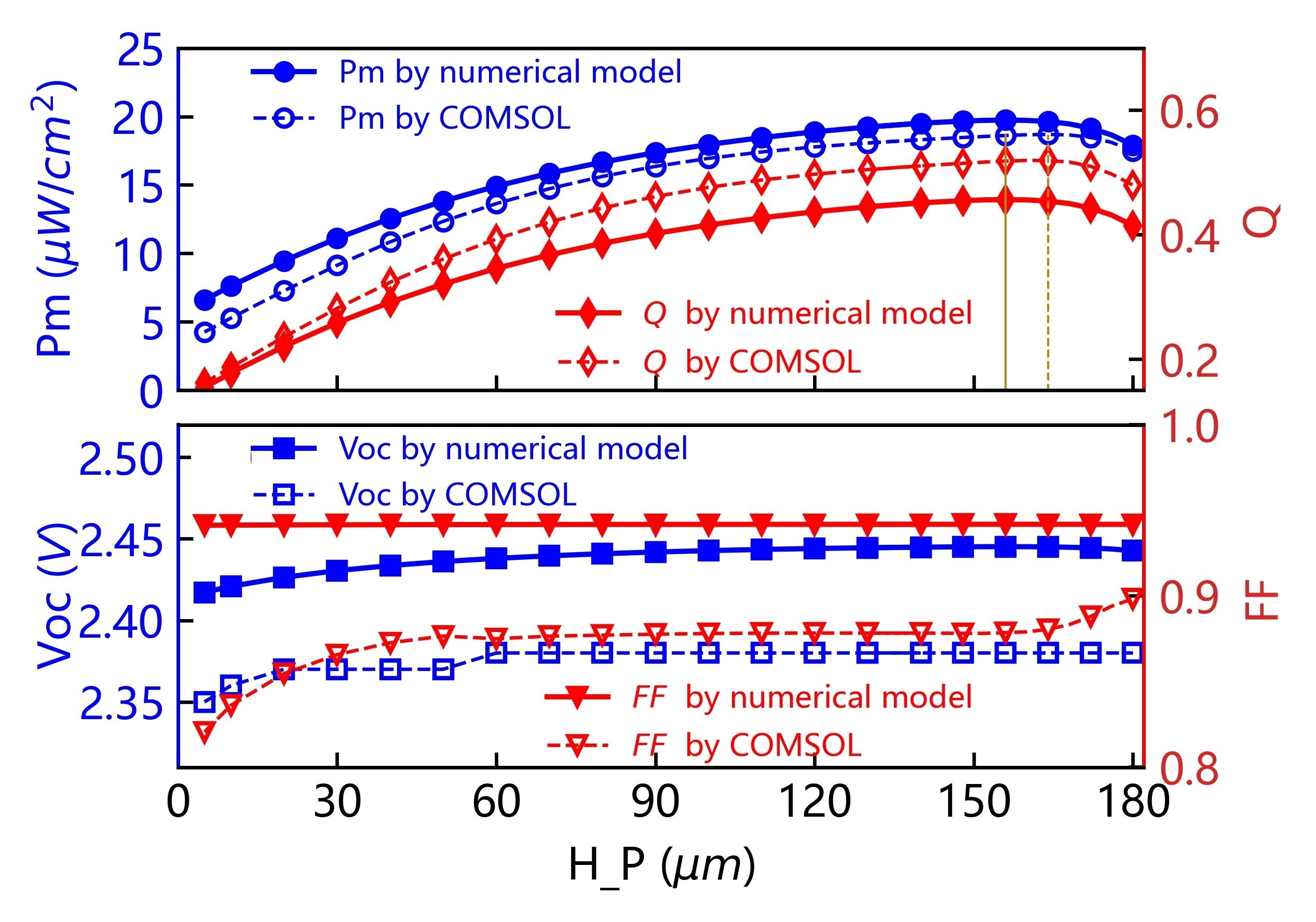
Performance discrepancies between the ideal and practical performances simulated by COMSOL. (Image by HE Houjun)

86-10-68597521 (day)
86-10-68597289 (night)

52 Sanlihe Rd., Xicheng District,
Beijing, China (100864)
Copyright © 2002 - Chinese Academy of Sciences


