
Researchers led by Prof. ZENG Fanjiang from the Xinjiang Institute of Ecology and Geography of the Chinese Academy of Sciences conducted an experiment using an active restoration approach of intercropping native desert plant species to evaluate the approach's impact on soil nutritional status and ecological functions.
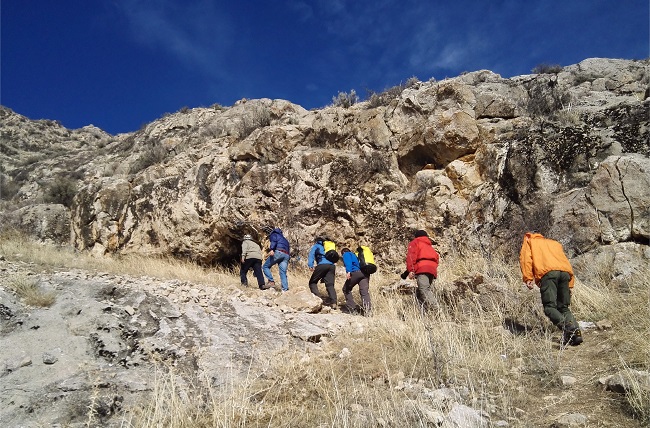
A recent study shows that western Central Asia has experienced a long-term drying trend over the past 7,800 years. This discovery, based on the analysis of a stalagmite from the Fergana Valley in Kyrgyzstan, adds a critical piece to the understanding of westerly-influenced hydroclimatic patterns in Central Asia.
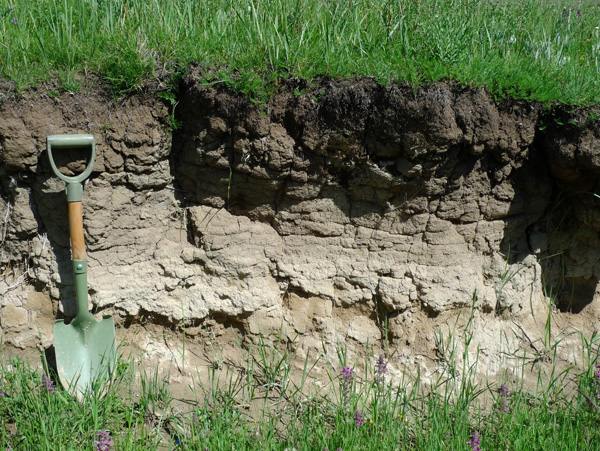
Prof. HUANG Yuanyuan from the Institute of Geographic Sciences and Natural Resources Research found a whopping 2,305 billion tons of carbon stored as SIC in the top two meters of soil worldwide, which is more than five times the carbon found in all of the world's vegetation combined.

Researchers led by Prof. WANG Kelin from the Institute of Subtropical Agriculture have found that maize cultivation and tree felling three hundred years ago triggered severe rocky desertification in the karst area of southwest China.

Researchers from the Institute of Atmospheric Physics found that during winter in the Northern Hemisphere, temperature changes seem to be the main reason for the jet's shift north. They think this happens because changes in temperature structure are the fundamental rule governing how air moves around the globe.
A research group led by Prof. WU Jinshui from the Institute of Subtropical Agriculture and Fuzhou University has investigated the changes in bacterial and micro-eukaryotic community composition in constructed wetland over one year. Now, they have revealed complex processes of wastewater treatment by microbial components in full-scale surface flow constructed wetlands.

86-10-68597521 (day)
86-10-68597289 (night)

52 Sanlihe Rd., Xicheng District,
Beijing, China (100864)
Copyright © 2002 - Chinese Academy of Sciences


