
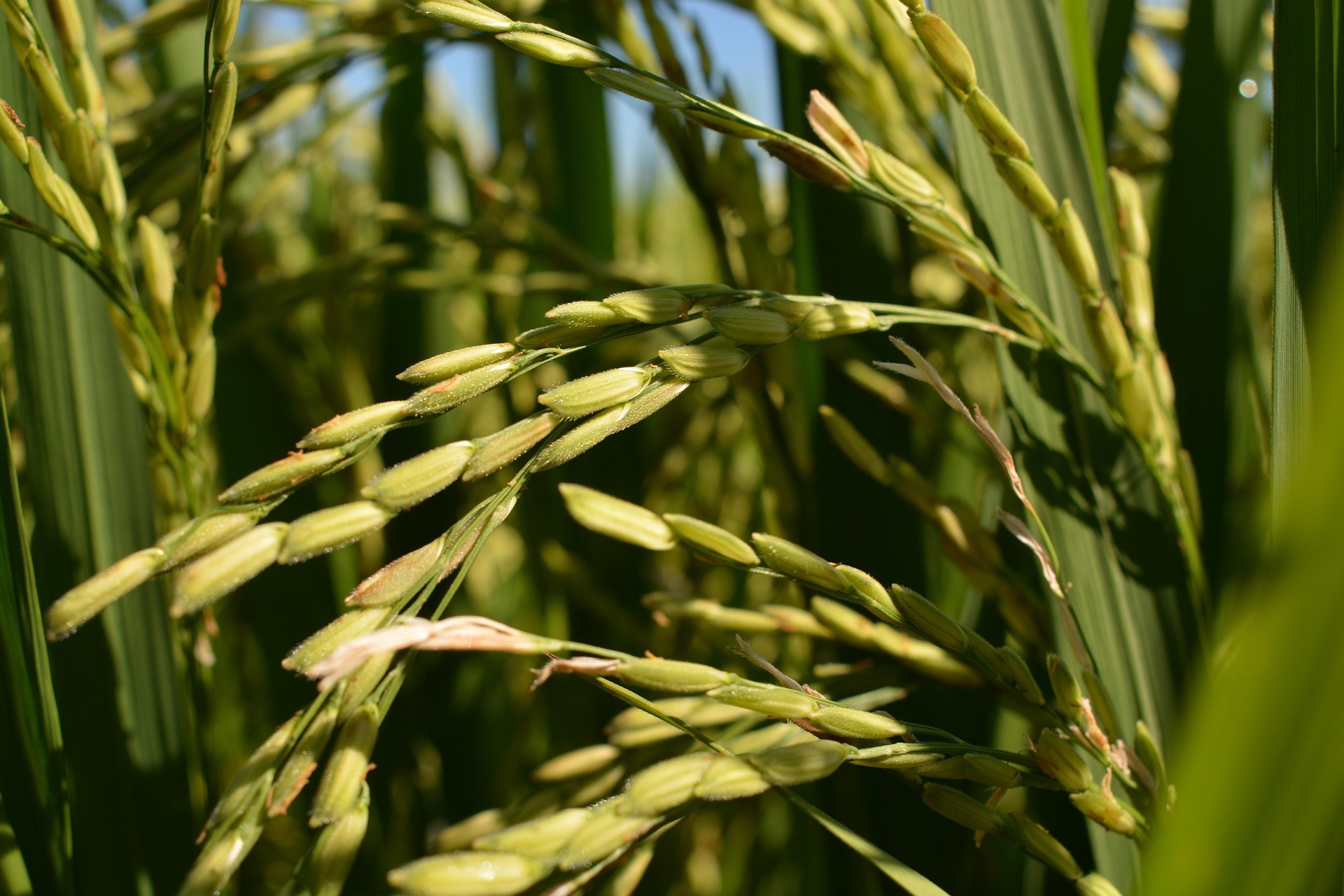
A research team led by Prof. ZHU Chunwu from the Institute of Soil Science reports that the CO₂ fertilization effect on rice growth and yield depends heavily on the number of generations exposed to elevated CO₂ conditions. Accurately predicting rice productivity in a future high-CO₂ world requires studying the effect of multigenerational exposure to elevated CO₂ on rice yield.
Researchers led by Prof. XUE Xian from the Northwest Institute of Eco-Environment and Resources have shown that increasing soil salinity is systematically reshaping the storage and distribution of soil inorganic carbon, providing the first comprehensive global assessment of how soil salinization influences inorganic carbon storage and highlight its implications for the global carbon cycle.
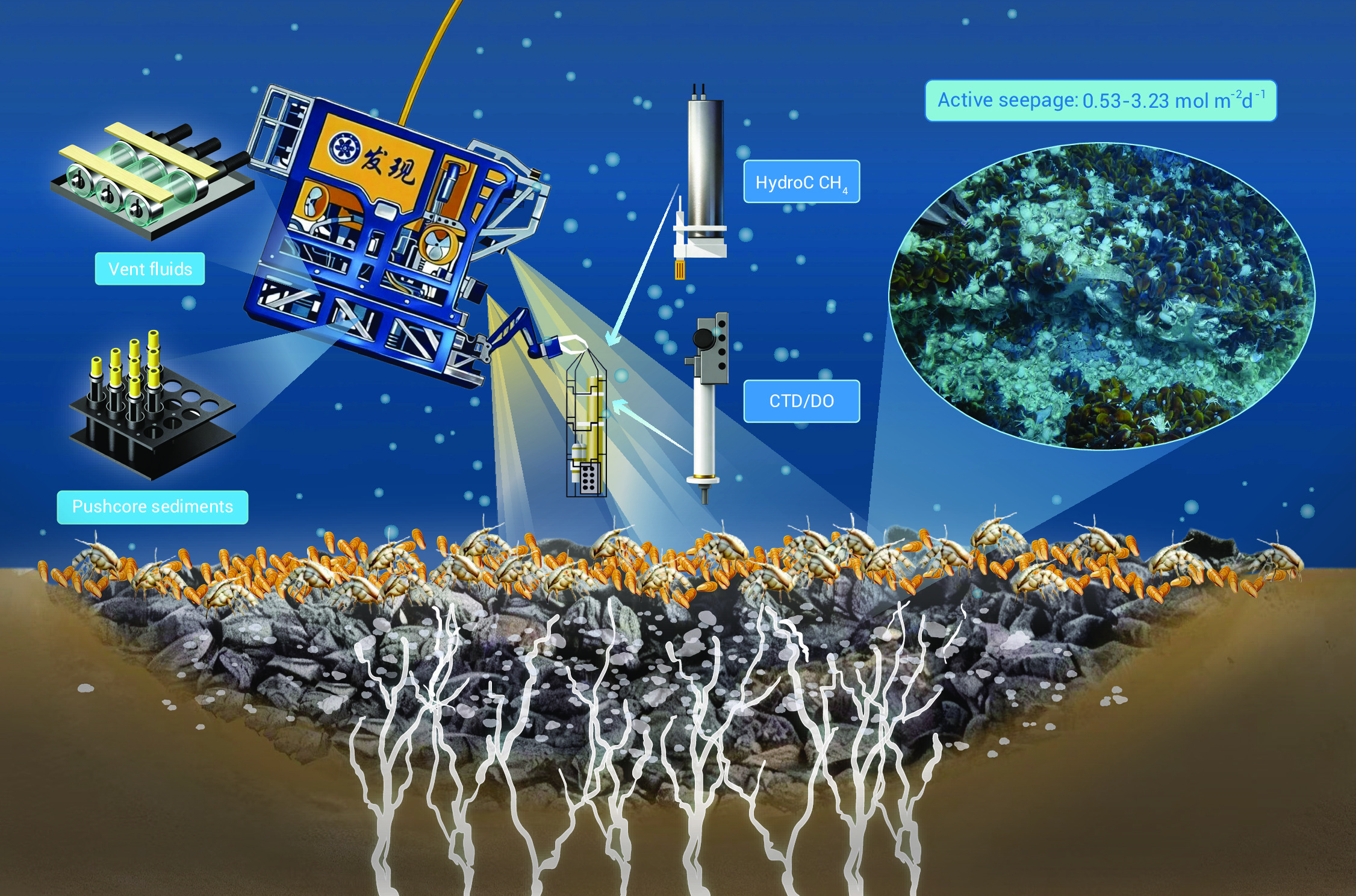
A research team from the Institute of Oceanology of the Chinese Academy of Sciences has discovered that methane emissions from cold seeps in the South China Sea are far higher than previously estimated, providing scientific evidence for accounting for oceanic greenhouse gas sources and sinks.
A research team from the Institute of Oceanology of the Chinese Academy of Sciences has identified a critical feedback loop involving rainfall and ocean salinity that helps maintain multiyear La Niña conditions.
Soils store more carbon than the atmosphere and vegetation combined, with soil microorganisms playing the main role. As a result, the global soil carbon cycle—by which carbon enters, moves through, and leaves soils worldwide—exerts a significant impact on climate change feedback. Now an important study led by researchers from the Institute of Earth Environment of the Chinese Academy of Sciences sheds new light on this cycle by overturning assumptions about the relationship between microbial respiration and carbon storage.

An interdisciplinary research team has uncovered a new explanation for the foraging division of labor in bumblebees, drawing on insights from fluid dynamics, morphology, and ecology. Their study reveals that subtle variations in the microstructure of the insects' functional organs can shape labor division at the colony level.

86-10-68597521 (day)
86-10-68597289 (night)

52 Sanlihe Rd., Xicheng District,
Beijing, China (100864)
Copyright © 2002 - Chinese Academy of Sciences


