Newsroom


A new study has revealed a shift from temperate shrubby desert and temperate semi-shrubby/dwarf semi-shrubby desert from Latest Pleistocene to mid-Holocene (~23.3–7.2 cal kyr BP) at Lop Nur, a well-known example of environmental change in arid Central Asia. The findings were published in Palaeogeography, Palaeoclimatology, Palaeoecology.
Led by Prof. WANG Yufei from the Institute of Botany of the Chinese Academy of Sciences, in collaboration with partners from the UK and Austria, the researchers performed interdisciplinary analyses including high-resolution pollen, grain size and stable carbon and nitrogen isotopes from a 617 cm sediment core from Lop Nur.
They found that variations in solar activity and westerly strength modulated regional water circulation, which in turn triggering the alternating dominance of the two desert vegetation types and drove lake-level fluctuations fed by alpine meltwater.
The researchers further revealed that aquatic vascular plants and phytoplankton supplied most of the lake organic matter during the latest Pleistocene (~23.3–11.6 cal kyr BP), whereas the early to middle Holocene (11.6–7.2 cal kyr BP) witnessed a greater diversity of sources (soil, C3 terrestrial plants, aquatic vascular plants and phytoplankton). Nitrogen levels in the lake sediment were primarily controlled by soil erosion and only marginally influenced by atmospheric nitrogen deposition.
The desert heartlands of the Eurasian interior are both a hotspot of global-change sensitivity and the pivotal terrain traversed by the ancient Silk Roads and today's Belt and Road Initiative. Deciphering how their desert-ecosystem patterns have evolved—and the mechanisms driving that change—is now a central theme in global-change science.
This work provides a robust historical analog for the prediction of future environmental change and ecosystem sustainable development across arid Central Asia under the scenario of global change.
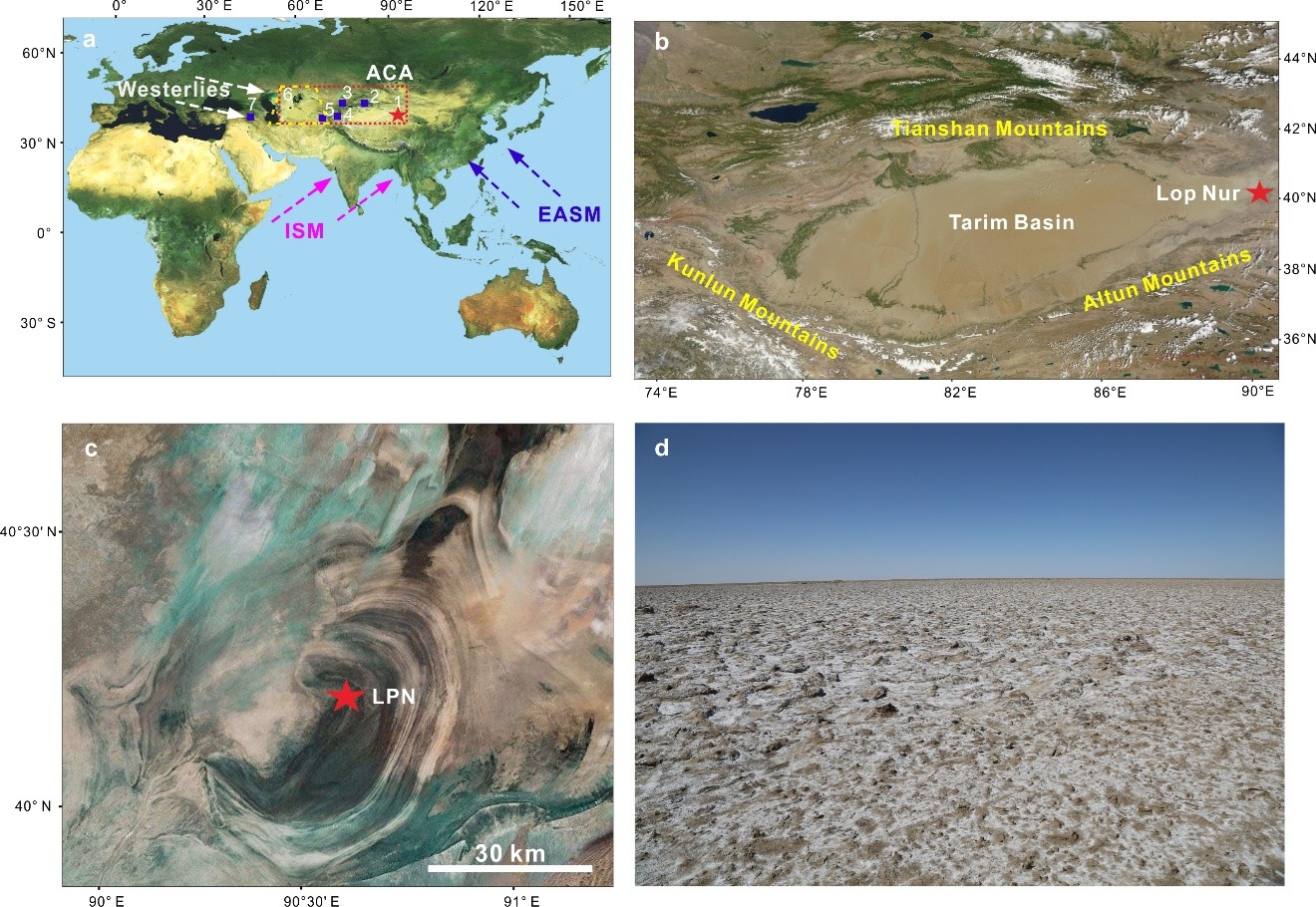
Today's Lop Nur (Image by YAO Yifeng)
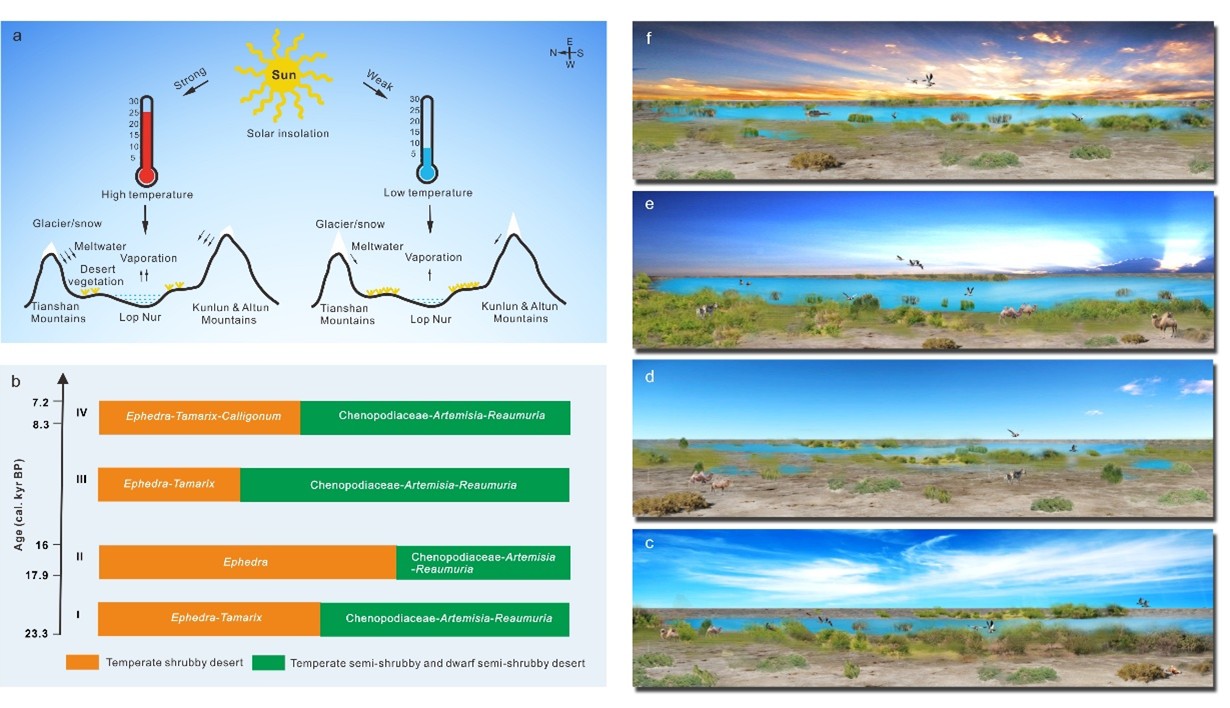
Past Lop Nur (Image by YAO Yifeng)