
A research team led by Prof. YAN Ya from the Shanghai Institute of Ceramics, in collaboration with scientists from Huazhong University of Science and Technology, Shanghai Jiao Tong University, and the University of Auckland, has developed a highly stable and efficient water oxidation catalyst, marking a major advancement in the field of green hydrogen production via water splitting technology.
A research group led by Prof. CHEN Liang at the Ningbo Institute of Materials Technology and Engineering of the Chinese Academy of Sciences has designed a high-entropy electrocatalyst that achieves efficient production of hydrogen and valuable glycerol chemicals.
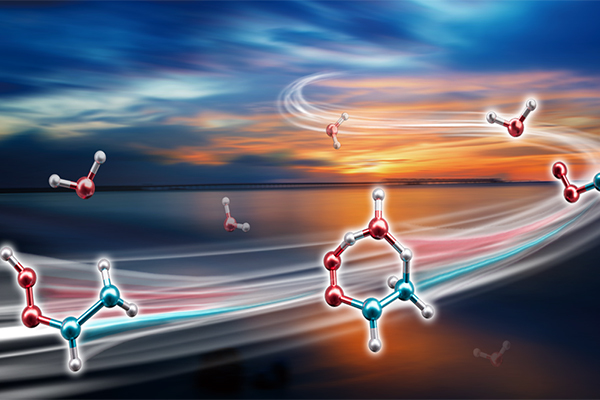
A research team from the Dalian Institute of Chemical Physics of the Chinese Academy of Sciences uncovered that syn-CH3CHOO's reaction with atmospheric water vapor is approximately 100 times faster than previously predicted by theoretical models.
A research team led by Prof. Haji Akber AISA from the Xinjiang Technical Institute of Physics and Chemistry of the Chinese Academy of Sciences, proposed a high-resolution mass spectrometry strategy combined with feature-based molecular networking to facilitate the comprehensive isolation of PFs. The isolated flavonoids underwent thorough pharmacological evaluation and analysis of their structure-activity relationships.
A study conducted by a research team led by Prof. SU Weiping and Prof. JIE Xiaoming from the Fujian Institute of Research on the Structure of Matter of the Chinese Academy of Sciences focused on developing radical-based reactions for the transformation of inert bonds, and opened up an efficient and universal synthetic route for the direct transformation of unactivated oximes.
Prof. JIA Di's group from the Institute of Chemistry of the Chinese Academy of Sciences reported the first experimental evidence of a novel universality class in hierarchical dynamics using dynamic light scattering (DLS).

86-10-68597521 (day)
86-10-68597289 (night)

52 Sanlihe Rd., Xicheng District,
Beijing, China (100864)
Copyright © 2002 - Chinese Academy of Sciences


