
Newsroom


Scientists have recently developed IHMT-HPK1-550, a small-molecule HPK1 inhibitor featuring a novel scaffold, providing a new candidate compound for cancer immunotherapy.
Led by Prof. LIU Qingsong from the Hefei Institutes of Physical Science of the Chinese Academy of Sciences, the relevant findings of the study were published in the Journal of Medicinal Chemistry on October 28.
Immunotherapy, a key advance after chemo- and targeted therapy, relies on the host immune system rather than direct tumor cell killing. Widely used PD-1/PD-L1 inhibitors reverse T-cell exhaustion but show variable efficacy and high relapse risk, driving the search for new immunotherapeutic agents.
HPK1 negatively restrains TCR signaling and suppresses T-cell activation and function. Blocking HPK1 releases this immune brake and boosts antitumor immunity. It is a promising immunotherapy target, with global inhibitor development ongoing, but no candidate has gained clinical approval yet.
In this study, the researchers applied scaffold-hopping and other molecular optimization strategies to obtain a lead compound IHMT-HPK1-550 featuring a novel pyrido[2,1-h]pteridin-6-one scaffold.
The compound exhibited potent inhibitory activity and effectively restored T cell function. In the CT26.WT syngeneic mouse model, IHMT-HPK1-550 as a single agent inhibited tumor growth and activated T cell function; when combined with a PD-1 antibody, the tumor growth inhibition rate reached 83.8%.
According to the researchers, this study not only expands the chemical scaffold repertoire of HPK1 inhibitors, but also provides a promising lead molecule for further development of HPK1-targeted immunotherapeutic candidates.
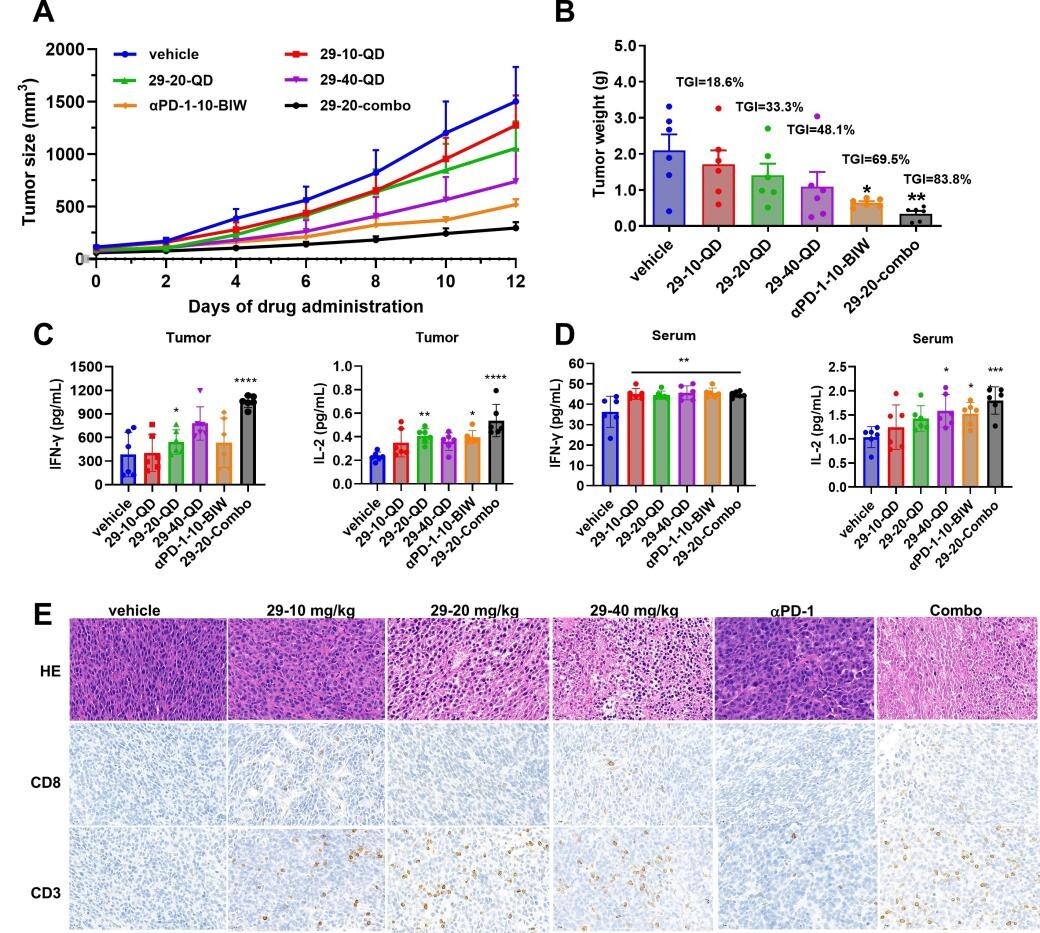
In vivo efficacy of the HPK1 inhibitor IHMT-HPK1-550 (compound 29) in the CT26 immunocompetent mouse xenograft model. (Image by WANG Beilei)
