
Newsroom


A new study has identified Arabidopsis SNARE proteins VAMP726 and VAMP725 as key components of the trafficking of cellulose synthase (CESA), helping support the formation of both primary and secondary cell walls.
The findings, published in Proceedings of the National Academy of Sciences (PNAS), show that these proteins associate with CESAs and regulate their delivery to the plasma membrane, with a particularly important role in secondary cell wall formation.
The work reveals an important trafficking process in plant cell biology and offers potential targets for engineering plants with enhanced structural integrity and biomass yield.
The study was conducted by researchers at the South China Botanical Garden of the Chinese Academy of Sciences, with collaborators, and is titled "VAMP725 and VAMP726 Interact with Cellulose Synthase to Support Secondary Cell Wall Formation".
Plant cell walls are essential for plant growth and mechanical strength. They depend on cellulose produced by CESA complexes located at the plasma membrane. However, the molecular mechanisms that regulate the transport of these complexes to the plasma membrane have remained largely unknown.
The new study shows that VAMP726, together with its close homolog VAMP725, colocalizes and binds to CESAs, helping transport them during the formation of both primary and secondary cell walls. Mutations in these VAMPs disrupt CESA dynamics, reduce cellulose and lignin deposition, and impair vascular development.
According to the study, VAMP726, likely acting in concert with VAMP725, regulates CESA delivery to the plasma membrane and possibly its retrieval from the membrane. This function appears particularly important during secondary cell wall synthesis, which is essential for supporting plant stature and enabling water transport from roots to shoots.
These findings reveal an important mechanism underlying cellulose synthase trafficking in plant cells and provide potential targets for engineering plants with enhanced structural integrity and biomass yield.
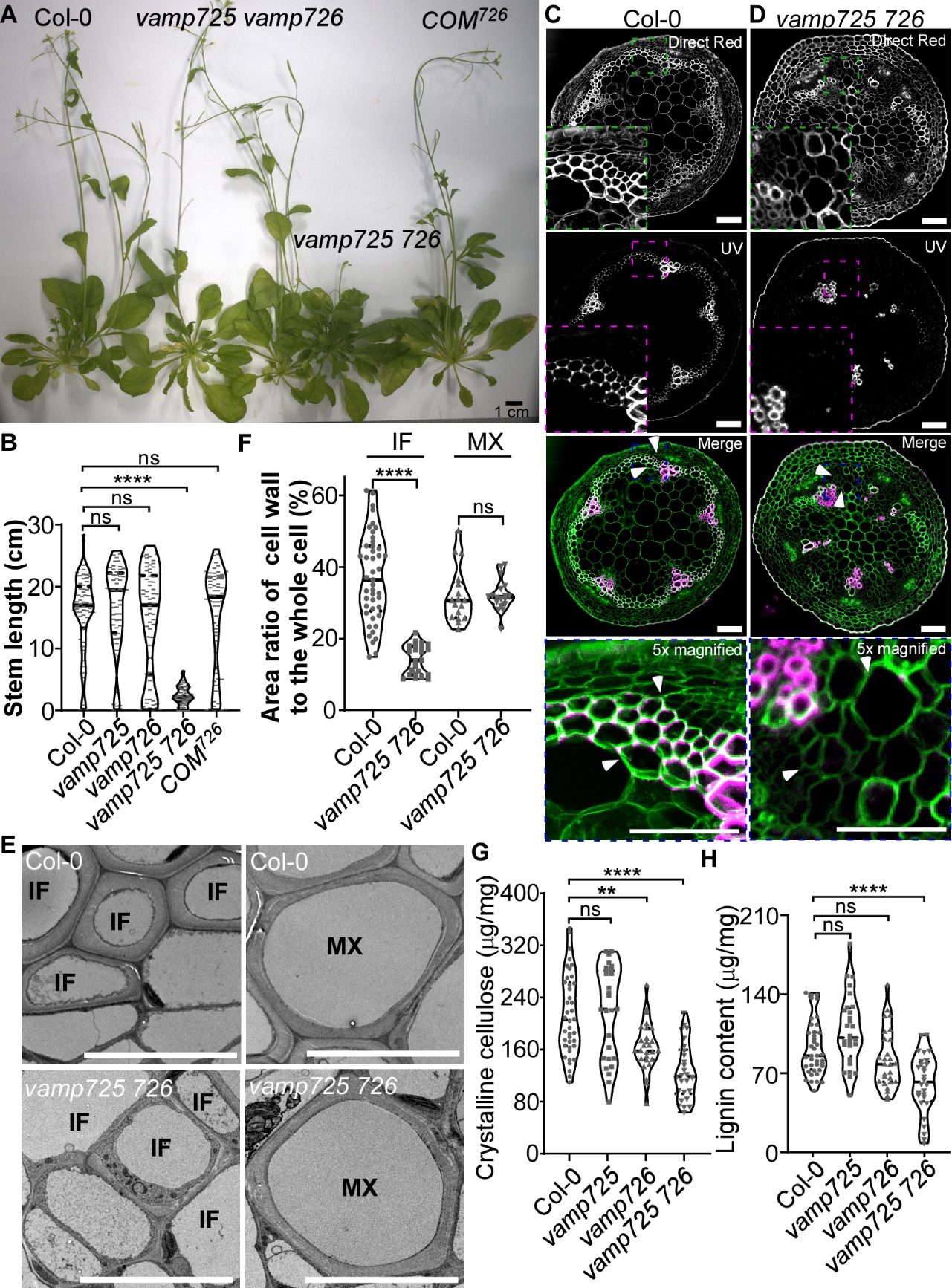
VAMP725 and VAMP726 impact secondary cell wall composition and thickness. (Image by ZHENG Wenna)

