Newsroom


Deadwood decomposition is a fundamental forest process that regulates the cycling of carbon and nutrients and supports biodiversity. Previous studies have suggested that differences in wood decomposition rates between bark-covered and bark-removed logs may be driven by fungal and bacterial communities. However, it remains unclear whether these effects are driven by microbial biomass or community composition alone.
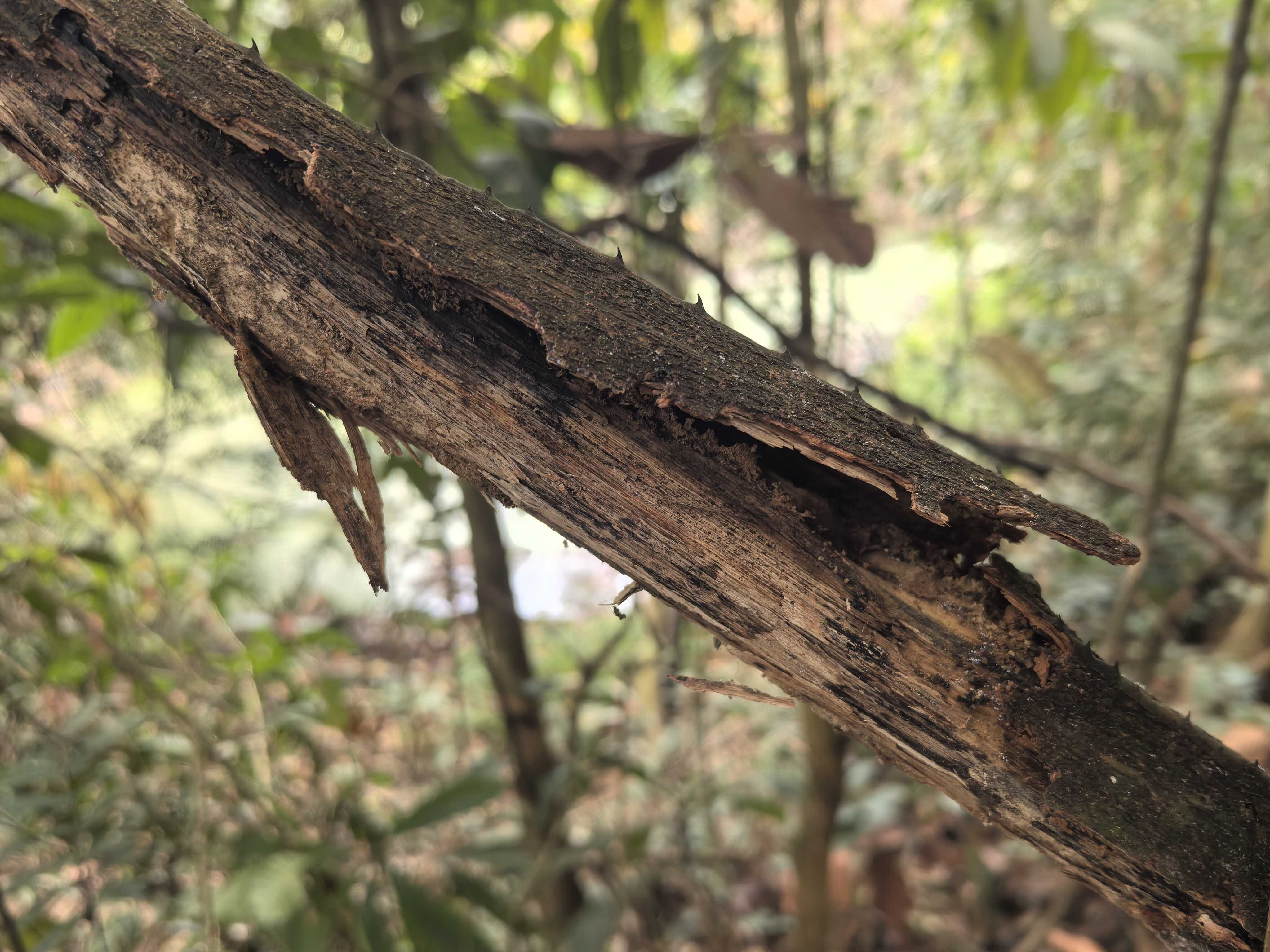
In a study published in ISME Communications, researchers from the Xishuangbanna Tropical Botanical Garden (XTBG) of the Chinese Academy of Sciences and their collaborators found that bark plays a key role in shaping fungal communities during tropical tree decomposition. The presence of bark alters the composition and assembly processes of fungal communities during wood decomposition in a tropical forest; however, it does not change the overall biomass of fungi or bacteria.
The researchers conducted a two-year common-garden experiment using logs from five tropical tree species. They compared logs with intact bark to logs from which bark had been removed, taking samples at 0, 18, and 24 months of field exposure. The researchers used high-throughput sequencing to characterize wood-inhabiting fungi and phospholipid fatty acid (PLFA) analysis to measure microbial biomass. They also performed chemical analyses to track changes in the wood over time.
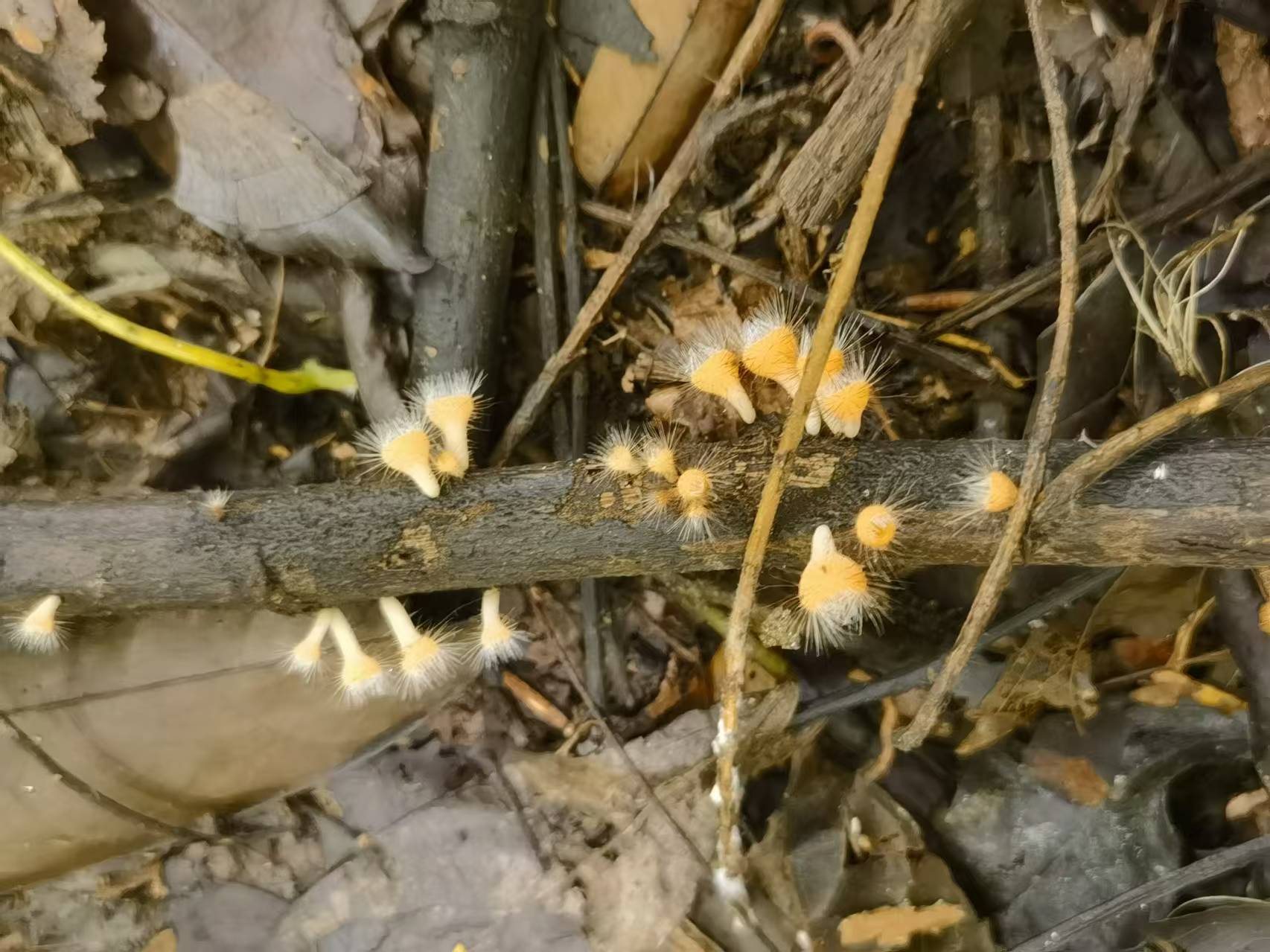
They found that the presence of bark significantly altered the composition of the fungal community. Logs without bark had a higher relative abundance of Ascomycota (including soft rot fungi), while the presence of bark favored Basidiomycota, particularly white rot fungi, during the initial stages of decay. Overall, soft rot fungi had the highest relative abundance, followed by white rot and brown rot fungi.
Furthermore, they found that bark status did not directly impact total microbial biomass (fungi + bacteria), though it was closely correlated with wood physicochemical properties, such as carbon and nitrogen content and moisture levels. As decomposition progressed, fungal biomass gradually declined while bacterial biomass increased, indicating microbial succession from fungus-dominated to bacterium-dominated communities.
In bark-removed treatments, fungal community assembly was dominated by turnover over time. In contrast, bark presence shifted assembly toward nestedness at advanced decay stages. This suggests a transition toward more deterministic, habitat-filtered assembly.
In addition, the results showed that wood mass loss was significantly associated with lignin/cellulose degradation and moisture content, both of which were influenced by bark.
"Bark is not just a passive barrier. It actively shapes the fungal communities that colonize wood, influencing which decomposers establish and how they function. However, our results show that the overall effect of bark on wood decomposition may depend not only on fungal activity but also on wood physicochemical properties," said Gbadamassi G.O. Dossa of XTBG.
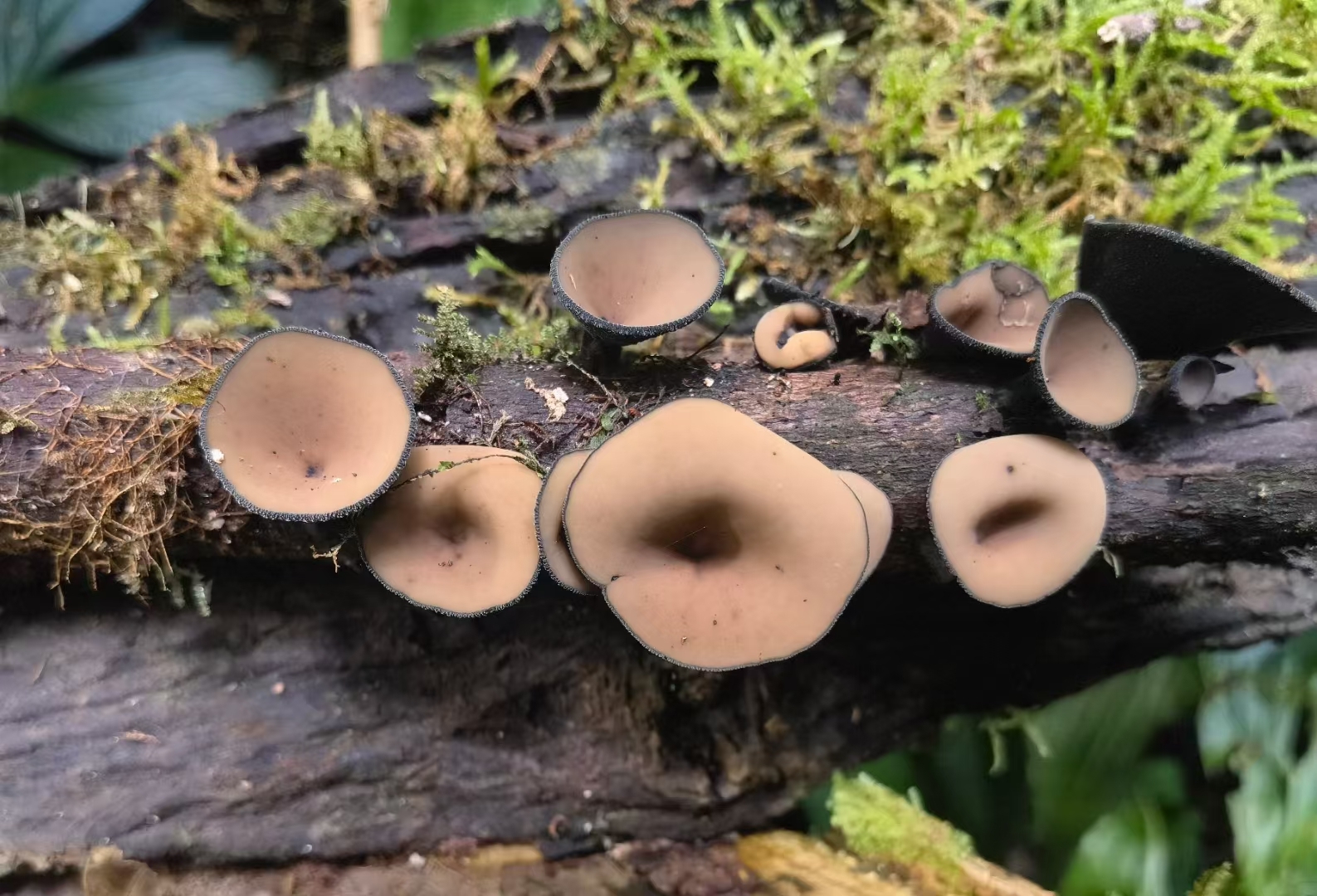
Fungal community on tropical dead wood. (Image by Gbadamassi G.O. Dossa)