Newsroom


Lianas are woody vines that rely on trees for support. They are becoming increasingly abundant in tropical forests around the world. Compared to trees, they exhibit faster turnover rates and distinct chemical compositions. However, the fate of liana deadwood has received limited scientific attention.
In a study published in Proceedings of the Royal Society B: Biological Sciences on April 1, researchers from the Xishuangbanna Tropical Botanical Garden (XTBG) of the Chinese Academy of Sciences and their collaborators found that although lianas can accelerate decomposition, their bark presents a resilient barrier, creating a complex "double-edged sword" effect on forest biogeochemical processes.
The researchers conducted a two-year common garden experiment in Xishuangbanna, directly comparing the decomposition rates of wood from 12 liana and 12 tree species. They placed more than one thousand liana and tree stems, representing two diameter classes, on the forest floor in stainless steel mesh bags of two sizes. The fine-mesh bags allowed microbes such as fungi and bacteria to access the wood, while the coarse-mesh bags besides microbes, also allowed entry to decomposing invertebrates such as termites and millepedes.
The results confirmed their primary hypothesis that liana wood decomposes faster than tree wood. While the inner wood (xylem) of lianas decayed rapidly, their bark proved to be remarkably resilient. In many cases, the bark remained largely intact even after the wood inside had completely rotted away.
Chemical analysis showed that liana bark has a higher lignin content than tree bark, which makes it a tough, protective layer that is difficult to break down.
Furthermore, the presence of invertebrates was a dominant factor, more than doubling the decomposition rates for both plant growth forms. This effect was particularly pronounced in the larger diameter stems, which offer a more stable and moister habitat for termites and other wood-boring and dwelling creatures.
The study revealed the complex and powerful role of liana afterlives in the forest ecosystems. It highlighted that woody vines are not just passive climbers, but also active and potent drivers of the global carbon cycle.
"Lianas may promote forest biogeochemical cycling by speeding up the turnover of carbon and nutrients. As lianas are becoming more abundant, the decomposition of wood in forests and the conversion of dead wood into atmospheric carbon could also accelerate," said Gbadamassi Dossa of XTBG.
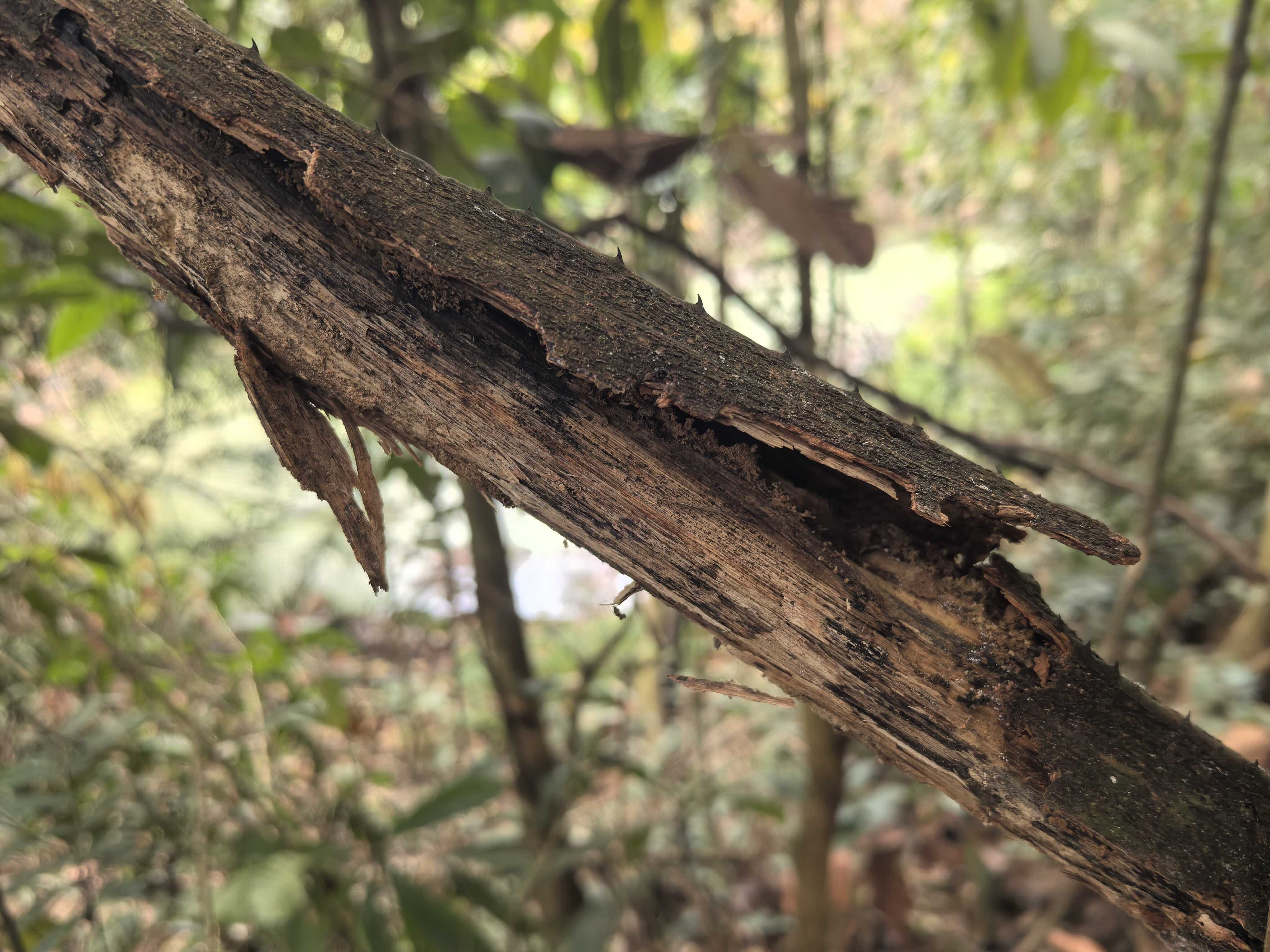
Dead liana decomposes. (Image by Gbadamassi G. O. Dossa)