
Newsroom


Soil organic carbon dynamics are a key indicator for assessing the success of ecosystem restoration. According to a new study by researchers from the Xishuangbanna Tropical Botanical Garden (XTBG) of the Chinese Academy of Sciences, soil microorganisms play a critical role in regulating carbon storage in tropical ecosystems undergoing recovery.
The study, published in Catena on August 27, showed that when microbes get the nutrients they need, they become powerful allies in locking carbon underground. The findings provide new insights into the microscopic mechanisms behind soil carbon sequestration during tropical forest restoration.
The researchers used a space-for-time substitution approach across a restoration chronosequence in Xishuangbanna, southwestern China. They compared three vegetation types: rubber monoculture plantations (heavily degraded), nearly natural rainforests (partially recovered), and primary rainforests. By combining soil chemistry tests, microbial biomarker analysis, and advanced gene sequencing, they were able to trace how both the composition and behavior of microbial communities changed as restoration advanced.
In the degraded rubber plantations, soil microbes were starved of carbon and phosphorus, which severely limited their activity. As restoration progressed, however, the quality of leaf litter and soil nutrients improved dramatically. This nutritional relief triggered a fundamental shift in microbial life strategies: instead of investing all their energy into rapid reproduction (a "Y-strategy"), the microbes switched to a more balanced approach focused on acquiring resources and tolerating stress (an "A/S-strategy").
They also found that microbial necromass (the dead remains of soil microorganisms), particularly fungal-derived carbon, is actually the stronger direct driver than plant-derived carbon (from fallen leaves and roots) for soil organic carbon accumulation.
The study also showed that microbial community assembly became increasingly influenced by stochastic processes as restoration progressed, while the influence of deterministic environmental filtering declined. This shift suggests that microbial communities in recovering forests may become more resilient and better able to withstand environmental disturbances.
"Our findings show that tropical plantation restoration can effectively enhance soil carbon storage. It turns degraded farmland into a functioning carbon sink, a natural solution that benefits both climate and biodiversity," said LIU Wenjie of XTBG.
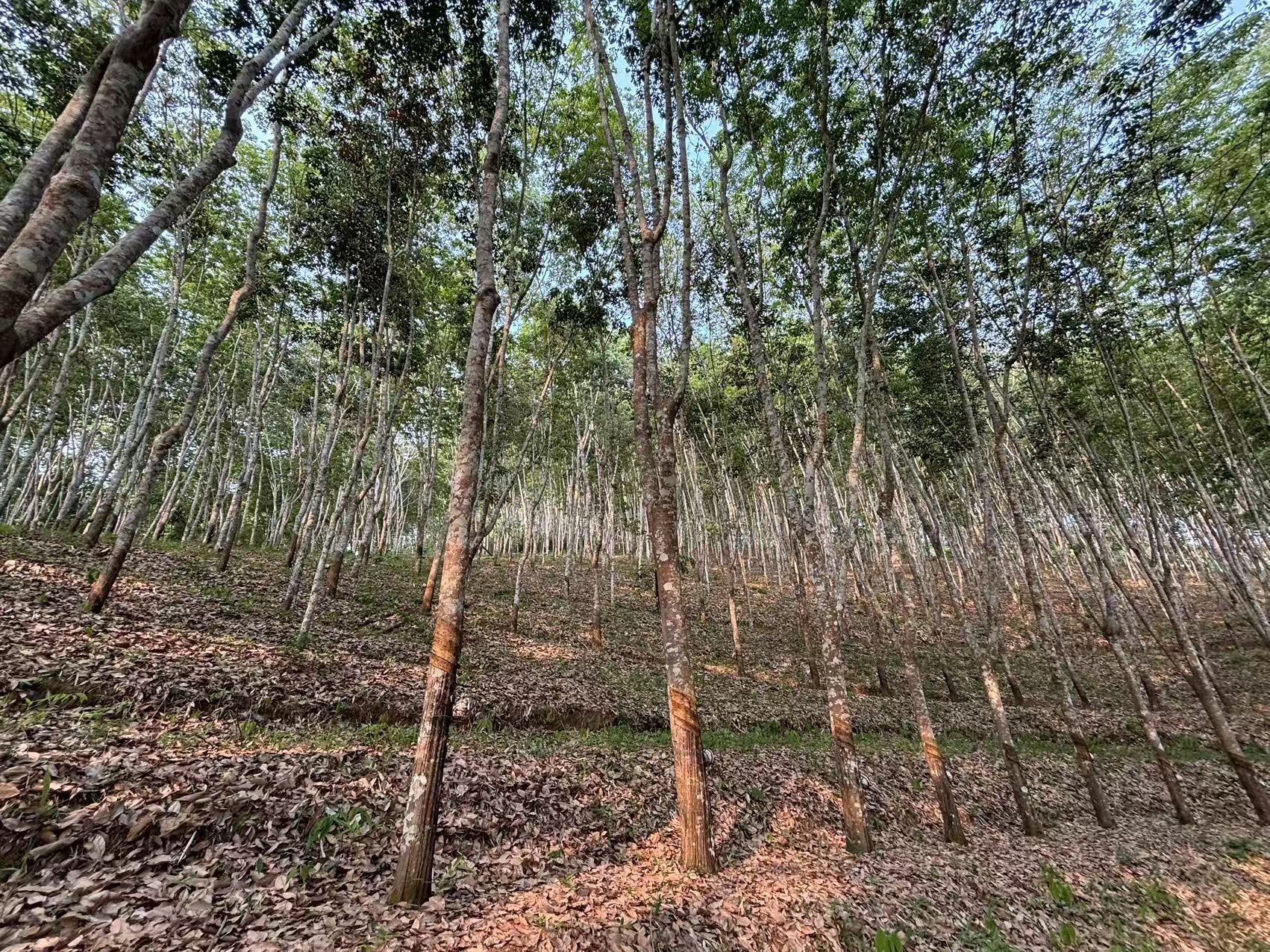
Rubber monoculture. (Image by CHEN Chunfeng)
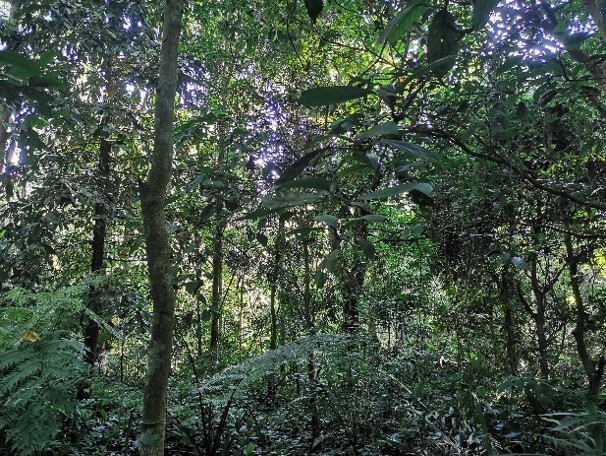
Nearly natural rainforests. (Image by CHEN Chunfeng)
