
Newsroom


The Max Planck–Chinese Academy of Sciences (CAS) Joint Center for Synthetic Biochemistry was officially inaugurated on April 18 at the CAS Shenzhen Institute of Advanced Technology (SIAT). This landmark center represents the first dedicated collaborative research initiative between the Max Planck Society (MPG) and CAS focusing specifically on synthetic biology.
Building on a robust partnership spanning five decades since 1974, the new center signifies a strategic deepening of cooperation between the two leading scientific institutions. An agreement to establish the center was formalized on April 13th.
Jointly hosted and managed by the Max Planck Institute for Terrestrial Microbiology (MPI-TM) and SIAT, the center aims to become a premier international platform for academic and industrial collaboration in synthetic biochemistry.
The center will focus on harnessing the immense potential of microorganism-derived natural products. Its investigations will target applications across crucial sectors, including medicine, plant protection, and biomanufacturing.
It will draw on Shenzhen's cutting-edge synthetic biology infrastructure, which supports automated cultivation, high-throughput analysis, and genetic engineering of microorganisms such as bacteria, algae, and fungi. The facility is equipped to characterize the metabolites produced, elucidate their molecular structures, and generate standardized datasets vital for further experimentation and development.
LIU Weidong, Director of the Bureau of International Cooperation, CAS, said the new joint center marks solid step in the 52‑year CAS‑MPG partnership. It will target synthetic biology frontiers, focus on microbial metabolism and biosynthesis, and drive basic research toward applications that support biomanufacturing and sustainable development.
LIU Chenli, Director of SIAT and Co-Director of the new center, described the launch as a significant milestone for SIAT's role in global innovation. "The center will foster bilateral collaboration, advance major scientific initiatives, and support the development of early-career researchers," Liu said. "It is envisioned as a world-class collaborative platform where scientists can work together on innovative research to address shared challenges in synthetic biology and biomanufacturing."
Prof. Patrick Cramer, President of the Max Planck Society, noted that the Shenzhen's synthetic biology infrastructure is striking in both its scale and its technological sophistication. "I hope this new center will become a vivid example of the very best in Sino-German scientific cooperation—a place where outstanding science thrives and young researchers flourish," said Prof. Cramer.
The establishment of this joint center further solidifies Shenzhen's reputation as a burgeoning global hub for innovation and technology. It also reinforces the deep commitment of both the Max Planck Society and CAS to fostering international scientific exchange and addressing global challenges through collaborative research.
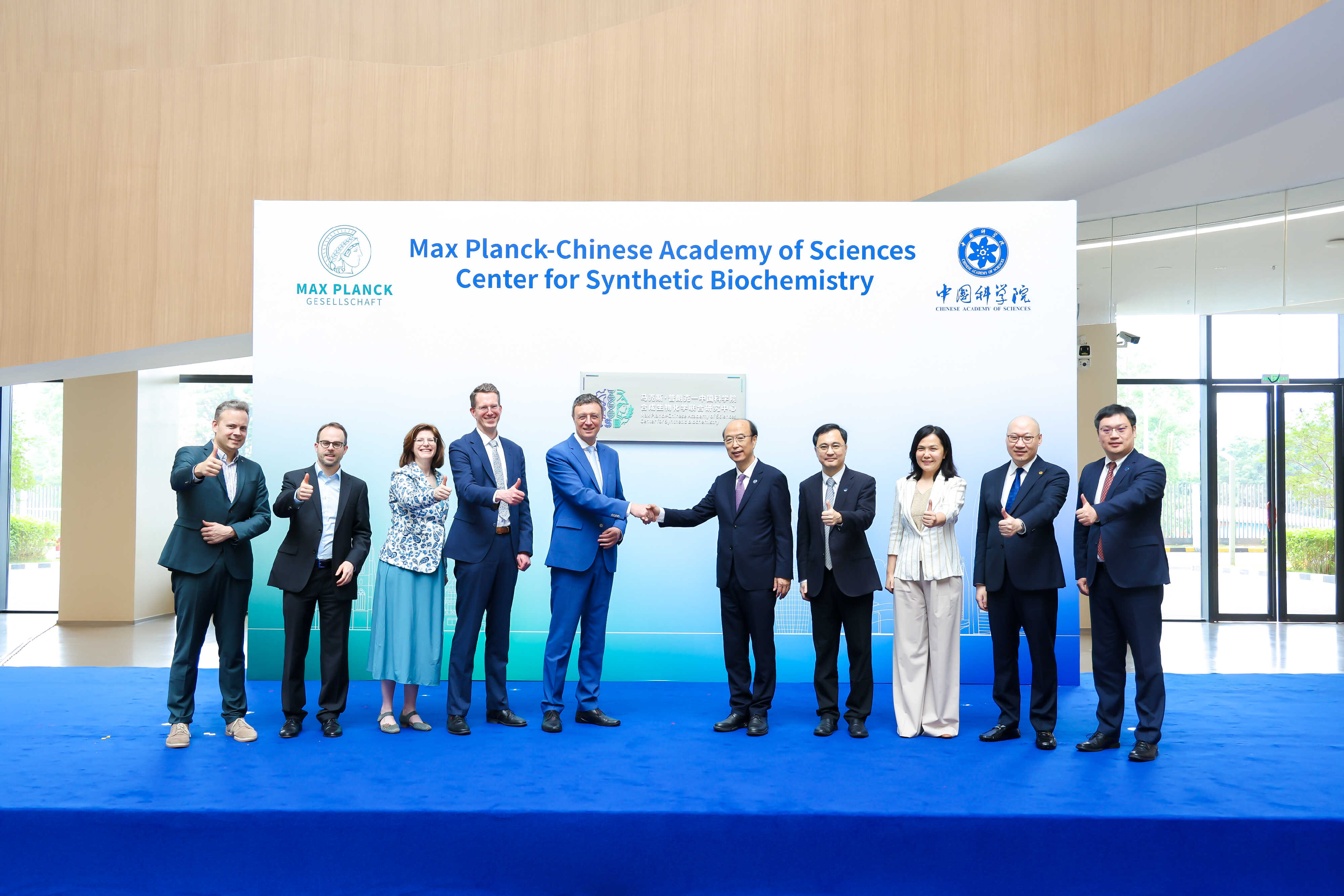
Inauguration ceremony of the Max Planck-Chinese Academy of Sciences Center for Synthetic Biochemistry. (Image by SIAT)
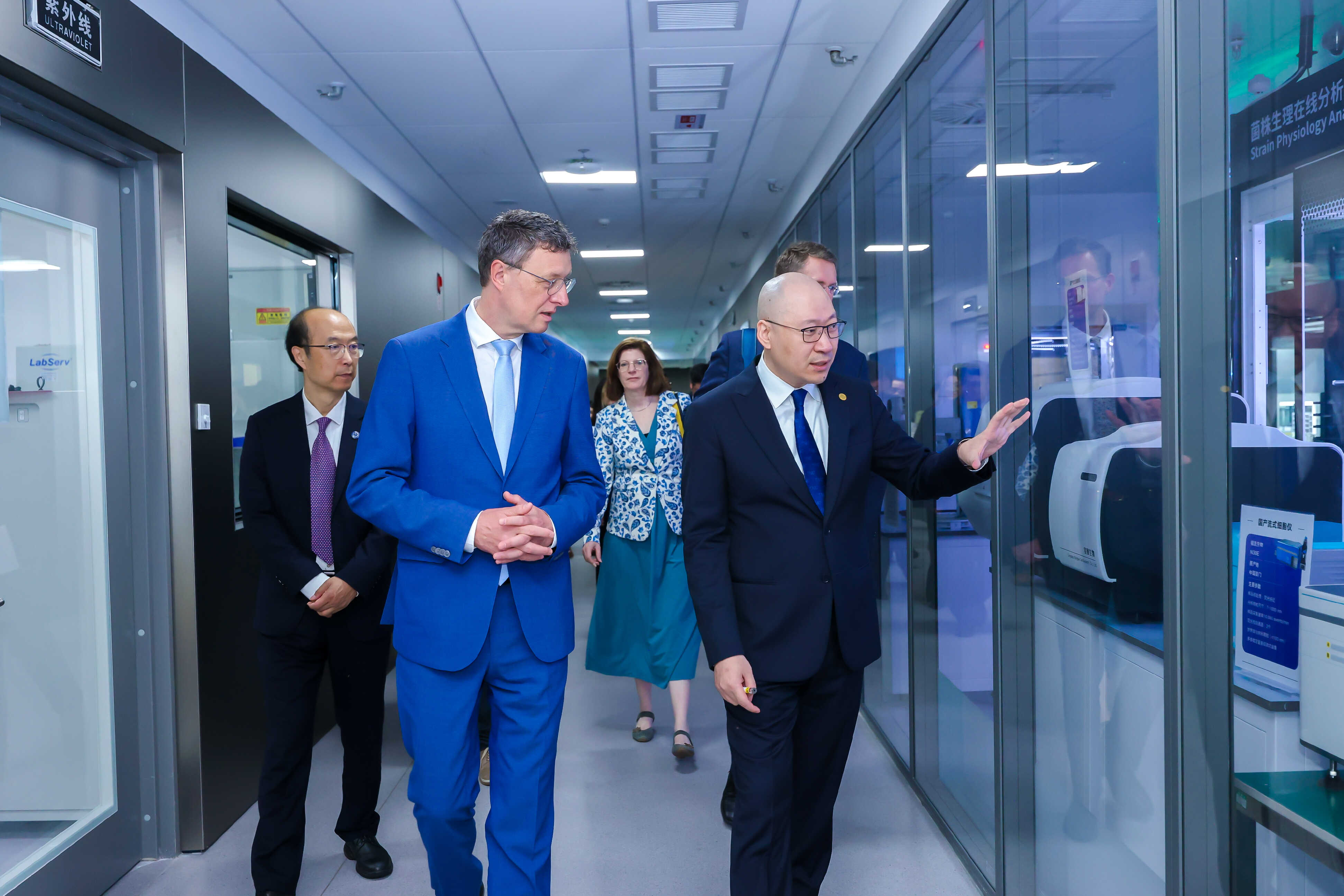
Researchers visit The Shenzhen Synthetic Biology Infrastructure. (Image by SIAT)

