Newsroom


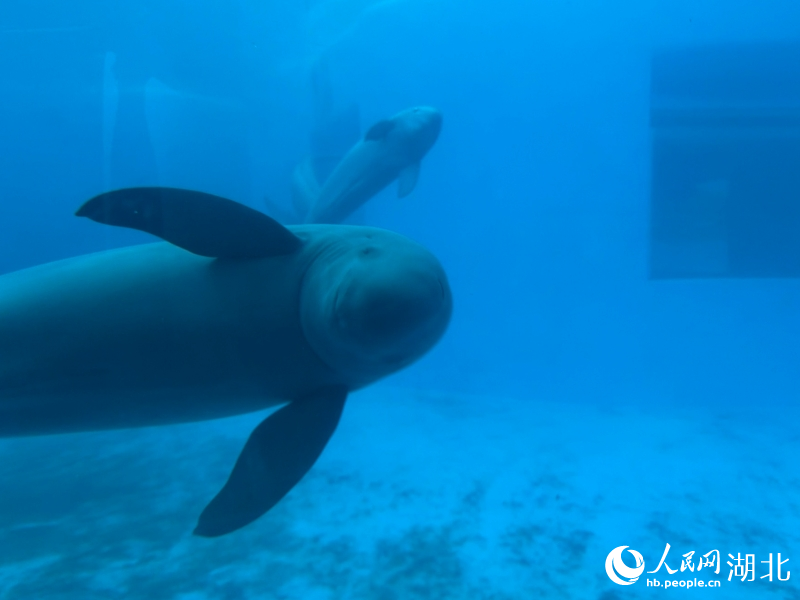
Dr. Ding Wang has dedicated his life to protecting endangered freshwater species including the Yangtze finless porpoise.
Global Humane Society, the international brand of American Humane Society, has awarded Dr. Ding Wang, Professor, Institute of Hydrobiology Chinese Academy of Sciences, with the 2026 Wolfgang Kiessling International Prize for Species Conservation. This award was created in honor of Wolfgang F. Kiessling, the founder of Loro Parque and a global leader in conservation.
Global Humane Society’s Wolfgang Kiessling International Prize for Species Conservation recognizes leading conservation scientists who are making significant changes in the fields of conservation and species preservation. With the future of up to one million species at risk, it is critical that we celebrate and support animal conservationists who are diligently working to save them.
For more than four decades, Dr. Wang has been a leading force in freshwater cetacean conservation in China, dedicating his career to protecting the Yangtze finless porpoise after the baiji’s functional extinction in 2007. Through his pioneering and highly influential conservation efforts, he reversed the decline of the wild Yangtze finless porpoise population, increasing it by 40 percent to 1,426 individuals by 2025. This achievement represents the world’s only successful recovery of a critically endangered small cetacean population.
“The Yangtze lost one cetacean on our watch. Dr. Ding Wang made certain it would not lose a second,” said Dr. Robin Ganzert, President and CEO of Global Humane Society. “He reversed a decline that scientists had called irreversible, built a world-class conservation program from the ground up, and trained the researchers who will carry that work forward long after him. Global Humane Society established this prize to honor Wolfgang Kiessling’s conservation legacy and to recognize those confronting the biodiversity crisis head-on, people who refuse to accept that a species is beyond saving. No one embodies that conviction more than Dr. Wang, and no one is more deserving of this year’s recognition.”
In addition, Dr. Wang established a breeding program that now supports 13 porpoises, providing a vital platform for scientific research, conservation innovation, and public education. He also built China’s first multidisciplinary cetacean conservation team, mentoring more than 100 graduate students and cultivating the next generation of conservation leaders. Building on this success, Dr. Wang has helped transfer and adapt these conservation strategies to support endangered river dolphin populations in Cambodia and Bangladesh.
“Dr. Wang’s dedication to the Yangtze Finless Porpoise over so many years is an example of what perseverance in conservation can achieve,” said Mr. Wolfgang Kiessling. “For me, this prize is about the recipients and ensuring their work is seen, recognized and supported.”
Alongside the title of Winner of the 2026 Kiessling Prize, Dr. Ding Wang is awarded with an $80,000 grant to continue to expand wild release programs of the finless porpoise and develop the future of freshwater cetaceans through research and education across China and Southeast Asia.
“It is my great honor to receive the 2026 Wolfgang Kiessling International Prize for Species Conservation,” said Dr. Ding Wang. “I also wish to congratulate all the other finalists; you have accomplished truly remarkable work.”
The following conservation leaders were selected as the finalists for the 2026 Wolfgang Kiessling International Prize for Species Conservation:
Néstor Correa, Founder & President, Panamerican Conservation Association
Dr. Yadvendradev V. Jhala, Senior Scientist with the Indian National Science Academy at India’s National Centre for Biological Science
Erica Pacífico, Specialist Professor at University of Campinas, UNICAMP
Dr. Jonah Ratsimbazafy, President, GERP Madagascar
Kerri Wolter, Founder and Chief Executive Officer of Vulpro
###
About the Award:
The Wolfgang Kiessling International Prize for Species Conservation was created to shine an international light on those who achieve significant positive change in the field of conservation practice, theory, and research. The Wolfgang Kiessling International Prize committee is led by Christoph Kiessling, Cybell Kiessling, Dr. Javier Almunia, Dr. Robin Ganzert, Brad Andrews, Dr. Martin Böye, Dr. Jon Paul Rodríguez and Rafael Zamora. Previous winners of the prestigious award have been Kathleen Dudzinski, Director and Founder of the Dolphin Communication Project and Managing Editor of Aquatic Mammals journal, Arnaud Desbiez, President and Founder of the Wild Animal Conservation Institute (ICAS) in Brazil, Professor Theo B. Pagel, CEO of the Cologne Zoo in Germany, Dr. Jon Paul Rodríguez, former Chair of the IUCN Species Survival Commission.
About Wolfgang Kiessling and Loro Parque:
Wolfgang Kiessling is a world-renowned conservationist and founder of Loro Parque, one of the most well-respected zoological institutions in the world, named twice “#1 Zoo of the World” by TripAdvisor, and known for the excellence of its facilities and its incredible work to save species on the brink of extinction. Up until today, Loro Parque Fundación has saved 12 parrot species from extinction. Kiessling was awarded the Gold Medal of the bird journal Gefiederte Welt for the first breeding of the blue-throated macaw and was honored with the Gold Medal from the Government of the Canary Islands, the Gold Medal from the Government of Spain, named “Adoptive Son of Tenerife” by the Island Council as well as the Town of Puerto de la Cruz, and was also honored with Spain’s highest distinction: the Principe Felipe Award for Business Excellence.
Founded in 1972 by Kiessling, Loro Parque was initially created as a paradise for parrots and began its journey with only 150 parrots. The park, located on the island of Tenerife in Spain’s Canary Islands, now has more than 4,000 specimens of 350 different species and subspecies of parrots, demonstrating its outstanding success in boosting the parrot population. Loro Parque is also home to flamingos, cranes, penguins, and swans, as well as many species of mammals and marine life. As billions of human beings exhaust the world’s resources, Loro Parque plays a critical role in education, science, and conservation. In 2017, Loro Parque become the first zoo in Europe to receive Global Humane Certification, reinforcing its recognition as a global leader in animal welfare.
About Global Humane Society:
Global Humane Society is the international brand of American Humane Society, which is the United States’ first national humane organization and the world’s largest certifier of animal welfare, helping to verify the humane treatment of more than one billion animals across the globe each year. American Humane Society has been at the forefront of virtually every major advancement in the humane movement to rescue, care for and protect animals. For more information or to support our life-changing work, please visit www.AmericanHumane.org, follow us on Facebook, X and Instagram and subscribe to our channel on YouTube for the latest breaking news and features about the animals with whom we share our Earth.
###
(Global Humane Society)