
A research team led by Prof. YIN Yulong from Institute of Subtropical Agriculture has demonstrated that dietary supplementation with glutamate and aspartate protects piglets from oxidative stress. This investigation has widen the knowledge that glutamate and aspartate can be used as nutritional supplements to protect human and animals from oxidative stress, suggesting that both glutamate and aspartate hold great promise in the nutrition and health of animals and human.
Researchers at the Institute of Modern Physics (IMP), Chinese Academy of Sciences have observed two new neutron-deficient isotopes 216U and 215U on the gas-filled recoil separator, SHANS (Spectrometer for Heavy Atoms and Nuclear Structure). The discovery of new isotopes is the first necessary step to explore and understand new nuclei. Overall about 3200 different nuclides have been discovered so far (2014), most of?which are synthesized in the laboratory beyond the 339 naturally occurring nuclides.
Dr. HE Zuhua and his colleagues from Institute of Plant Physiology and Ecology, Shanghai Institutes for Biological Sciences, with collaboration with other groups, identified that a major Arabidopsis QTL qHat2-1 confers thermotolerance to extreme heat, and this locus also confers disease resistance to pathogens.
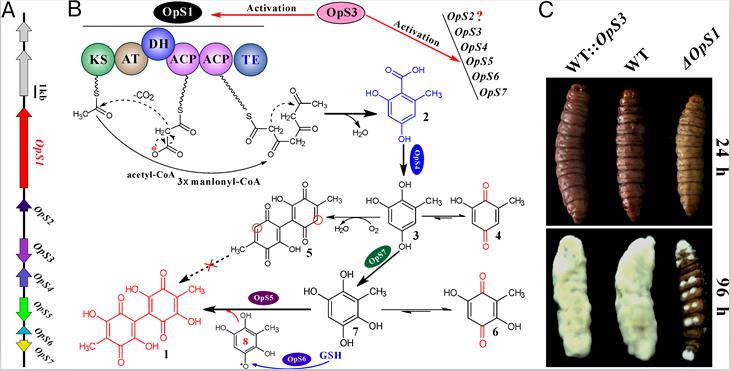
Prof. WANG Chengshu’s group at the Institute of Plant and Physiology and Ecology, Shanghai Institutes for Biological Sciences, CAS, unveiled the biosynthetic machinery of oosporein in fungi. The polyketide synthase (PKS) gene cluster includes seven genes for oosporein biosynthesis. The PKS OpS1 produces orsellinic acid that is hydroxylated to 6-methyl-benzenetriol by the hydroxylase OpS4.
Researchers in YANG Weicai’s group from the Institute of Genetics and Developmental Biology, Chinese Academy of Sciences, collaborated with researchers in CHAI Jijie’s group in Tsinghua University, revealed the PSK activation mechanism. Biochemical, genetic and structural evidence revealed that PSK binding on the island domain of PSKR1 enhanced PSKR heterodimerization with the somatic embryogenesis receptor-like kinases (SERKs). PSK was not directly involved in PSKR–SERK interaction but stabilized PSKR island domain for recruitment of a SERK.
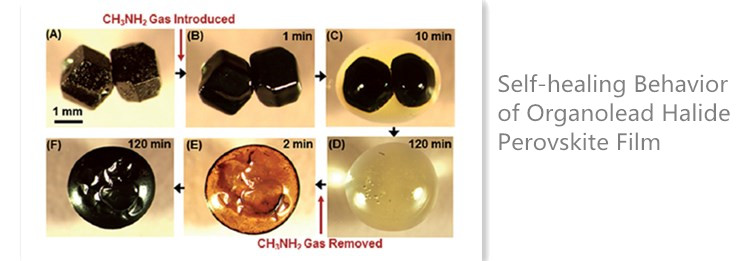
A group led by Prof. CUI Guanglei at Qingdao Institute of Bioenergy and Bioprocess Technology successfully developed a room-temperature, ultrafast methylamine-induced defect-healing (MIDH) technology to gain better control over the crystallization of perovskite from solution.

86-10-68597521 (day)
86-10-68597289 (night)

52 Sanlihe Rd., Xicheng District,
Beijing, China (100864)
Copyright © 2002 - Chinese Academy of Sciences


