Newsroom


The sixth International Forum on Big Data for Sustainable Development (FBAS 2026) concluded in Beijing on Sept. 8 with the adoption of the Beijing Initiative on Digital Science and AI for Global Sustainable Development.
The initiative sets out 12 priorities across five areas for using big data, Earth observation and artificial intelligence to advance the United Nations 2030 Agenda for Sustainable Development. It calls on governments, U.N. agencies, research institutions and other stakeholders to strengthen open, inclusive and science-based cooperation.
Hosted by the Chinese Academy of Sciences (CAS), the forum was co-organized by the International Research Center of Big Data for Sustainable Development Goals (CBAS) and the Aerospace Information Research Institute (AIRCAS). Held from Sept. 6 to 8, the event marked CBAS’s fifth anniversary and brought together nearly 700 participants from 50 countries and 19 international organizations.
Csaba Kőrösi, chair of the FBAS 2026 Scientific Committee and a CBAS Fellow, presented the initiative at the closing session. It builds on the 2024 Beijing Declaration on digital technology cooperation.
Under the theme “Inheriting the Future: Innovations in Digital Intelligence for Global Sustainable Development,” the forum examined how digital technologies can support practical sustainable-development action. Speakers highlighted the importance of scientific cooperation, equitable access to digital technologies, data-informed decision-making, stronger risk early-warning systems and support for developing countries and vulnerable communities.
In his opening keynote address, GUO Huadong, forum chairman and director-general of CBAS, reviewed the center’s work over the past five years. He highlighted its development of Sustainable Development Goal data products, monitoring and assessment methods, international think tank platforms, and capacity-building programs for African countries and small island developing states.
GUO also introduced the Digital Sustainable Development Science Programme, initiated by CBAS. Its network connects 59 institutions in 35 countries to advance the use of Big Earth Data and AI for sustainable development.
The forum included eight keynote sessions, four special sessions and 32 parallel sessions. Topics ranged from international partnerships for digital sustainable development and AI-enabled innovation to Earth observation for water security and youth participation.
Two books on big data-based SDG monitoring and assessment and regional applications were launched during the forum. They present methodologies and case studies to support sustainable-development efforts.
At the 2026 CBAS Fellow Investiture Ceremony, three international scholars were recognized for contributions to big data research and technological innovation for sustainable development. Their appointments bring the total number of CBAS Fellows to 19.
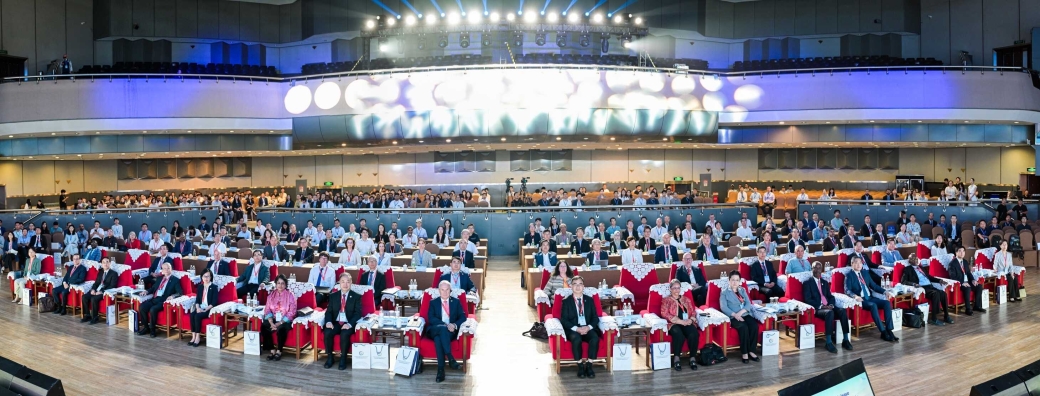
A scene of the forum. (Image by AIRCAS)