
Newsroom


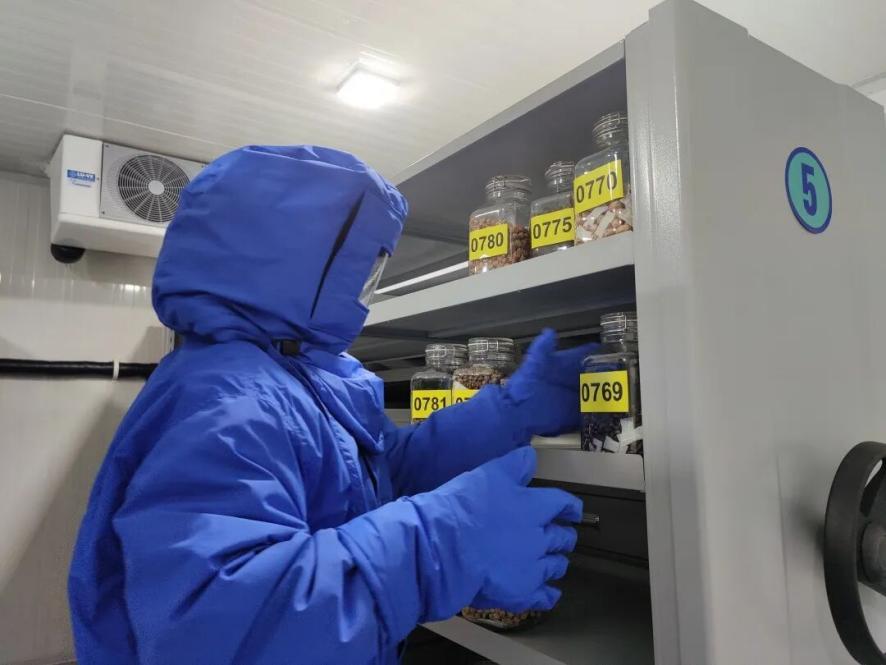
A staff member of the National Wild Plant Germplasm Resource Center for Chenshan Botanical Garden puts seeds in cold storage.
As winter blankets Shanghai Chenshan Botanical Garden, the vibrant landscape belies the scientific milestone it houses: a 30-square-meter "vault of life" -- the seed bank of the National Wild Plant Germplasm Resource Center for Chenshan Botanical Garden (hereafter referred to as the Chenshan Center).
The Center recently announced a significant achievement: it now holds over 100 million viable seeds, representing 1,950 wild plant species from 159 families and 785 genera, including 323 species endemic to China and 68 rare and endangered species.
Preserving genetic wealth
"This milestone reflects the establishment of a comprehensive collection network and collaboration system, enabling us to preserve extensive genetic resources essential for future species restoration, revitalization, and scientific research," said Ge Binjie, curator of the Shanghai Chenshan Herbarium. "These seeds are our 'life insurance' for the future."
The creation of such a seed repository is critical as global biodiversity faces mounting threats. "Extinction results in the irreversible loss of unique genetic resources, which are potentially key to future medical or environmental solutions," Ge explained.
Most seeds undergo desiccation and cold storage for long-term preservation. Ex-situ germplasm banks, such as the Chenshan Center, complement in-situ conservation strategies, providing better safeguard for biodiversity.
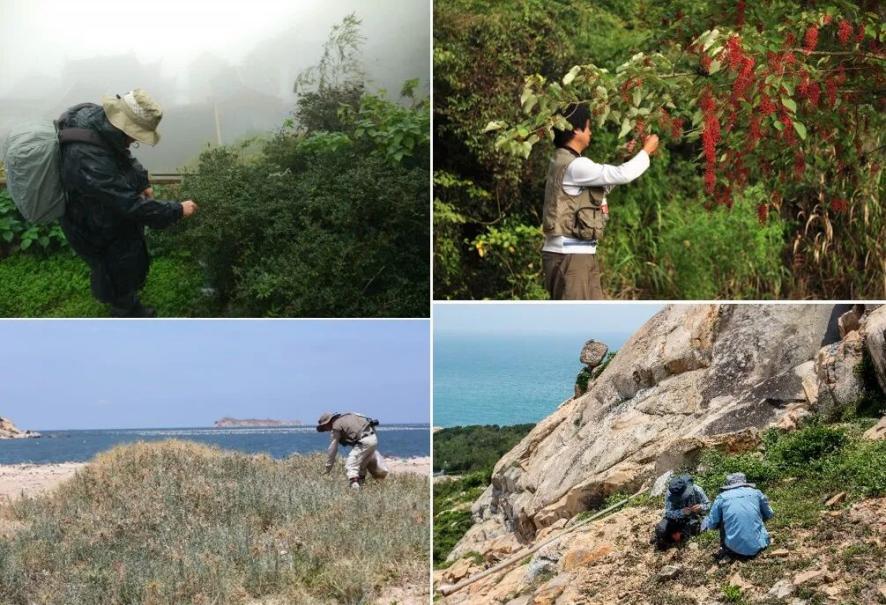
Staff members of the National Wild Plant Germplasm Resource Center for Chenshan Botanical Garden collect seeds across China.
"When wild populations decline or vanish, these meticulously cataloged 'dormant' seeds can be reactivated," said Zhong Xin, head of the Chenshan Center. Wild germplasm is also instrumental in scientific research, from anti-cancer drug discovery to the development of stress-resistance genes and salt-tolerant varieties.
"These seeds are the result of eight years of fieldwork by our teams, who traversed 17 provinces, 45 prefectures, and 100 counties," Ge noted. Building a seed bank begins with rigorous fieldwork to collect plant samples from remote and often challenging terrains.
In the summer of 2023, deep in the primeval forests of Yigong township in Bomi county, Nyingchi, southwest China's Xizang autonomous region, Zhong and his colleagues climbed a 101.2-meter Tibetan cypress to collect seeds and document the epiphytes thriving on its canopy.
Suspended high above the forest floor, Zhong described his awe: "Fear gave way to fascination as we observed the micro-ecosystems formed by orchids, mosses, and lichens -- each layer of bark revealing a unique world." The mission yielded nearly 5,000 seeds from the Tibetan cypress.
From collection to conservation
Upon arrival at the Chenshan Center, seeds undergo a meticulous process. Technicians clean, dry, count, and test their viability. Upon arrival at the Chenshan Center, seeds undergo a meticulous process. including pressed vouchers, field data, DNA samples, and photographs, to ensure precise identification and traceability.
Seeds meeting the required standards are then sealed within glass containers or specialized aluminum foil packets. Each is assigned a unique QR-coded identification "passport" before being placed into secure cold storage rooms maintained at minus 20 degrees Celsius. Under these carefully controlled, dry, low-temperature conditions, the seeds enter a state of suspended animation, capable of remaining viable for decades, potentially even centuries.
However, long-term storage is not the ultimate objective. The Chenshan Center aims to revive these dormant samples to support research in seed ecology, population genetics, and conservation biology, contributing to long-term biodiversity protection.
At a dedicated nursery within Shanghai Chenshan Botanical Garden, maintained at approximately 20 degrees Celsius, researchers are cultivating a particularly special batch of seeds that returned from space aboard the Long March-2D rocket.
Space breeding leverages the unique environment of outer space to induce genetic variation, with the potential to develop new varieties with improved traits. The seeds sent by the Chenshan Center focus on ornamental and medicinal species such as hydrangea, salvia, and Salvia miltiorrhiza.
"If space breeding can extend the flowering period and enhance stress resistance of hydrangeas, it would offer new possibilities for urban landscaping. For medicinal plants like Salvia miltiorrhiza and motherwort, new varieties with higher concentrations of active compounds could support the development of treatments for cardiovascular and cerebrovascular conditions," Zhong said.
Today, the Chenshan Center's germplasm resources are available to institutions nationwide. Each year, numerous research institutions request seeds and DNA samples to support studies in plant systematics, biogeography, and ex-situ conservation.
Beyond research, these genetic resources play an important role in ecological restoration, wetland rehabilitation, and urban biodiversity enhancement. For example, Salvia zhangjiajieensis, a species newly identified by Chenshan researchers in 2019, has been successfully propagated from stored seeds for both wild population recovery and horticultural application. (People's Daily)
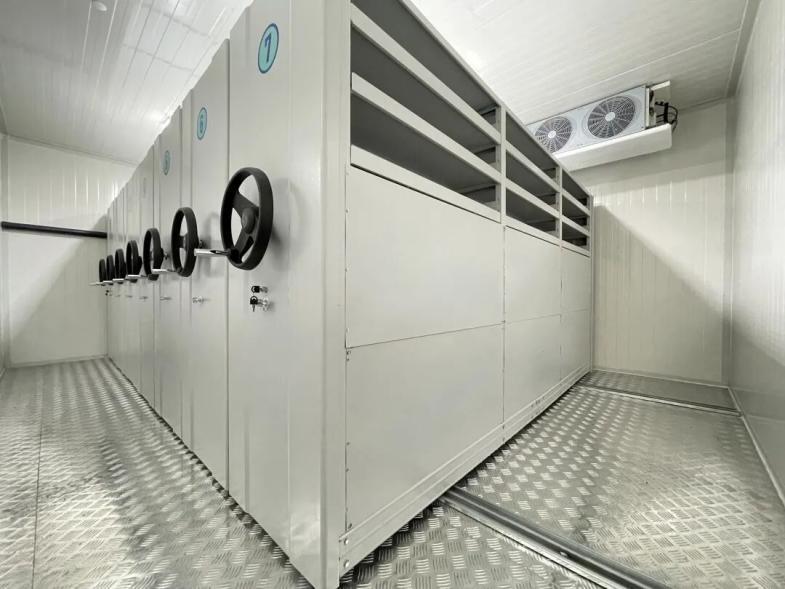
Photo shows cabinets in a cold storage for seeds at the National Wild Plant Germplasm Resource Center for Chenshan Botanical Garden. (Photos provided by Shanghai Chenshan Botanical Garden)


