Research


In order to understand and monitor alpine plants at risk from climate change and human activities at extreme high elevation, collectors from the Germplasm Bank of Wild Species (GBOWS) of the Kunming Institute of Botany, Chinese Academy of Sciences, conducted seed collecting expeditions to Mount Everest in 2021.
Five seed plant species were found around 6,200 m asl, and mature seeds of Solms-laubachia himalayensis and Saussurea gnaphalodes were collected and stored at GBOWS. The initial germination of Solms-laubachia himalayensis showed a 100% germination rate, and after eight months of cold storage at -20℃, the seed germination rate remains high.
Researchers will continue to work on these collections to understand the biological mechanisms involved in adapting to the extreme adverse environment.

Solms-laubachia himalayensis flourishing at 6,212 m asl. (Photo credit: GBOWS)

Recording Saussurea gnaphalodes at 6,221 m asl. (Photo credit: GBOWS)

Seeds of Solms-laubachia himalayensis (Photo credit: GBOWS)
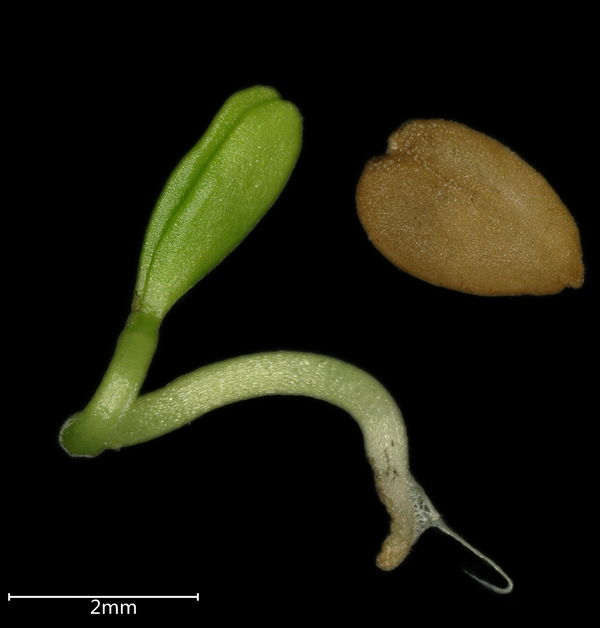
Seed germination of Solms-laubachia himalayensis. (Photo credit: GBOWS)