Newsroom


The genus Aspidistra, native to Asia's tropical and subtropical regions, is renowned for its resilience and shade tolerance. Often called "cast-iron plants," many species thrive in low-light environments, making them popular in horticulture.
Recently, researchers from the Xishuangbanna Tropical Botanical Garden (XTBG) of the Chinese Academy of Sciences, and the collaborators, identified a new species of Aspidistra (Asparagaceae) in the karst forests of Yunnan Province, China, highlighting the region’s extraordinary biodiversity. The study was published in Taiwania.
During a field survey of southeastern Yunnan in January 2025, researchers collected an unknown Aspidistra species in karst forest of Hekou County. After meticulous morphological comparisons with related species as well as the review of herbarium specimens and literature of Aspidistra species from southern China and the neighboring countries, they confirmed that the material represents a species new to science.
This new species is named Aspidistra lianhuatanensis to refer to the type locality in Lianhuatan Township, Hekou County, Yunnan Province.
Aspidistra lianhuatanensis is an evergreen perennial up to 50 cm tall, with elliptic leaves and solitary white or purple-spotted flowers. It stands out for its striking floral features, including a bell-shaped (campanulate) perigone with a purple interior and creamy white pollen. It differs from its closest relative, Aspidistra zhangii, in leaf width, flower size, and stigma structure.
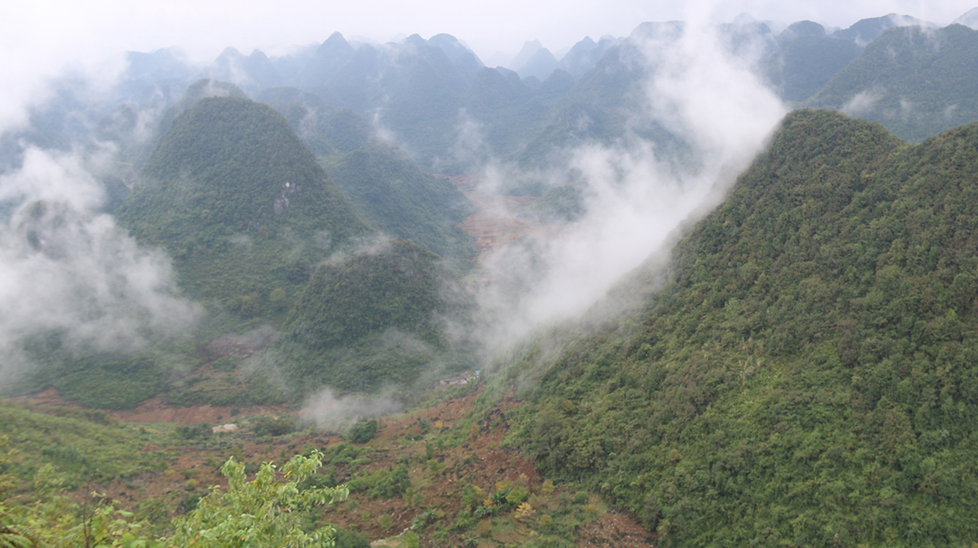
Aspidistra lianhuatanensis thrives in karst forests, a fragile ecosystem increasingly threatened by habitat loss. Currently, only one population of approximately 50 individuals has been documented in Hekou County.
Researchers considered the conservation status of the new species as as Data Deficient (DD) under IUCN criteria. They emphasized the urgent need for further field studies to evaluate its conservation status.
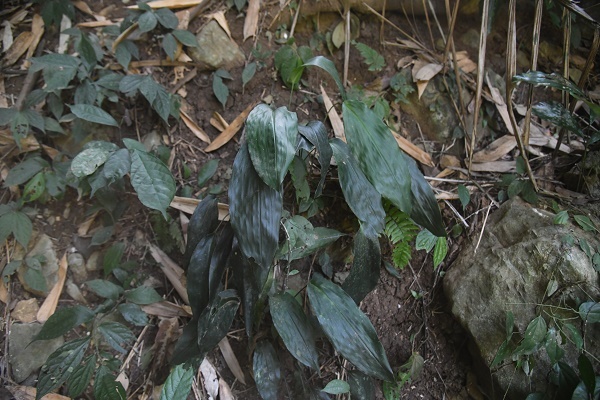
Aspidistra lianhuatanensis (Image by LI Renkun)