Newsroom


Chinese researchers have finally formally described a new fern species that has been hiding in plain sight for nearly 200 years. Named Drynaria lineatisora, the species was collected as early as the 19th century in Myanmar and Vietnam, but it was repeatedly misidentified as the widespread Drynaria coronans. Recent field studies by researchers from the Xishuangbanna Tropical Botanical Garden (XTBG) of the Chinese Academy of Sciences and their collaborators confirmed that it is indeed a distinct species.
They combined morphological analysis, scanning electron microscopy of spores and scales, and molecular phylogenetics to confirm its distinct status.
The study was published in Phytotaxa.
Drynaria lineatisora can be easily distinguished from its close relative by its sori, or the clusters of spore-producing structures on the underside of the fronds. While D. coronans bears circular or short linear sori that occasionally merge at maturity, the new species consistently produces elongate linear, continuous sori that can reach up to 20 millimeters in length. D. lineatisora has dark brown, lanceolate scales with shortly spinulose-denticulate margins, whereas D. coronans has pale yellow, long-linear scales with long-ciliate margins.
Scanning electron microscopy further revealed that the spores of the new species are densely covered with fine, sharp spines about one micrometer long. This is in striking contrast to the smooth spore surfaces of D. coronans.
The new species occupies a distinct ecological niche. It is restricted to relatively high-altitude mountains (840–2,400 meters) along the southern Himalayan margin. Its known range includes Medog County in Xizang, China, where the type specimen was collected at approximately 3,700 feet in a tropical broadleaf forest. It grows epiphytically on tree trunks. The new species is also found in northern Myanmar and northern Vietnam.
DNA analysis of 84 chloroplast genes confirmed that D. lineatisora is genetically distinct from Drynaria coronans and belongs to a different evolutionary lineage.
When asked why the species was misidentified for so long, the researchers pointed to several factors. Early specimens were scarce and often lacked rhizomes, which made it impossible to examine scale morphology. Additionally, some D. coronans specimens exhibit fused sori that create intermediate forms, causing confusion. Many researchers also relied on limited herbarium material rather than conducting field surveys to observe population-level variation.
"Although we were unable to conduct field surveys of other recorded populations, our extensive fieldwork across several townships in Medog County has now confirmed that hundreds of individuals in this region consistently exhibit the elongate-linear sori characteristic of D. lineatisora," said JIANG Liju of XTBG. "This finding supports the independence of the species."
This discovery adds an important new branch to the fern family tree and highlights the significant biodiversity that may remain hidden in remote mountain regions.

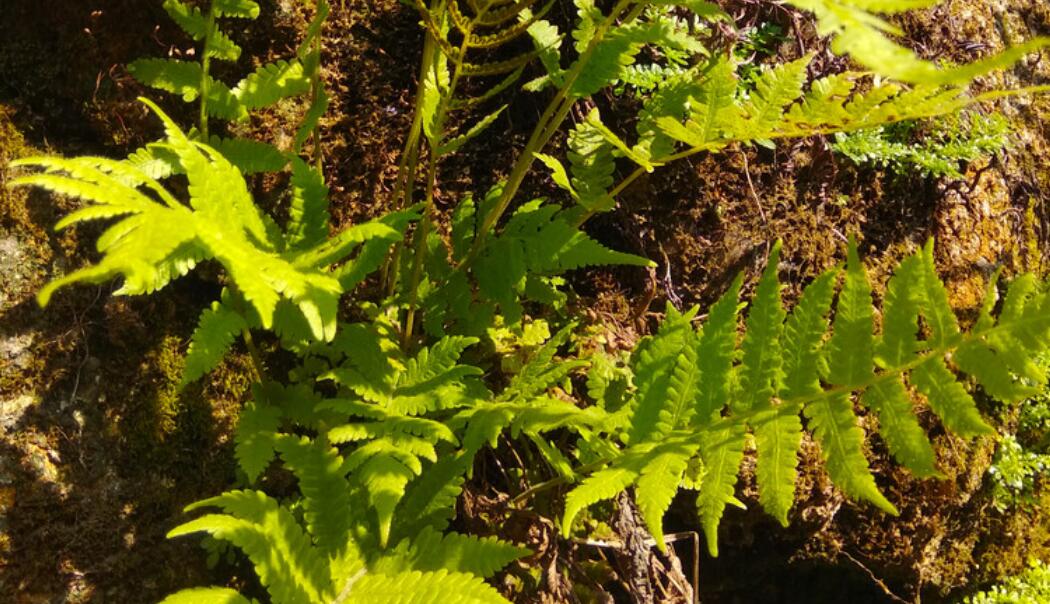
Drynaria lineatisora (Image by JIANG Liju)

Drynaria lineatisora (Image by JIANG Liju)