
Newsroom


Botanists have described a new Ophiopogon species from the Yunnan Wenshan National Nature Reserve in southeastern China. They named it Ophiopogon longiscapus for its unusually long flowering stalk, or scape. The species grows in subtropical evergreen broad-leaved forests at elevations of 1,500–2,700 meters.
Researchers from the Xishuangbanna Tropical Botanical Garden (XTBG) of the Chinese Academy of Sciences and Southwest Forestry University collected the plant during floristic surveys in 2025 and 2026. After comparing it with herbarium specimens and taxonomic literature, they confirmed that it was new to science. The species was published in Phytotaxa.
Ophiopogon, commonly known as mondo grass or lilyturf, is a genus of evergreen perennial plants in the Asparagaceae family. It comprises approximately 85 species distributed from the Himalayas and Indochina through southern China to Japan.
Ophiopogon longiscapus is a terrestrial, perennial herb with very long, grass-like leaves, and scapes distinctly longer than leaves. It is morphologically similar to Ophiopogon longifolius in having grass-like, relatively long leaves with minutely serrulate margins. However, it can be readily distinguished by several striking features: its slender, wiry roots that lack the fusiform tubers typical of its relative; its thick, branched, densely noded rhizome; a flowering stem, or scape, that exceeds the leaves in length; and a relatively short inflorescence occupying only one-quarter to one-third of the entire scape.
The flowers are notably large, with narrowly elliptic perianth lobes that are cream-white on the inside and pinkish-purple on the outside, spreading flat when in bloom. The anthers are yellowish-green.
The species is currently known only from the Yunnan Wenshan National Nature Reserve in southeastern Yunnan, China, where it grows in subtropical evergreen broad-leaved forests at elevations between 1,500 and 2,700 meters. "Although all known populations occur within protected areas, its population size and trends remain unclear. Following IUCN guidelines, we recommend the species be assessed as Data Deficient (DD)," said TAN Yunhong of XTBG.
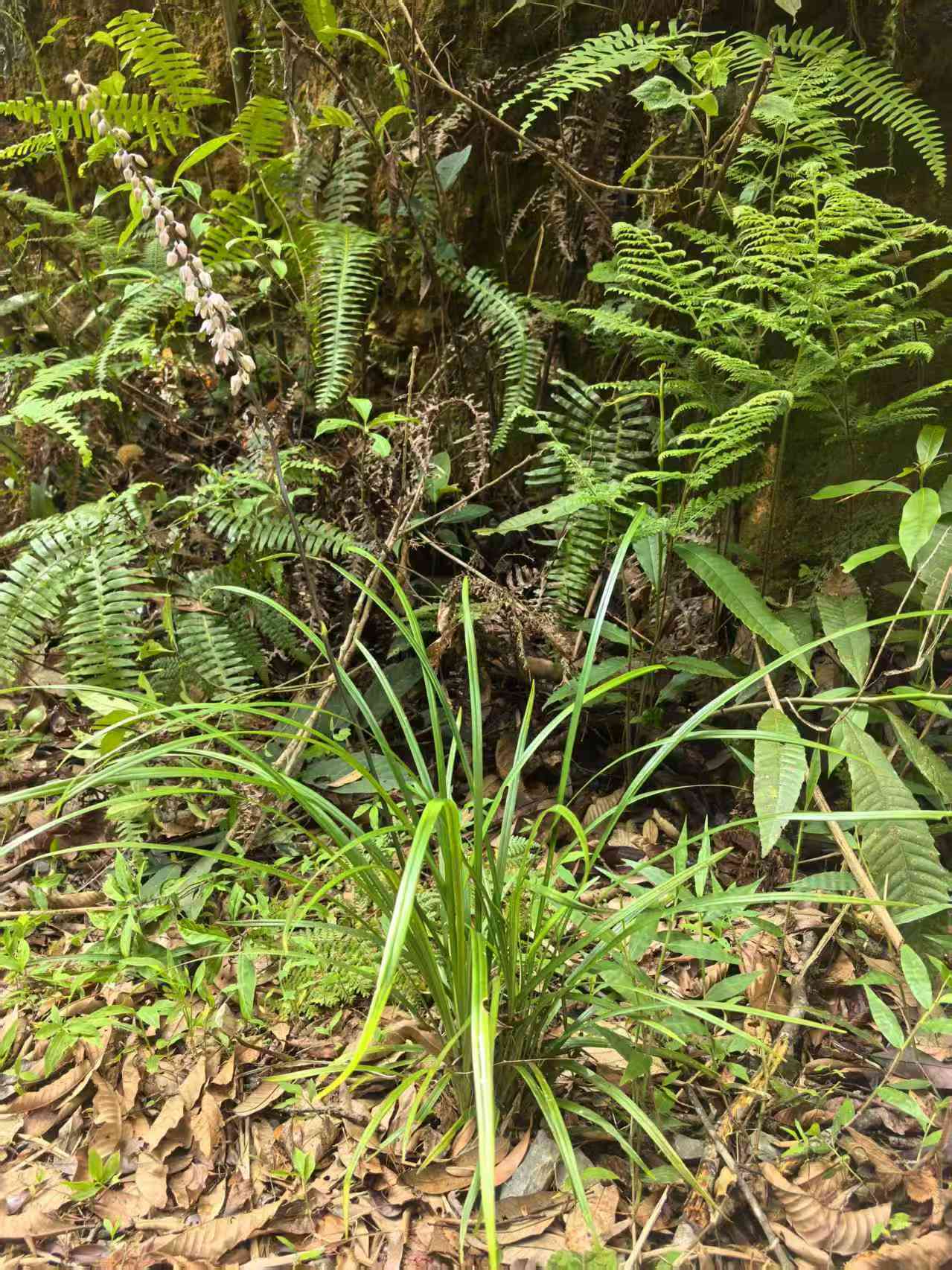
Habitat of Ophiopogon longiscapus. (Image by TAN Yunhong)
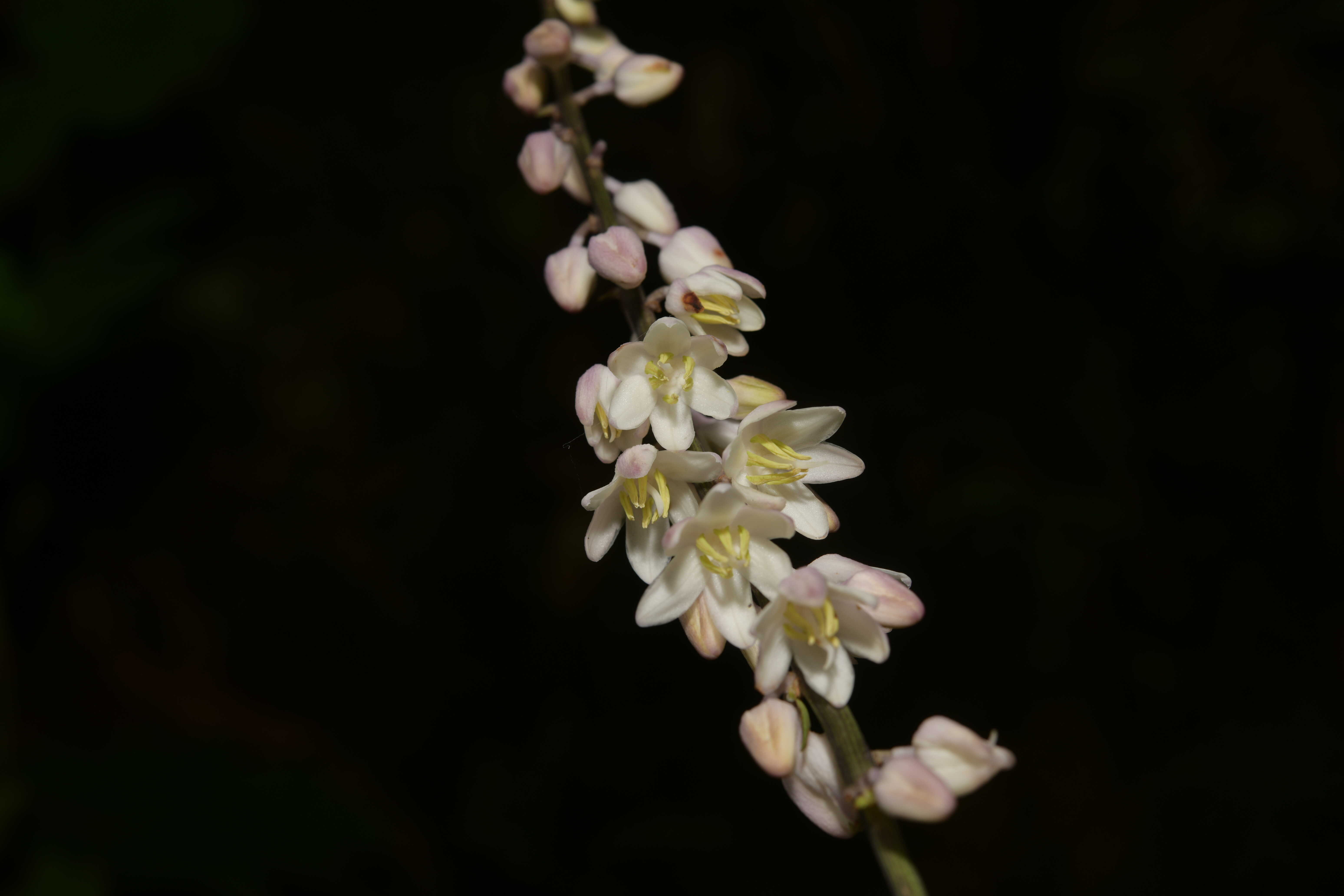
Flowers of Ophiopogon longiscapus. (Image by TAN Yunhong)
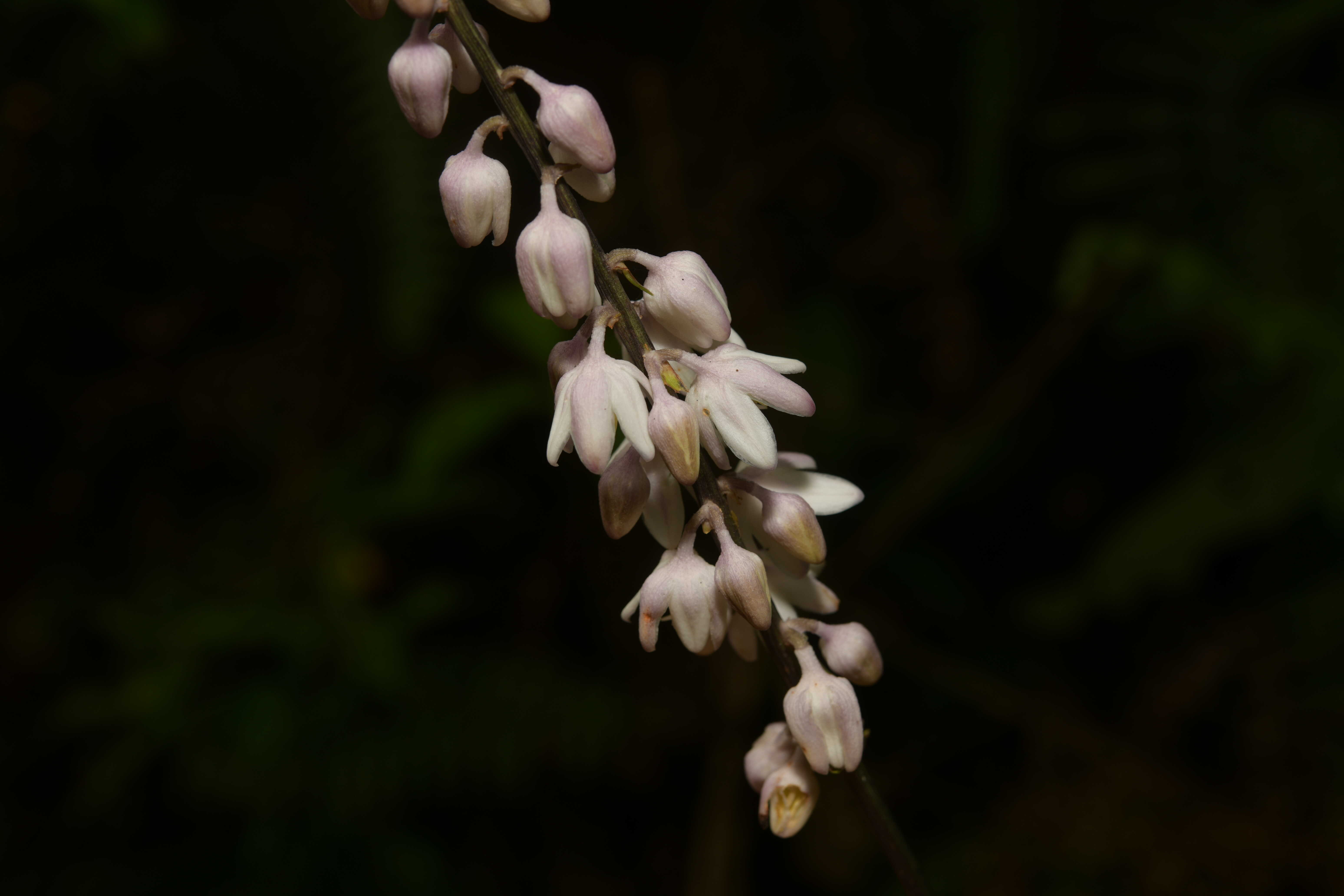
Flowers of Ophiopogon longiscapus. (Image by TAN Yunhong)


