
Newsroom


Desert dust can reach the lower stratosphere, according to a new study combining balloon measurements with satellite observations and atmospheric modeling over the northern Tibetan Plateau.
Published in Advances in Atmospheric Sciences, the study compared balloon measurements taken before and during an April 2023 dust event over Golmud to investigate changes in the vertical distribution of aerosol particles.
The researchers also used satellite observations and reanalysis data to examine dust transport across the tropopause—the boundary between the troposphere and stratosphere.
The comparison revealed a general increase in the number concentrations of aerosol particles larger than 0.416 micrometers from near the surface to the lower stratosphere. Below five kilometers, their number concentrations were more than ten times their pre-event levels. The measurements were obtained using balloon-borne portable optical particle spectrometers.
To investigate the sources and transport pathways of the dust, the researchers used WRF-Chem simulations and HYSPLIT backward trajectory analysis. The analysis indicated that dust at three to five km came mainly from the nearby Taklamakan Desert, whereas dust at 12 to 13 km, near and above the tropopause, came mainly from the more distant Thar Desert.
The simulations helped explain how dust from the Thar Desert reached the northern Tibetan Plateau. Southwesterly winds transported dust from the Thar Desert to Golmud in about 30 hours. Large-scale upward motion associated with low-pressure troughs and jet streams, together with airflow forced upward over the plateau's high terrain, helped lift the dust above the tropopause.
Dust transported to the upper troposphere can act as ice-nucleating particles, influencing cirrus cloud formation and Earth's energy balance. The balloon profiles provide observational data for evaluating how well models reproduce the vertical distribution of particles during a dust event. Together with the analysis of dust sources and transport mechanisms, these data can support further research into the potential effects of dust on clouds and climate.
The observations were part of the Sounding Water Vapour, Ozone, and Particle (SWOP) program, which began in 2009. Led by BIAN Jianchun, the research team at the Institute of Atmospheric Physics of the Chinese Academy of Sciences used instrumented balloons to study atmospheric composition.
According to the researchers, an earlier balloon sounding at Golmud in March 2021 identified dust near and above the tropopause. Building on that finding, the April 2023 study examined changes between pre-event and event profiles and investigated the sources and transport pathways of the dust.
WANG Lan, a PhD student, is the study's first author. Atmospheric scientist LI Dan and senior engineer BAI Zhixuan are co-authors.
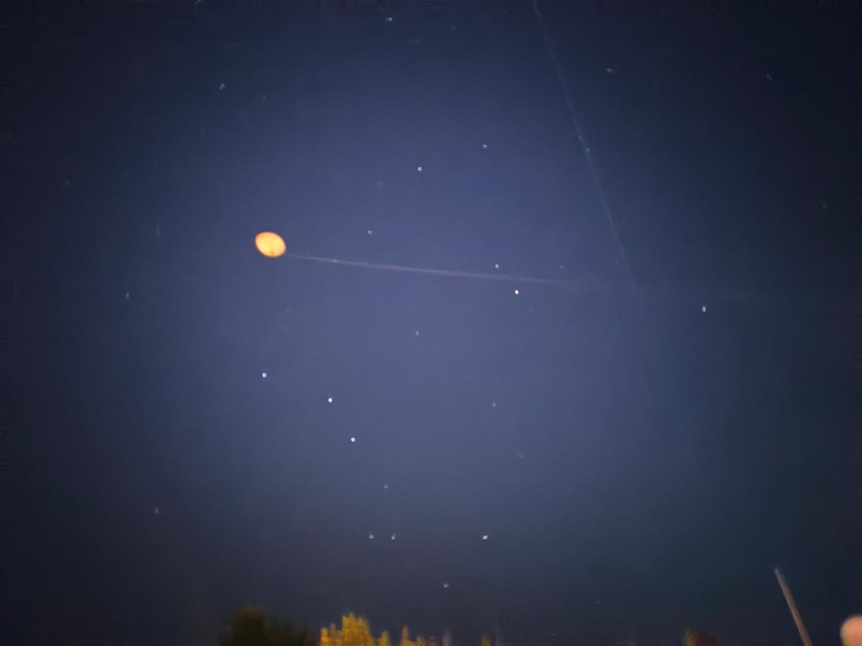
A balloon sounding at Golmud on the northern Tibetan Plateau. Measurements before and during an April 2023 dust event documented changes in aerosol concentrations from near the surface into the lower stratosphere. (Image by BAI Zhixuan)
