
Newsroom


Researchers at the Institute of Oceanology of the Chinese Academy of Sciences (IOCAS) have developed a new technique for polyploid breeding in Undaria pinnatifida, one of the world's most commercially important kelp species.
The study, led by Prof. SHAN Tifeng, was published in the Journal of Phycology on September 18.
Saccharina japonica and U. pinnatifida are the two most commercially important kelps in the world. However, continuous rising seawater temperatures and more frequent marine heatwaves are increasingly threatening the kelp cultivation industry, making it urgent to breed high-quality, heat-tolerant, stress-resistant, and widely adaptable kelp cultivars.
Polyploid breeding has rarely been applied to seaweeds. Previous studies have obtained diploid gametophytes from heterozygous sporophytes via apospory; however, the resulting gametophytes exhibit variable sex phenotypes, which makes precise crosses to generate triploids difficult.
To overcome this limitation, the researchers obtained a large number of diploid aposporous gametophytes from sporophytes of three origins: selfing of monoicous gametophytes, parthenogenesis of female gametophytes, and cross-fertilization.
The researchers generated triploid lines by crossing diploid and haploid gametophytes. They found six triploid lines with superior economic traits compared to the diploid control. Additionally, they obtained five tetraploid sporophyte lines via selfing or parthenogenesis of diploid gametophytes.
"We expanded the methods for generating diploid gametophytes with clear sex phenotypes and established the new technique for polyploid breeding in Undaria pinnatifida", said Prof. SHAN, corresponding author of the study. "This technique is also applicable to other kelp species because they have a similar life cycle."
The researchers have also established the largest germplasm stock culture collection of U. pinnatifida in China, maintaining over 2,000 gametophyte clonal lines. These valuable materials provide ample germplasm resources for triploid breeding of this species.
This study is of great significance for establishing a key polyploid breeding technology system for economically important kelps, laying a foundation for developing triploid cultivars with superior quality, stress tolerance, and wide adaptability.
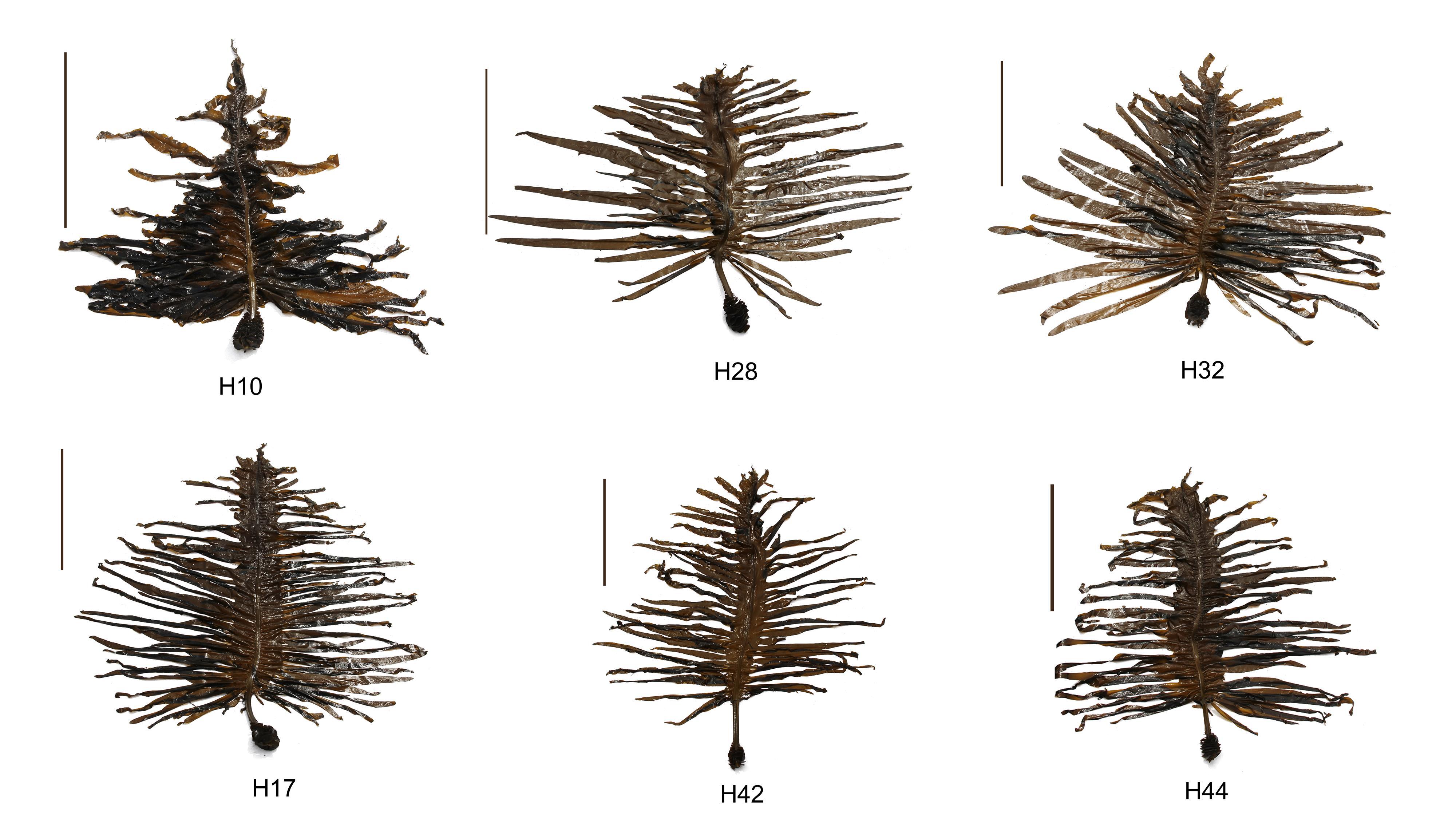
Morphology of triploid sporophytes. (Image by IOCAS)

