
Newsroom


Legumes, including beans and peas, play an important role in nutrient cycling and ecosystem function. While these plants are well known for their ability to fix atmospheric nitrogen, little is known about how the availability of phosphorus (P) shapes interactions among tropical legume species.
In a study published in Plant and Soil on August 4, researchers from the Xishuangbanna Tropical Botanical Garden (XTBG) of the Chinese Academy of Sciences found that interspecific interactions significantly enhance the plant performance of tropical legumes, particularly under phosphorus-limited conditions.
The researchers conducted greenhouse experiments with four tropical legume species—Crotalaria assamica, Crotalaria pallida, Flemingia macrophylla, and Ototropis multiflora—under low, medium, and high phosphorus conditions. They compared plant growth under three neighbor regimes: intraspecific interactions, in which the plants grew alongside members of the same species; interspecific interactions, in which they grew with a different species; and no competition, in which plants were grown in isolation.
They found that legumes grown with interspecific neighbors produced significantly greater aboveground and total biomass compared to those grown with intraspecific neighbors or in isolation. In contrast, intraspecific interactions led to increased belowground biomass and enhanced resource-acquisition traits, such as root length and nodule formation, suggesting stronger competition for soil resources among individuals of the same species.
They also found that legumes respond differently to competition and phosphorus availability depending on the species. Crotalaria pallida shifted from facilitative interactions at low P levels to competitive ones at high P levels, while Crotalaria assamica consistently facilitated neighboring plants across all P levels. Flemingia macrophylla and Ototropis multiflora showed weaker overall responses but still benefited from interspecific interactions.
The researchers then analyzed physiological traits and found that mixed-species groups had higher levels of nutrients in their leaves and stronger natural defense systems. These defenses help the plants cope with stress caused by nutrient-poor soils.
These findings highlight the importance of neighbor identity in driving both individual performance and community dynamics in tropical ecosystems.
"Our work points to a practical strategy: mixed-species planting could boost productivity and resilience in phosphorus-limited soils," said ZHANG Jiaolin of XTBG. "This has direct implications for tropical forest restoration, agroforestry systems, and sustainable farming practices."
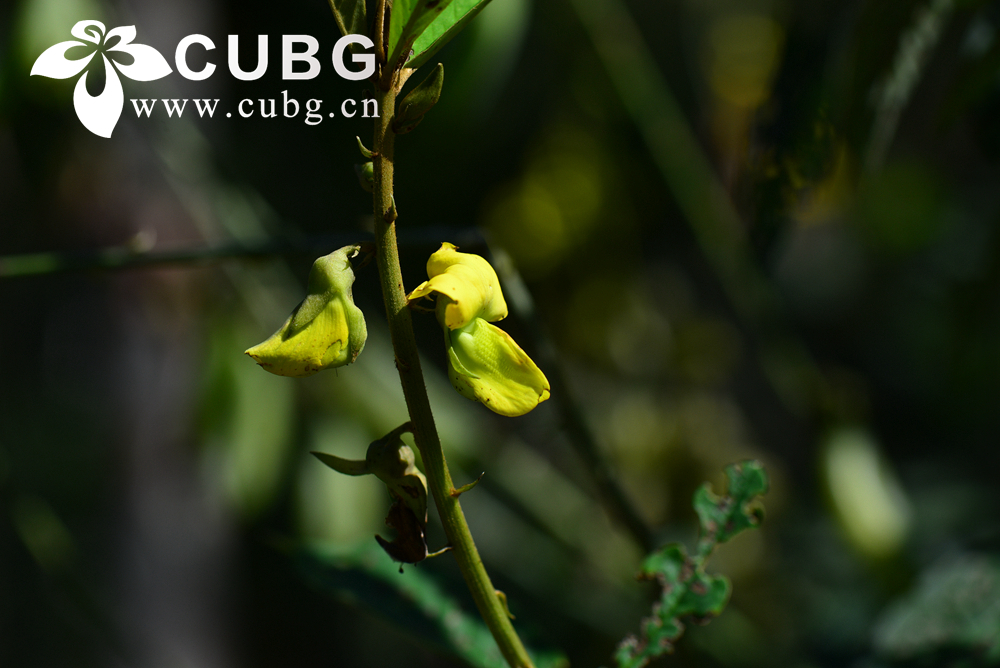
A tropical legume species. (Image by ZHU Renbin)

