Newsroom


The biodiversity-productivity relationship (BPR) is crucial for understanding the consequences of biodiversity loss. However, how this relationship evolves over time in natural ecosystems remains unclear. Several long-term biodiversity experiments with artificially-assembled plant communities have suggested that the BPR escalates over time. But whether this pattern applies to natural ecosystems requires further exploration.
In a study published in PNAS, a research team led by Prof. PAN Qingmin from the Institute of Botany of the Chinese Academy of Sciences revealed that the negative impacts of plant diversity decline on grassland productivity gradually diminish over time through a 16 years removal experiment in the Inner Mongolia grassland, contrasting the findings of long-term biodiversity experiments with artificially-assembled plant communities.
From 2006 to 2009, researchers conducted the removal manipulation with gradients of plant functional group (PFG) richness and species richness established through targeted removals. From 2010 to 2021, they ceased the removal treatments, and allowed the new colonization from external species pools. During 2007–2021, they measured the aboveground biomass annually.
Researchers found that both the PFG richness-based and species richness-based BPRs diminished gradually during the removal period (years 2–4) and decoupled in nine out of 12 years following the cessation of removal (years 5–16). This finding suggests that the negative impacts of biodiversity loss do not necessarily escalate over time; rather, they tend to decrease.
Furthermore, researcher revealed that the temporal shift in BPRs was driven initially by compensatory growth of the remaining species, and subsequently by new colonization from external populations. This finding suggests that in natural ecosystems, the impacts of biodiversity loss are strongly modified by assembly processes such as compensation and colonization.
This study offers new insights into the mechanisms shaping the BPR in natural ecosystems, and underscore the importance of incorporating compensatory dynamics and colonization processes when predicting long-term impacts of biodiversity loss.
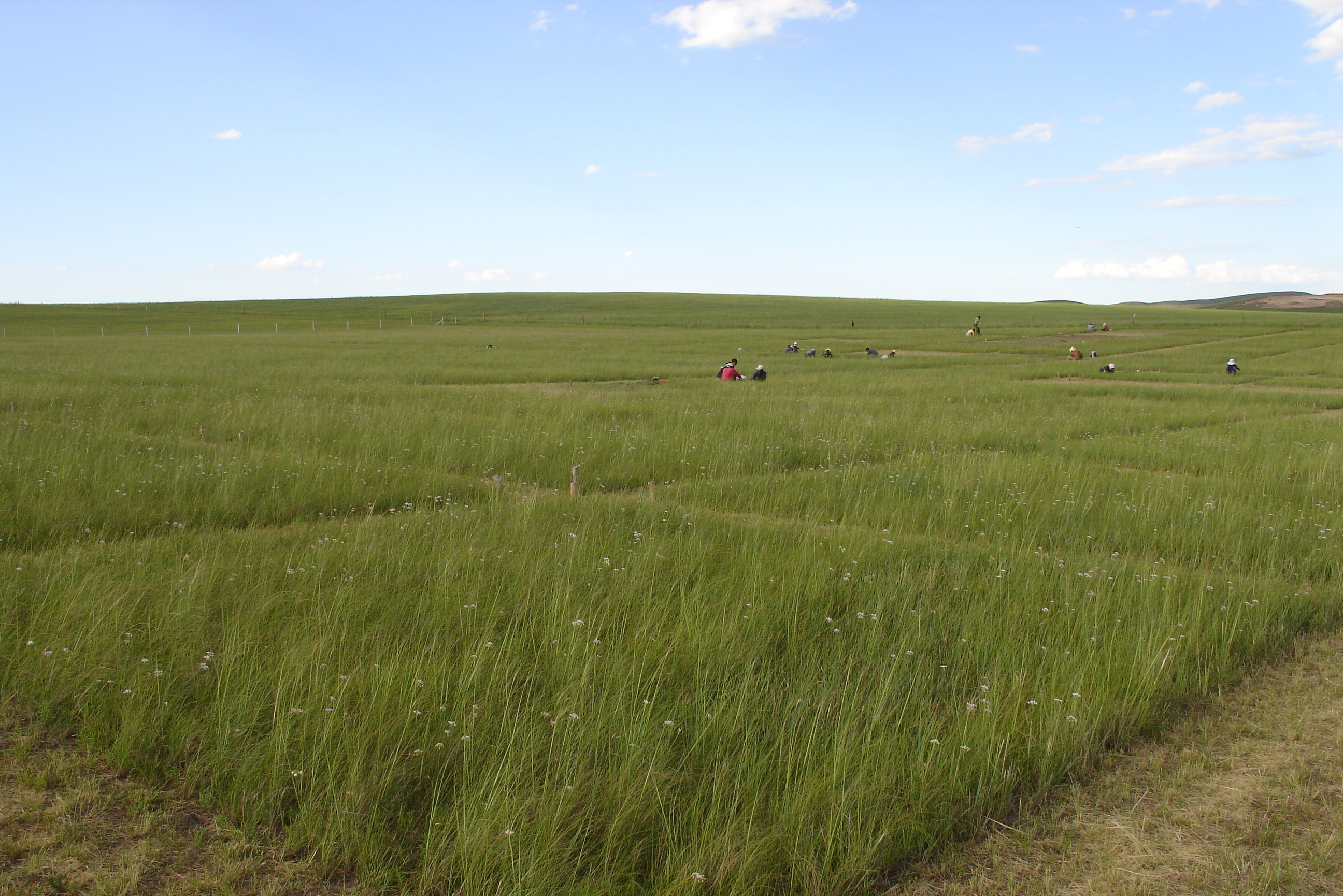
Field measurements in plots of the Inner Mongolia grassland removal experiments. (Image by PAN Qingmin)