
Newsroom


Bone marrow gradually loses its rhythm as people age. This factory for blood and immune cells produces fewer essential components over time. More defective parts emerge and the quality control team shrinks. Hematopoietic stem cells increasingly favor myeloid lineage over lymphoid production, tilting the balance of immune system. Older bodies become vulnerable to infections, weak vaccine responses, and blood cancers.
Scientists have debated whether this decline is an irreversible fate for years. Now a study published in Cell Stem Cell and conducted by researchers from the Institute of Zoology of the Chinese Academy of Sciences and Capital Medical University, along with international collaborators, revealed that long-term oral vitamin C supplementation mitigates age-related deterioration of bone marrow at both the cellular and molecular levels.
The researchers gave aged female monkeys, equivalent to 40 to 53 human years, a daily oral dose of 30 mg/kg vitamin C, with young and middle-aged animals served as controls. They conducted deep single-cell RNA sequencing of the bone marrow from the rib and femur, complemented by DNA methylation profiling. To quantify aging, they built a primate-specific single-cell transcriptomic clock and a separate epigenetic clock, both trained on untreated animals.
The researchers found that aging consistently depleted common lymphoid progenitors (CLPs), and it skewed hematopoietic stem cells toward myeloid differentiation. Vitamin C partially reversed these shifts, with increased CLP frequencies and lymphoid-to-myeloid ratio closer to that of young animals. The transcriptomic clock estimated that vitamin C-treated bone marrow cells appeared 4.07 years younger on average. An independent DNA methylation clock showed a similar 3.44-year reduction in epigenetic age.
Moreover, the researchers pinpointed the progranulin signaling axis as a key mediator. In vitamin C-treated animals, its levels were elevated and its intercellular communication networks were partially restored. In parallel human in vitro experiments, recombinant progranulin mimicked several of vitamin C's protective effects on old hematopoietic stem cells and T cells, including the reduction of oxidative damage and restoration of nuclear lamina proteins, suggesting that vitamin C-progranulin pathway may be a conserved regulatory module.
Notably, the researchers observed these effects across both skeletal sites, though with some site-specific nuances. The femur showed a slightly larger reduction in predicted age than the rib, highlighting how local microenvironments interact with systemic interventions.
This work provides an accessible single-cell atlas of primate bone marrow aging and a framework for evaluating interventions. The identification of a vitamin C-responsive, progranulin-linked pathway opens new avenues for maintaining immune resilience in the growing elderly population.
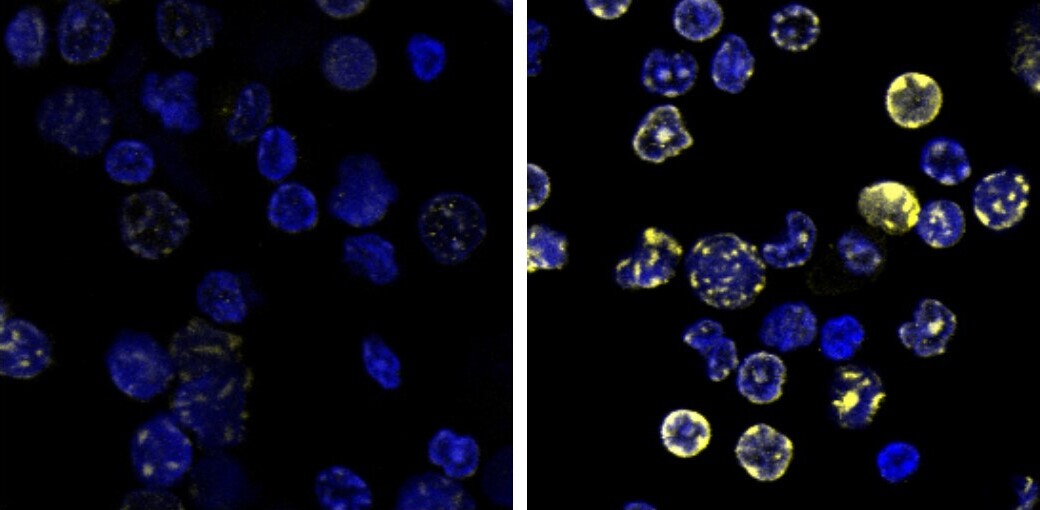
Vitamin C Restores Heterochromatin State in Aged Monkey's Bone Marrow. (Image by LIU Guanghui's lab)

