Newsroom


As the effects of climate change intensify, extreme droughts are becoming more frequent and severe. These droughts threaten the stability of forests and their ability to store carbon. However, the relative importance of climatic factors and growth strategies in determining drought resilience remains unclear, particularly in regions with a monsoon climate, such as the tropics and subtropics.
In a study published in Agricultural and Forest Meteorology on July 7, researchers from the Xishuangbanna Tropical Botanical Garden (XTBG) of the Chinese Academy of Sciences and their collaborators investigated the growth resilience and recovery dynamics of four pine species widespread across Southeast Asia under extreme drought conditions. Their findings reveal that drought sensitivity and tree growth traits, rather than long-term climate averages, are the primary drivers of how these pines withstand and recover from severe dry spells.
The researchers compiled a comprehensive tree ring width dataset from 103 sites, covering the four pine species widespread in the region. To assess how the trees responded to extreme early-growing-season droughts, they measured drought resistance (growth during a drought year relative to the pre-drought mean), recovery (post-drought growth relative to growth during the drought year), and overall resilience (post-drought growth relative to the pre-drought mean).
Using advanced analytical tools, including random forest modeling, the researchers found that drought sensitivity was the strongest predictor of both resistance and recovery, followed by growth-related traits. Climatic variables consistently ranked lowest in explanatory power.
Across all four species, early-season moisture availability emerged as the dominant constraint on radial growth. While extreme drought severely reduced growth in all species, most trees had recovered to average growth levels within three years, though there were notable differences between species. Notably, Pinus yunnanensis exhibited the lowest resistance and the highest recovery capacity.
A clear trade-off emerged: sites with higher drought sensitivity experienced greater growth reductions during drought, but demonstrated stronger post-drought recovery. In contrast, Pinus kesiya showed the slowest recovery and lowest overall resilience, while Pinus latteri combined strong drought resistance with rapid recovery. This pattern reflects fundamental physiological trade-offs in carbon allocation and water use regulation.
"Our results suggest that forest growth assessments based primarily on mean climatic conditions may underestimate post-drought recovery in monsoon-dominated regions, unless seasonal drought timing, tree attributes, and growth sensitivity are explicitly accounted for," said Dr. FAN Zexin of XTBG.
The researchers emphasized that compared to unchangeable climatic backgrounds, selecting specific size classes or less sensitive species for afforestation could serve as effective approaches to enhance forest drought resilience.
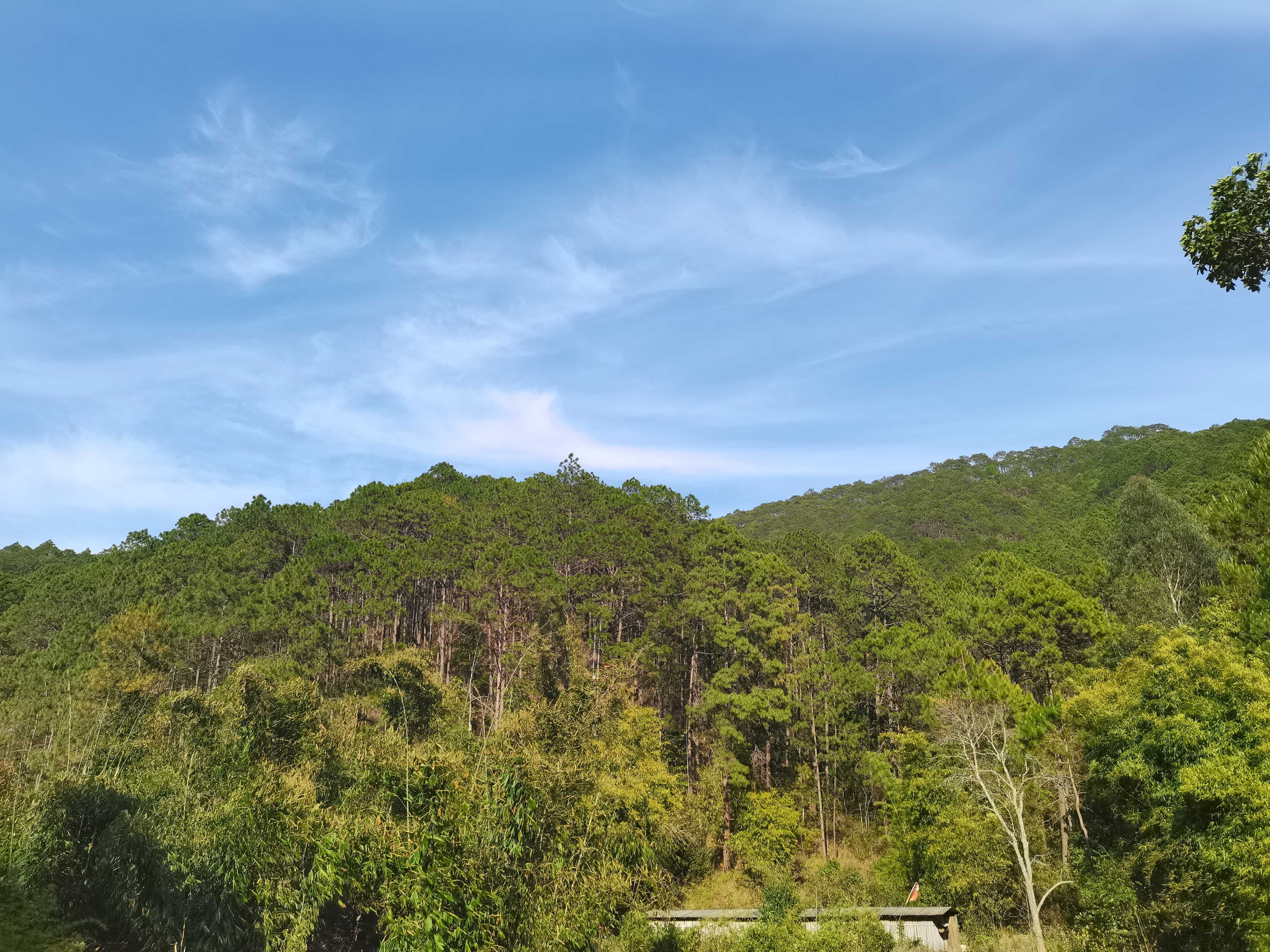
Pine forest in Yunnan. (Image by YANG Raoqiong)