Newsroom


Researchers from the South China Botanical Garden (SCBG) of the Chinese Academy of Sciences (CAS) have developed an innovative method to tackle the complex origins of organic carbon in saltmarshes and other wetland ecosystems, where traditional tracing approaches often yield only broad source separation.
The team has recently filed a patent application (titled "A whole-system method for tracing organic carbon sources in wetlands") that outlines an integrated workflow covering everything from sediment sampling and biomarker measurement through to quantitative source apportionment.
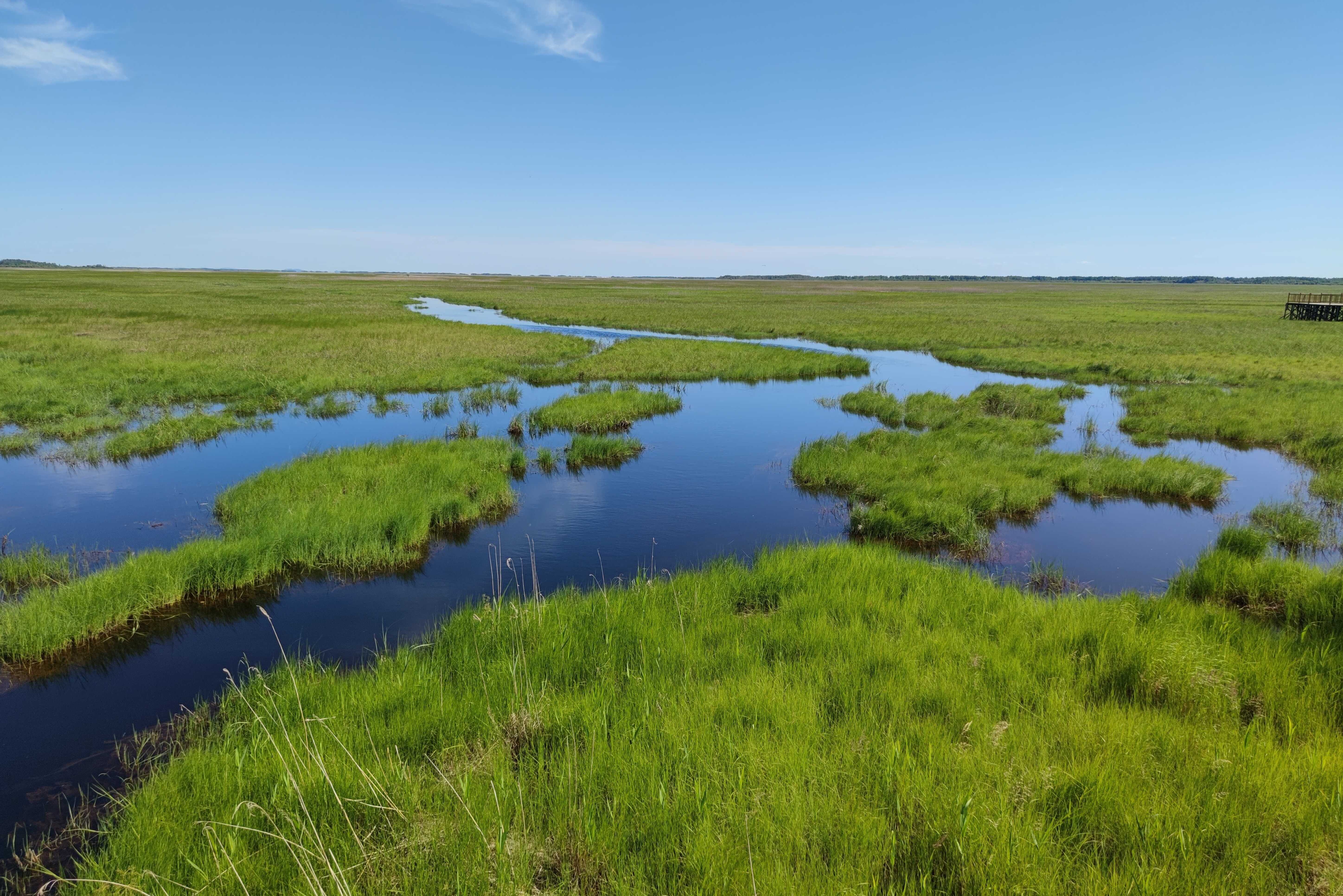
Coastal wetlands, particularly saltmarshes, are influenced by the combined effects of terrestrial inputs, riverine transport, tides, and marine processes. The sedimentary organic carbon in them includes both autochthonous carbon generated within the wetland and allochthonous carbon sourced from adjacent terrestrial and marine systems.
Conventional approaches relying on stable isotopes and N/C ratios are effective for broad discrimination among terrestrial, marine, and plant-derived carbon; however, they offer limited resolution when it comes to identifying more specific plant and microbial sources.
This new method integrates two classes of biomarkers—n-alkanes and amino sugars. N-alkanes help trace plant-derived organic matter from different source groups, whereas amino sugars serve as indicators of microbial necromass carbon.
Drawing on these biomarkers and total organic carbon measurements, the method allows for quantitative comparison across six biological carbon sources: herbaceous plants, woody plants, aquatic plants, algae, fungal necromass carbon, and bacterial necromass carbon.
In practice, n-alkane concentrations are determined by gas chromatography-mass spectrometry, and amino sugars are measured by high-performance liquid chromatography. The patent details the workflow using sediment samples from the Yellow River Estuary and Yancheng saltmarshes, with stable isotope and endmember mixing model results employed for validation. This establishes a methodological basis for resolving complex multi-source carbon inputs in wetland sediments.
This approach is expected to support research into wetland carbon cycling, blue carbon accounting, the monitoring of algal carbon inputs, and the evaluation of wetland conservation and restoration outcomes. In addition to saltmarshes, it shows potential for application in mangroves, lakes, marshes, forests, grasslands, and other ecosystems that require source-resolved organic carbon analysis.
The patent application was filed by SCBG, and its inventors are WANG Faming, ZHOU Jinge, GAN Shuchai, LU Zhe, QIN Guoming, ZHANG Jingfan, LI Yingwen, and LI Yongxing.