
Newsroom


Cold stress is a significant environmental challenge that can severely limit rice production, particularly during the early stages of growth. Low temperatures can damage leaf and root development, causing wilting or even death of seedlings, which ultimately leads to significant yield losses. However, the way in which rice leaves and roots coordinate their responses to cold stress remains poorly understood.
In a new study published in Plant Physiology and Biochemistry on May 19, researchers from the Xishuangbanna Tropical Botanical Garden (XTBG) of the Chinese Academy of Sciences have uncovered the molecular and physiological mechanisms behind cold sensitivity in a specialized rice line derived from common wild rice (Oryza rufipogon). Their findings provide insight into how different plant organs (leaves and roots) respond to low-temperature stress, offering potential pathways for breeding more resilient rice varieties.
To investigate cold tolerance, the researchers developed introgression lines (ILs) using Dianjingyou 1 (DJY1), a cultivated rice variety, as the recipient parent. Among these lines, one named J876 was selected to study cold tolerance at the seedling stage. Phenotypic analysis showed that J876 was significantly more sensitive to cold stress than DJY1.
By comparing the cold-sensitive line J876 with the cold-tolerant control variety DJY1 at the seedling stage, the researchers identified key differences in physiological, biochemical, and molecular responses. The differences revealed coordinated regulatory pathways in leaves and roots that contribute to chilling tolerance.
Under low temperatures, J876 accumulated higher levels of reactive oxygen species (ROS), while its antioxidant enzyme activities decreased, indicating a weaker capacity to manage oxidative stress. The researchers identified phenylpropanoid metabolism as a key secondary metabolic pathway involved in rice's response to cold stress.
The researchers also found that, although leaves and roots share similar strategies for coping with cold stress, their response patterns are distinct. In J876 leaves, flavonoid biosynthesis was suppressed in response to cold stress. In contrast, galactose metabolism was uniquely modulated in roots.
The study highlights that impaired ROS scavenging and disruptions in cell wall-related metabolic pathways, particularly flavonoid production in leaves and galactose metabolism in roots, are key contributors to cold sensitivity in J876. The researchers proposed that enhancing these organ-specific pathways could improve cold tolerance in rice.
"Our findings show that cold stress responses are not uniform across the plant. To develop truly cold-tolerant rice, we may need to consider leaf- and root-specific regulatory networks, particularly those governing ROS balance and cell wall integrity," said XU Peng of XTBG.
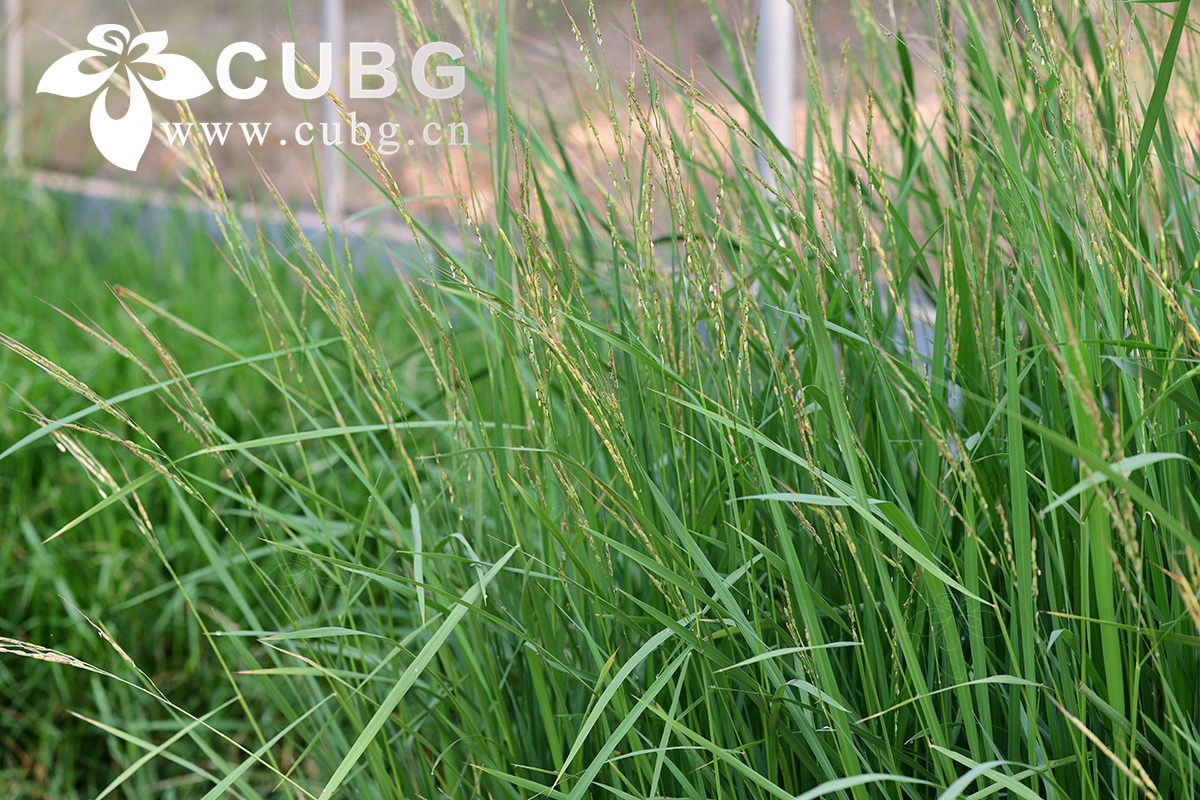
Oryza rufipogon (Image by ZHU Renbin)

