
Newsroom


Balsa wood (Ochroma lagopus) is one of the fastest-growing species cultivated for commercial use. Renowned for its exceptional strength-to-weight ratio, balsa wood is a key material for wind turbine blades, aerospace components, and lightweight construction. Although water availability is known to be a critical factor in balsa growth, little research has been conducted on the water use strategies, potential driving mechanisms, and physiological adaptation strategies of balsa plantations across different stages of development.
In a study published in Agricultural and Forest Meteorology, researchers from the Xishuangbanna Tropical Botanical Garden (XTBG) of the Chinese Academy of Sciences revealed that balsa wood plantations employ an age-dependent, dynamic water-use strategy that shifts from "conservative" to "opportunistic" as the plantations mature. This study provides new insight into the dynamic water-use patterns of balsa wood plantations of different ages in Xishuangbanna, southwestern China.
By integrating multi-isotope techniques with leaf nutrient trait analysis, the researchers studied the water use strategies and their driving mechanisms of the balsa trees across different stand stages (1-4 years).
They found that balsa trees follow an age-dependent pattern of water uptake. Stands aged one to two years primarily absorbed water from the 20–50 cm soil layer. In contrast, mature stands aged three to four years relied more heavily on the shallow 0–20 cm soil layer.
Surprisingly, the researchers discovered that water scarcity alone is not the key driver behind this shift, but rather, soil phosphorus availability — a critical nutrient that is often limited in tropical soils. Younger plantations had higher available phosphorus, while older stands showed significant phosphorus depletion.
"Deeper roots would require more carbon investment and separate them from nutrient-rich topsoil. Instead, mature balsa stands appear to prioritize phosphorus acquisition over accessing deeper water," said YANG Bin of XTBG.
Rather than shifting uptake depth, the trees adjust their intrinsic water use efficiency (WUEi), a measure of carbon gain per unit water lost. Juvenile stands showed higher WUEi (a conservative strategy), while older stands adopted a more opportunistic, nutrient-foraging strategy, even if it resulted in lower water efficiency.
The study also revealed a strong correlation between leaf δ13C (a proxy for WUEi) and leaf nutrient ratios, highlighting a coordinated trade-off between water conservation and nutrient use.
These findings have direct implications for cultivating balsa wood in seasonal climates like Xishuangbanna. "Balsa shows us that even the fastest-growing trees have age-dependent strategies. Managing them well means understanding not just how much water they need, but where and why they prefer to get it," said YANG Bin.
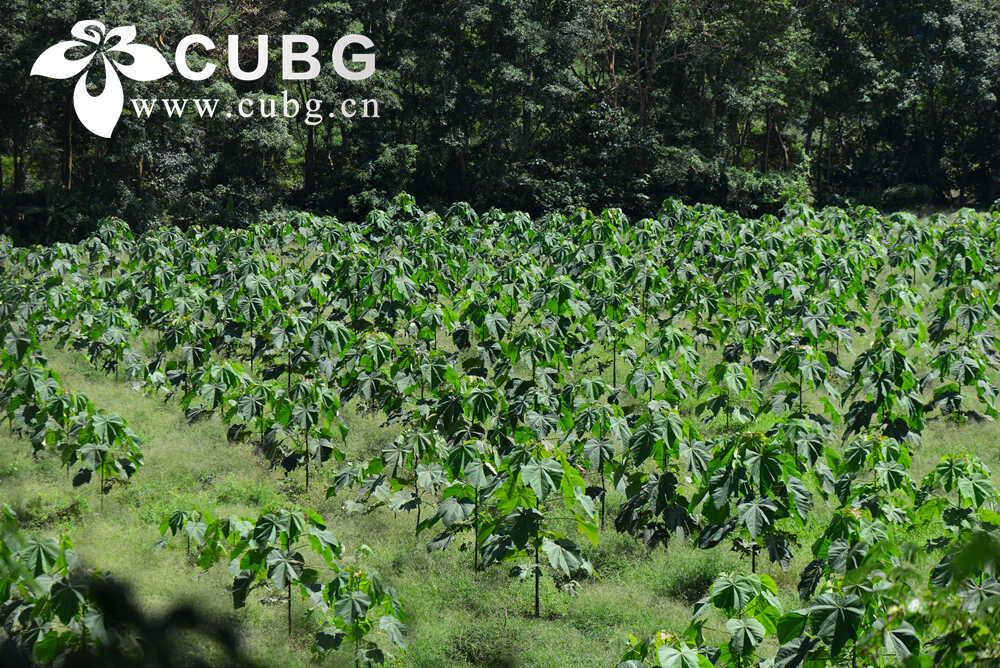
Balsa wood plantation in Xishuangbanna. (Image by ZHU Renbin)
