
Newsroom


The scientific monitoring team of Dinghushan National Nature Reserve in South China's Guangdong province, affiliated with the South China Botanical Garden of the Chinese Academy of Sciences, has recently confirmed and documented five newly recorded amphibian and reptile species, including Sphenomorphus tonkinensis, Pseudocalotes microlepis, Dibamus bourreti, Pareas formosensis and Paramegophrys liui, as well as the rare orchid species Epipogium roseum.
These discoveries were yielded through regular wildlife monitoring, terrestrial vertebrate line-transect surveys and passive acoustic monitoring for birds. The newly added distribution records have further updated the reserve's species database, fully manifesting the steady optimization of local ecological environment and fruitful outcomes in biodiversity conservation.
Among the newly documented amphibians and reptiles, Sphenomorphus tonkinensis is a small forest-inhabiting lizard of the genus Sphenomorphus within the family Scincidae, order Squamata.
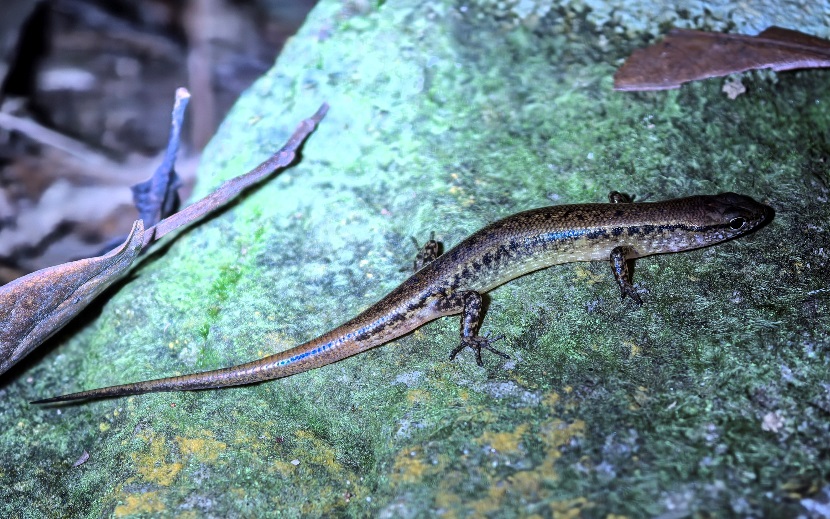
Sphenomorphus tonkinensis (Image by FAN Zongji)
Pseudocalotes microlepis is a tropical humid-adapted agamid lizard; it is a small-to-medium-sized diurnal species capable of body color plasticity for camouflage.
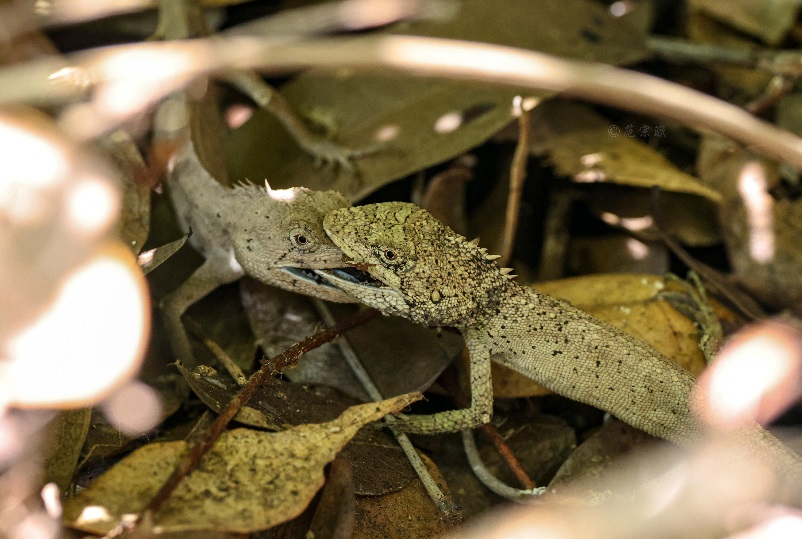
Two Pseudocalotes microlepis are biting each other (Image by FAN Zongji)
Dibamus bourreti is a Vulnerable (VU) species with obligate fossorial habits, rarely observed in the wild, and thus represents one of the most enigmatic rare reptiles in subtropical montane forests of southern China.
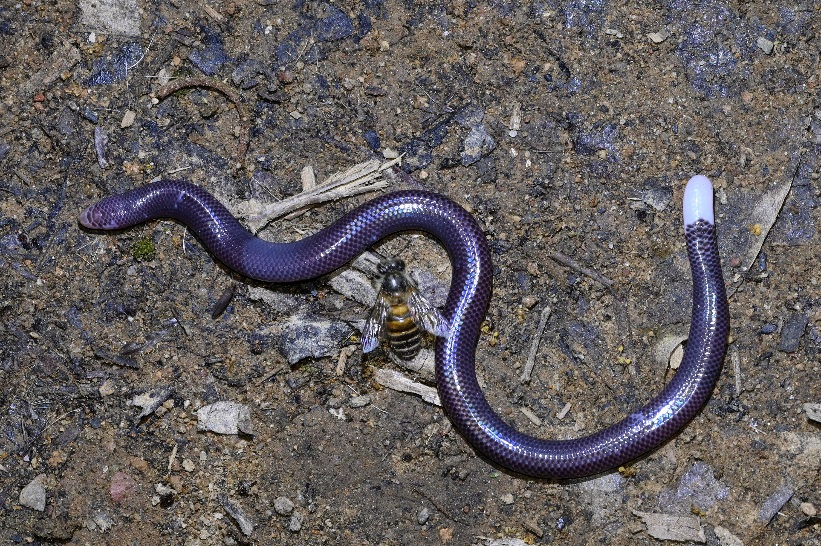
Comparison photo of Dibamus bourreti and a bee (Image by BIAN Wenbo)
Pareas formosensis is a small-to-medium-sized non-venomous snake, listed as a terrestrial wildlife species with important ecological, scientific, and social values (China's "Three-Value" protected species) and assessed as Least Concern (LC). It possesses a blunt, rounded snout, large eyes, and a distinct W-shaped marking on the dorsal head; it is a nocturnal, arboreal species that preys on snails and other mollusks and inhabits low-altitude montane forests, shrubs, and humid farmlands.
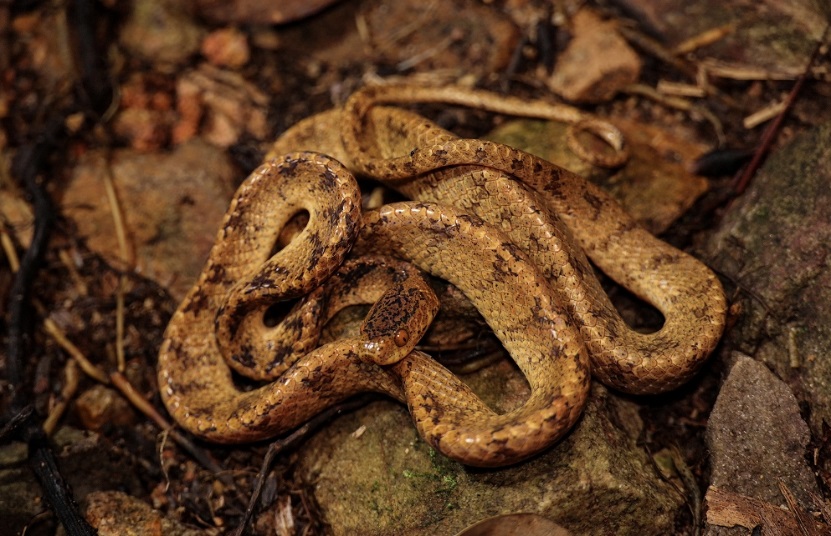
Pareas formosensis (Image by ZHONG Junjie)
Paramegophrys liui is also a "Three-Value" protected species with an LC conservation status; it is a small megophryid frog of the genus Paramegophrys, with a snout–vent length (SVL) of 3–4 cm and prominent metacarpal tubercles. This species depends on pristine water sources, occurs adjacent to montane streams, and emits sharp, loud calls at night during the breeding season. These new records fill the distribution gaps of these taxa in Dinghushan National Nature Reserve and provide additional first-hand data for studies on animal behavioral ecology.
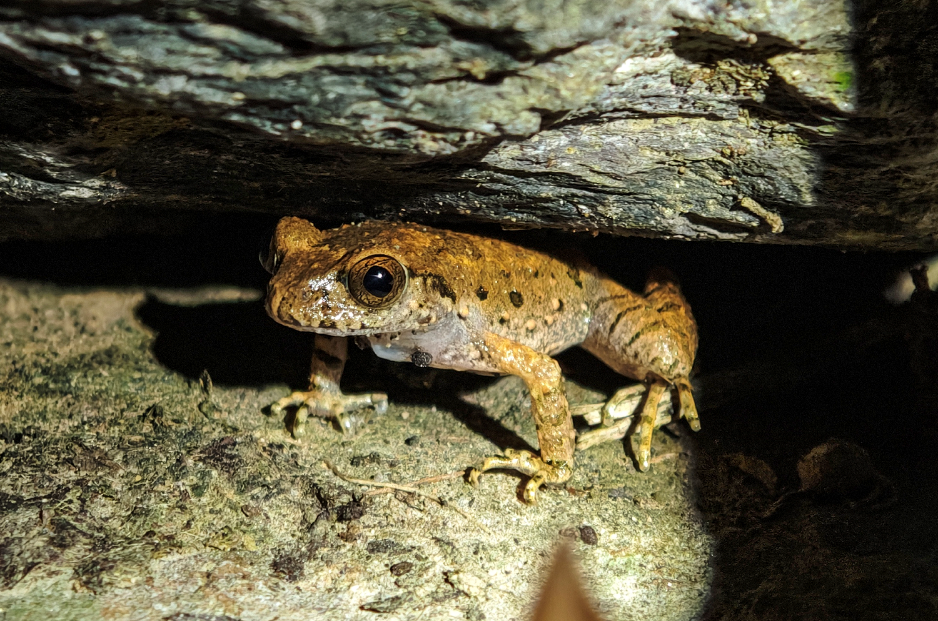
Paramegophrys liui (Image by ZHONG Junjie)
Epipogium roseum, the newly recorded plant species also known as the "Ghost Orchid", is a saprophytic orchid that acquires nutrients via fungal symbiosis. It has stringent habitat requirements and acts as a critical indicator species for ecosystem health. This record also updates the known distribution range of this species in Guangdong Province.
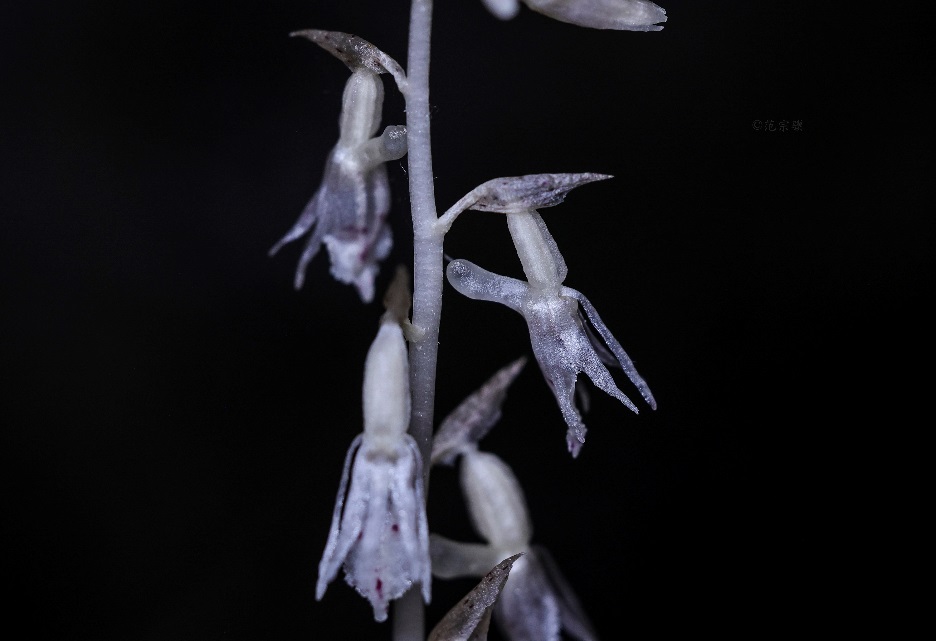
Close-up of Epipogium roseum (Image by FAN Zongji)
These novel discoveries provide valuable empirical evidence and data support for research on species dispersal mechanisms, ecological adaptability, and the impacts of climate change.
As the first national nature reserve in China, Dinghushan will persist in conducting regular biodiversity monitoring, enhance the conservation and scientific research of wild flora and fauna, and safeguard this valuable ecological treasure on the Tropic of Cancer desert belt.


