Newsroom


Accurately determining whether all tumor tissues have been removed during breast cancer surgery is critical for reducing recurrence and avoiding reoperation. Currently, intraoperative frozen-section pathology is the main method for margin assessment, but it is time-consuming and highly dependent on pathological expertise, making rapid molecular-level evaluation difficult.
In a study published in Journal of Nanobiotechnology, a research team led by Prof. WANG Hongzhi from the Hefei Institutes of Physical Science of the Chinese Academy of Sciences developed a bioselective surface-enhanced Raman scattering chip, the BioGate Surface-Enhanced Raman Scattering (SERS) Chip, for rapid identification of malignant breast cancer margins during surgery.
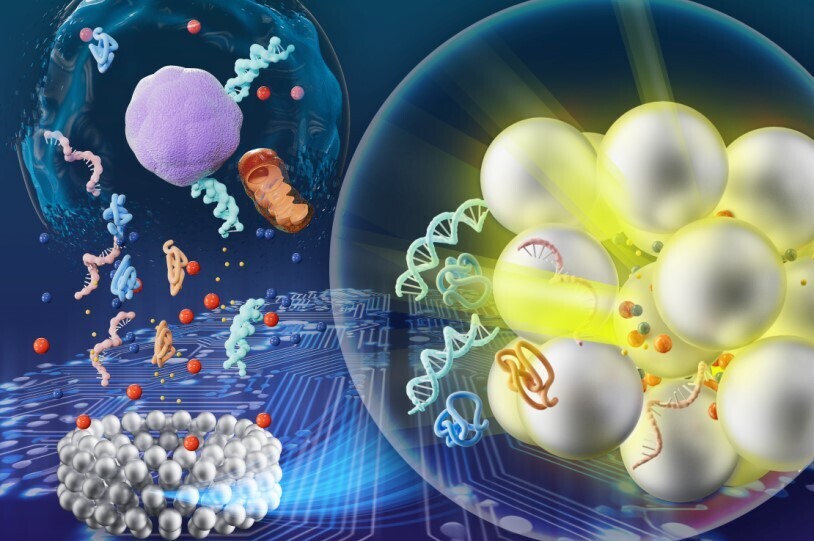
Researchers designed the BioGate SERS Chip using a layered gold nanoparticle structure that formed "bioselective nanochannels." These channels allowed low-molecular-weight metabolites to enter plasmonic hotspot regions while blocking larger interfering molecules such as proteins and DNA. This design improves signal stability and reduces background interference in complex tissue samples.
A system based on the Chip demonstrated extremely high sensitivity. It detected molecular probes at concentrations as low as 10-13 M and identified malignant signals in samples containing only 1% tumor cells. In breast cancer mouse models and intraoperative tissue samples from breast cancer patients, the system distinguished malignant tissues from benign tissues based on characteristic Raman signals, and it showed stable performance across major molecular subtypes of breast cancer.
"The new nanobiosensing strategy is based on what we call 'bioselective hotspot gating'. Instead of relying only on morphology-based analysis, it allows surgical margin assessment to directly detect metabolite molecular fingerprints," said Prof. WANG, the corresponding author of the study.
The system developed in this study is expected to support breast-conserving surgery and precision tumor resection, and in the future, it can be integrated with portable Raman devices and artificial intelligence systems for rapid molecular pathological diagnosis.
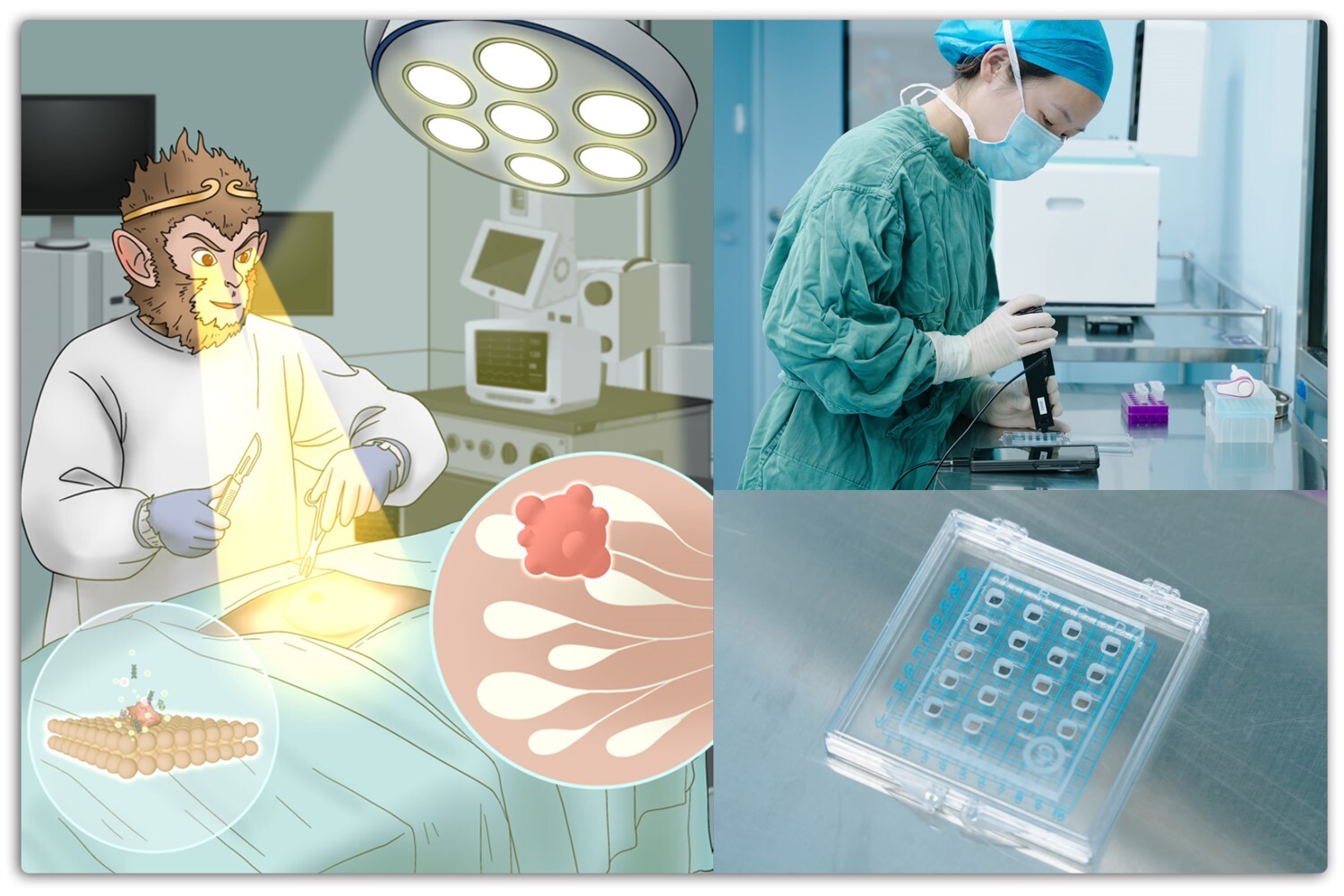
Schematic illustration of the BioGate SERS Chip for rapid intraoperative detection of breast cancer surgical margins. (Image by HUANG Guangyao)