Newsroom


Nervonic acid, an essential fatty acid for brain health and the treatment of neurodegenerative diseases, is difficult to produce on a large scale because traditional sources derived from animals are limited. While certain plant seed oils are a natural alternative, most high-nervonic acid plants are wild and undomesticated, which creates a major obstacle for commercial cultivation.
In a study published in Horticulture Research on April 20, researchers from the Xishuangbanna Tropical Botanical Garden (XTBG) of the Chinese Academy of Sciences and their collaborators have assembled the first chromosome-level genomes of two sympatric Macaranga species: Macaranga indica and Macaranga denticulata. By integrating multi-omics analysis, population genetics, phylogenomics, and molecular validation, the researchers revealed the molecular mechanisms underlying nervonic acid accumulation in Macaranga indica.
Using single-molecule real-time sequencing with Hi-C scaffolding, the researchers generated high-quality genomes for both species. Although both genomes are rich in repetitive sequences, Macaranga indica has streamlined its genetic toolkit for fatty acid biosynthesis and accumulation.
The researchers found that the high-nervonic-acid species relies on fewer but more highly expressed genes involved in two critical processes for nervonic acid production: fatty acid elongation and triacylglycerol (TAG) synthesis. Additionally, it possesses a single, tightly regulated gene expression module linked to nervonic acid accumulation.
In contrast, the low-nervonic-acid species retain more redundant and diverse gene copies, distributing its metabolic efforts across multiple pathways. This results in a broader but less focused lipid profile.
Cold temperatures, abscisic acid (ABA), and phosphate starvation were identified as major inducers of nervonic acid biosynthesis in Macaranga indica, pointing to specific environmental cues and stress responses that could be leveraged to boost production.
Further phylogenetic analysis showed that nervonic acid biosynthesis evolved convergently in Macaranga indica and other nervonic acid-producing plants. Notably, Macaranga indica has undergone fewer gene duplications and retained a more direct route for nervonic acid production, while Macaranga denticulata has expanded its genetic repertoire to adapt to a wider geographic range.
"Our findings reveal how genomic simplification and targeted environmental responses enable high NA accumulation in Macaranga indica," said TIAN Bo of XTBG. "This provides a roadmap for the domestication and genetic improvement of Macaranga species for industrial-scale nervonic acid production."
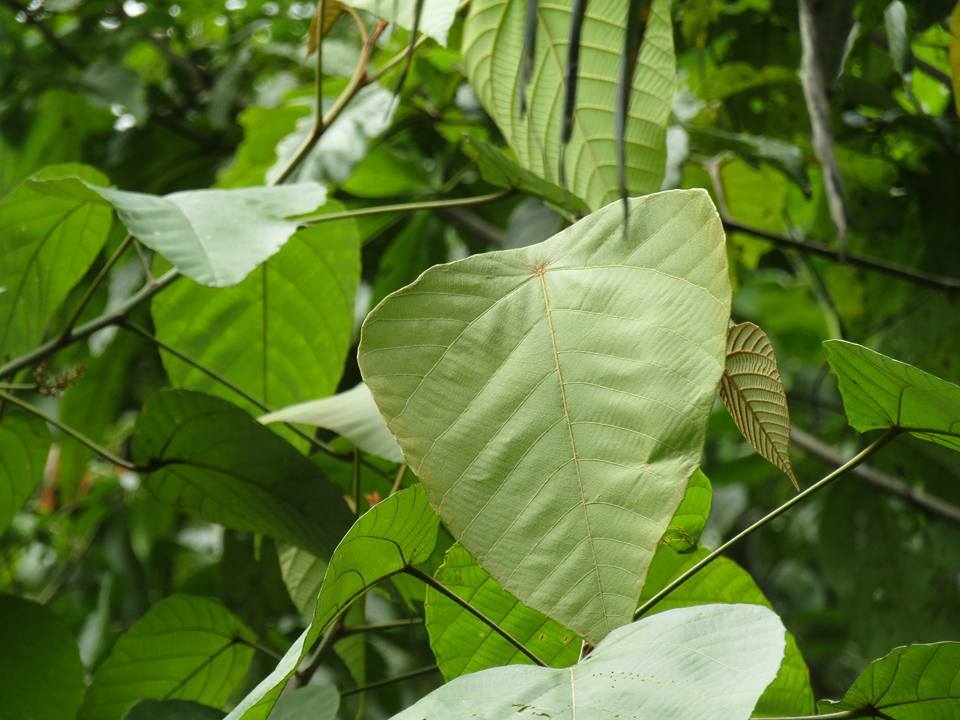
Macaranga indica (Image by TIAN Bo)