Newsroom


Tropical coral island soils suffer from high alkalinity and poor nutrient-holding capacity, making nitrogen a critically limiting factor for plant life. While traditional restoration efforts often involve heavy fertilizer application, this approach carries the risk of severe nitrogen loss and environmental damage.
Recently, a research team from the South China Botanical Garden (SCBG) of the Chinese Academy of Sciences employed 15N isotope tracing and found nitrogen form as the key factor determining nutrient utilization. Based on this finding, the team proposed revising traditional "application-heavy" methods and adopting a core strategy centered on "form optimization".
The research has been published in the Journal of Plant Ecology.
By testing ammonium, nitrate, and amide nitrogen on two resilient local species (Ficus microcarpa and Terminalia catappa) grown in coral sand, the researchers systematically assessed how different nitrogen forms affect plant development and the soil's capacity to retain vital nutrients. The findings indicate that nitrogen form plays a decisive role in nutrient utilization.
Researchers suggested that coral island restoration efforts, especially in dry seasons, should prioritize nitrate-based fertilizers combined with organic soil improvement and slow-release techniques. This approach not only promotes plant growth but also significantly reduces the risk of nitrogen loss, providing a vital technical roadmap for the long-term conservation of fragile coral island environments.
CHEN Han, a PhD candidate at the SSBG, is the first author of the paper, and Researcher WANG Faming is the corresponding author. This research was supported by the National Key Research and Development Program of China.
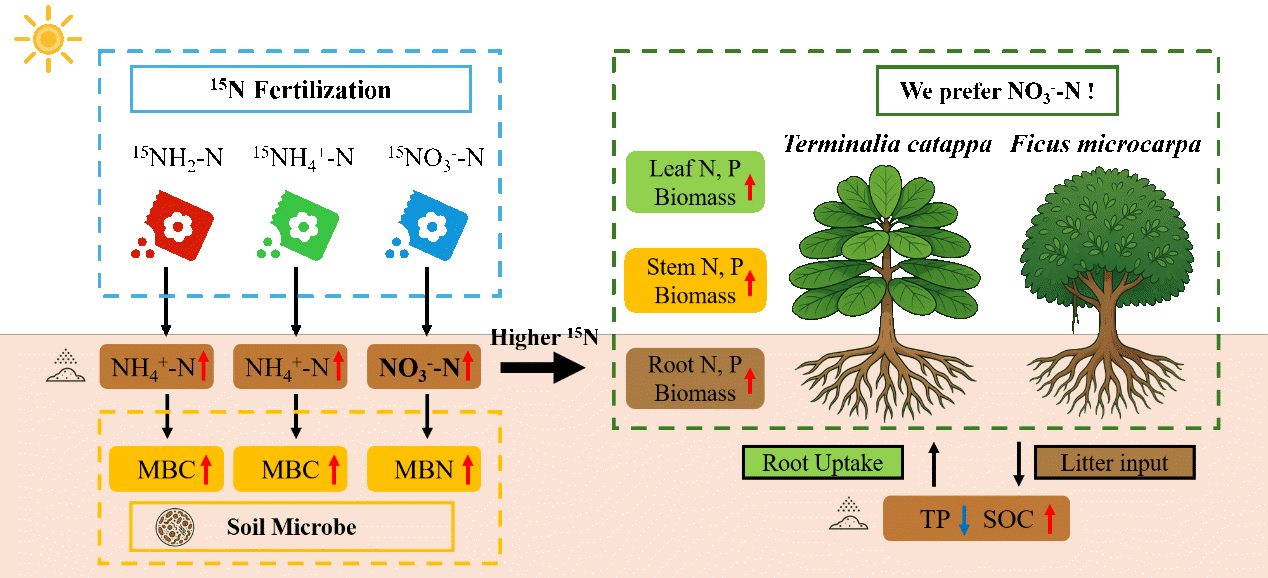
Schematic diagram of the mechanisms by which nitrogen forms regulate soil nutrients and plant uptake on coral islands. (Image by WANG et al.)