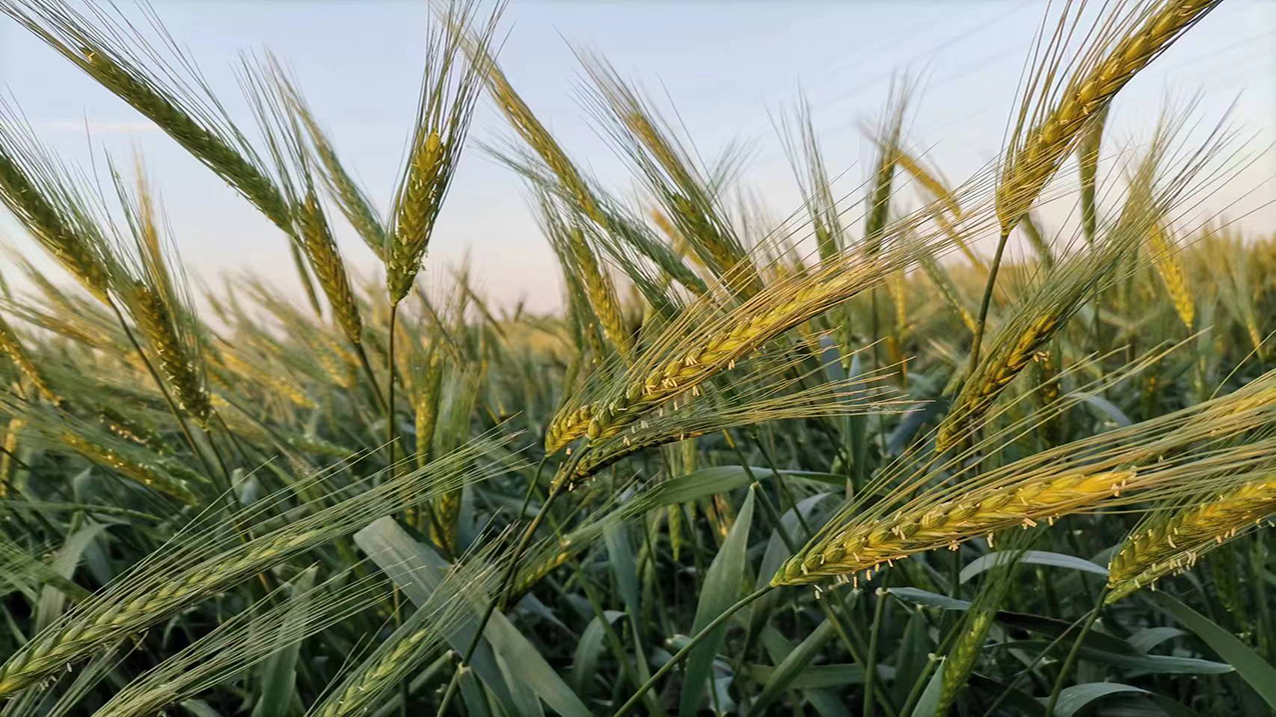
Rye (Secale cereale), once considered a "wild grass," as a key wild relative, has excellent characteristics such as cold tolerance, drought resistance, and disease resistance. It provides valuable genetic resources for wheat genetic improvement, and has benefited many significant advancements in wheat breeding history.
In a study published online in Nature Plants, a research group led by Prof. HAN Fangpu from the Institute of Genetics and Developmental Biology of the Chinese Academy of Sciences successfully cloned the broad-spectrum stripe rust resistance gene Yr83 from the Ukrainian triticale accession Rozovskaya.
Researchers showed that a distinctive structural feature of Yr83 was the fusion of Harbinger transposase-derived nuclease domain (HTDND) at the C-terminus of a canonical NLR protein. Functional studies confirmed that this domain was a crucial component for the resistance function of Yr83: its deletion resulted in a complete loss of resistance in transgenic plants.
The analysis of protein domain interactions revealed that the HTDND exhibited weak interactions with various NLR protein domains and showed strong self-interaction. These findings indicated that it might be involved in maintaining the autoinhibitory state of the protein and driving the assembly of the resistosome. The structure of disease resistance protein unveiled a novel evolutionary mechanism for resistance proteins.
Researchers demonstrated that Yr83 conferred near-immunity resistance against multiple prevalent races of Pst in China without adversely affecting key wheat agronomic traits. They developed a small fragment translocation line 6R/6A carrying Yr83, achieving improvement in both disease resistance and yield. This line maintained immunity to stripe rust, and significantly increased the number of spikelets and grains per spike.
This study provides an important genetic resource for wheat stripe rust resistance breeding, reveals a new mechanism by which a transposon domain has been "domesticated" into a functional resistance component, and opens up new avenues for the artificial design of disease resistance genes.