
Newsroom


Lianas are particularly abundant in seasonally dry tropical forests, where most species flower during the dry season. Although the hydraulic differences between the vegetative organs of lianas and trees are well documented, the floral hydraulic strategies and their potential role in liana expansion remain unclear.
In a study published in New Phytologist on March 17, researchers from the Xishuangbanna Tropical Botanical Garden (XTBG) of the Chinese Academy of Sciences and their collaborators presented the first evidence at the level of individual organs that lianas and trees use fundamentally different hydraulic strategies in their flowers. The study offered a key explanation for the increasing dominance of lianas in seasonally dry tropical forests in the context of climate change.
The researchers systematically compared 32 species (16 lianas and 16 trees) of the genus Bauhinia (Fabaceae) under common garden conditions in Xishuangbanna. By analyzing 24 floral traits related to water transport, storage, drought resistance, and pollinator attraction, they sought to uncover divergent hydraulic strategies between the two growth forms.
The results showed that, although both life forms coexist, their reproductive organs have evolved contrasting solutions to cope with seasonal water deficits. Liana flowers adopt a "drought-tolerant" strategy. They have denser veins in their petals, higher stomatal density and size, and tougher, more structurally reinforced flowers. These traits enable liana flowers to bloom in the canopy under conditions of high heat and dry air.
In contrast, tree flowers rely on a "drought-avoidance" strategy. They store more water and have greater hydraulic capacitance, which helps delay dehydration. However, they are less resistant to drought overall.
Interestingly, the trade-off between hydraulic efficiency and safety showed different patterns among life forms. Liana flowers exhibited a clear trade-off between efficiency and safety, whereas tree flowers did not. This reverses the pattern commonly observed in vegetative organs, where lianas often decouple these traits.
The researchers also found that lianas and trees occupy distinct regions in floral hydraulic-reproductive trait space, reflecting different coordination between structure, function, and reproduction.
"Our findings demonstrate that even closely related species have evolved contrasting floral hydraulic strategies shaped by their life form. Therefore, it is significantly important to consider the hydraulic traits of reproductive organs, when assessing plant drought tolerance and predicting reproductive performance under future climate change," said ZHANG Jiaolin of XTBG.
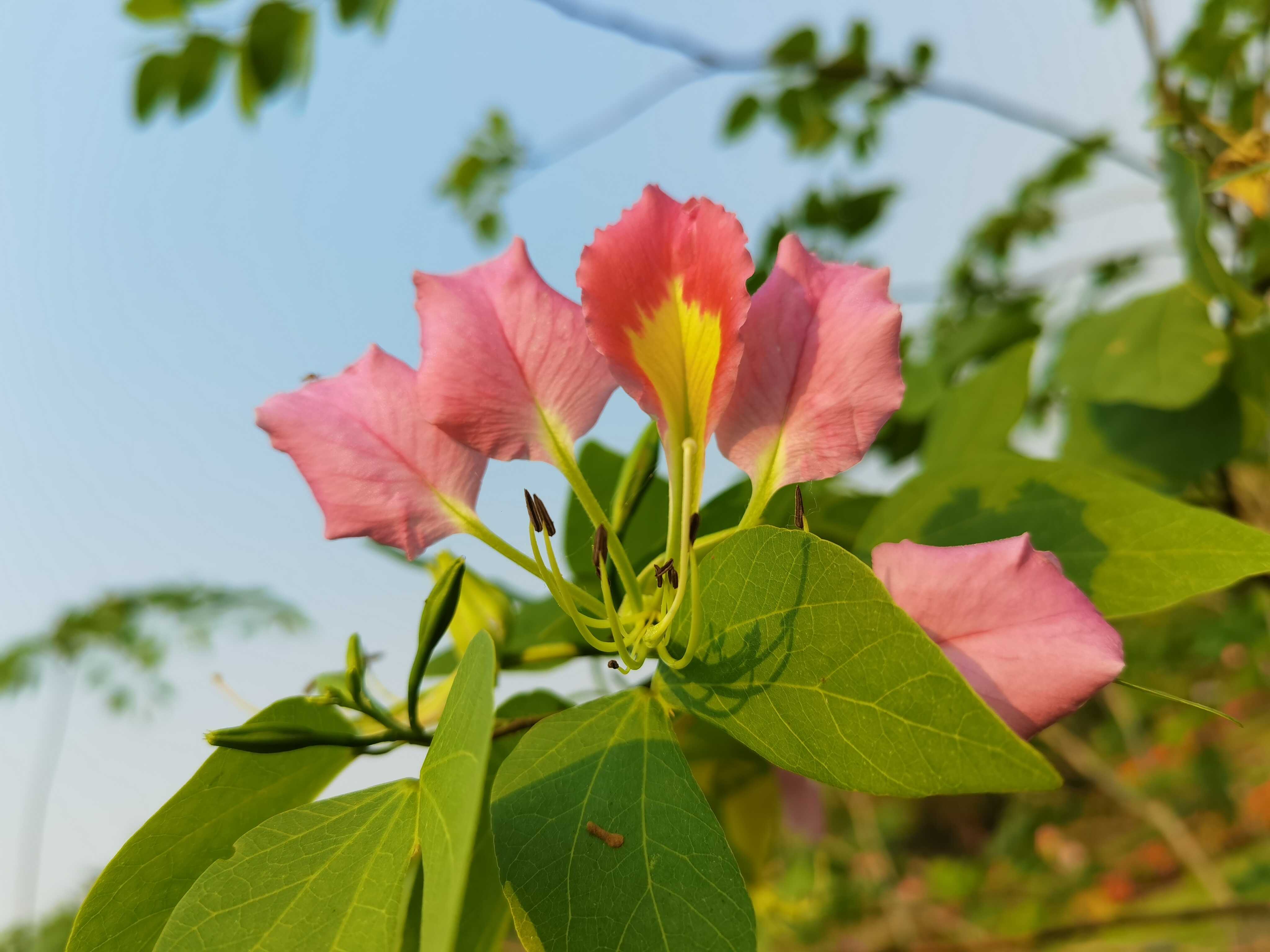
Flower of Bauhinia plants. (Image by KE Yan)
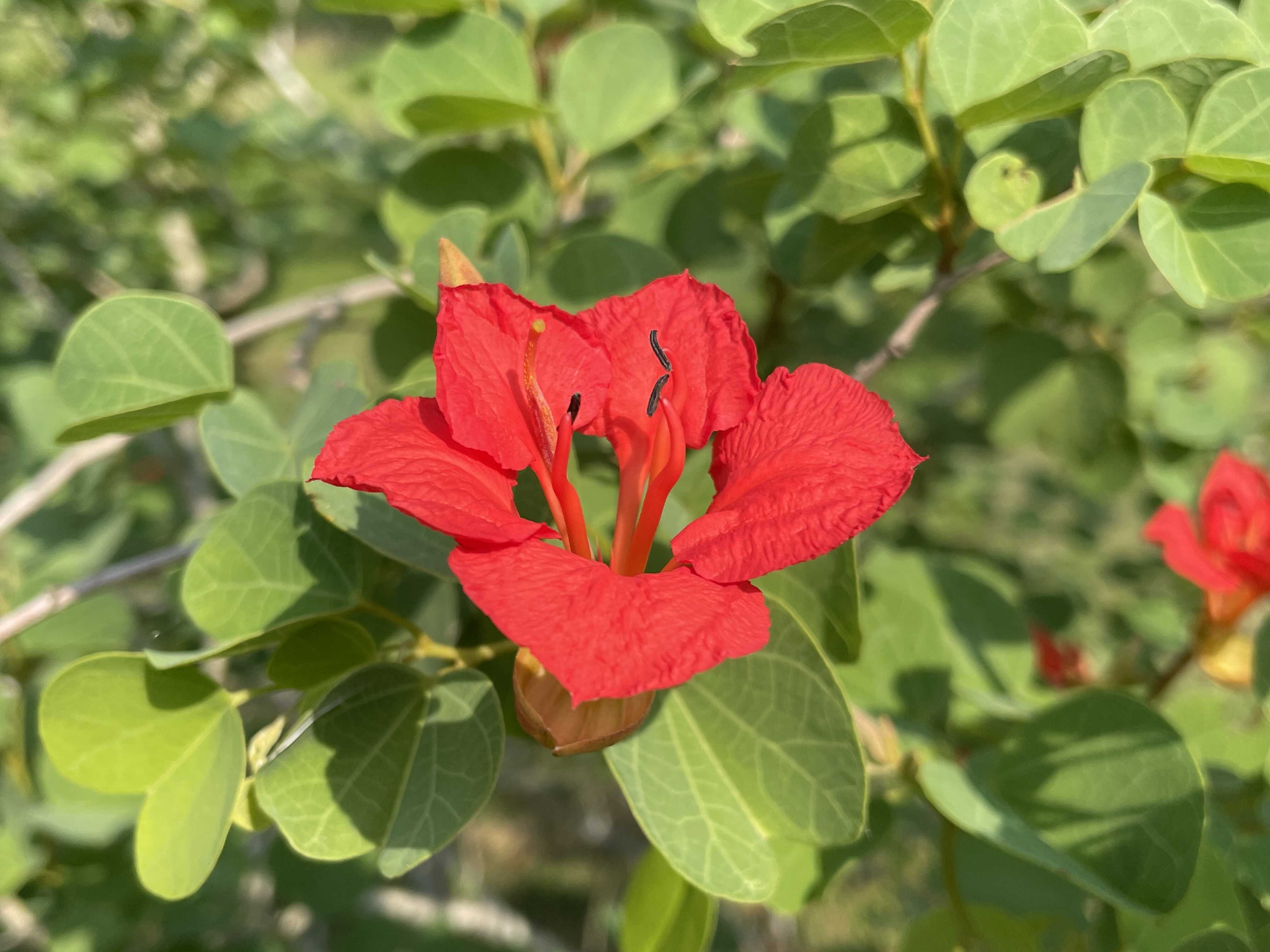
Flower of Bauhinia plants. (Image by KE Yan)

