2024


Over the years, a number of core/shell heterostructured quantum dots (QDs) (primarily CdSe-based core/shells) with impeded Auger recombination have been developed, which have led to several milestones in the development of QD-lasing technologies such as sub-single-exciton low threshold lasing, continuous-wave lasing, and electrically-driven amplified spontaneous emission.
However, due to the large size (10 to 20 nm) of the Auger-suppressed QDs used in the research, the devices almost exclusively lase in the red part of the spectrum. This limitation leaves technologically-viable blue QD-lasers remaining out of reach, despite blue lasers are crucial to laser-based display, printing, data recording, and medical technologies.
Recently, Prof. WU Kaifeng's group and the collaborators from the Dalian Institute of Chemical Physics of the Chinese Academy of Sciences have achieved stable blue lasing from a solution of low-toxicity colloidal QDs. The study was published in Nature Nanotechnology.
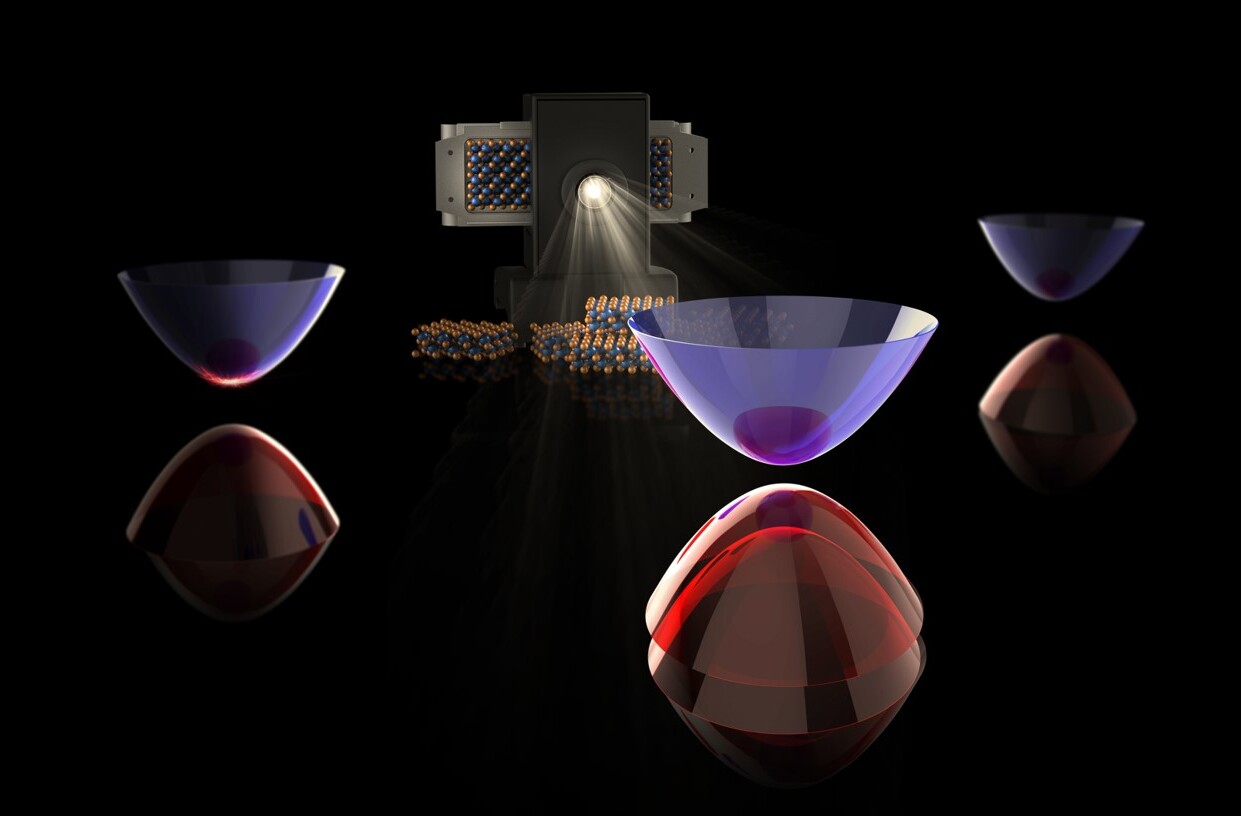
Researchers developed very compact (7.8 nm) ZnSe/ZnS core/shell QDs, yet their gain lifetime was approaching one nanosecond, which was comparable to the best CdSe-based complex core/shell systems with diameters typically of about 20 nm. A crucial enabler was the suppression of nonradiative Auger recombination by an unintentionally alloyed core/shell interface that smoothened the confinement potential.
Due to the compact size (thus minimized scattering loss) and long gain lifetime, researchers could handle these QDs just like laser dyes, demonstrating tunable and robust liquid lasing output from a Littrow cavity under excitation by solid-state nanosecond lasers.
"Besides the advancement in blue QD lasing, liquid lasers based on ZnSe/ZnS QDs offer many practical benefits. They don't contain toxic elements such as Cd and Pb, and they exhibit stability against photodamage that far exceeds typical blue dyes, allowing for consistent output needing circulation systems," said Prof. WU.
This blue liquid has the potential to become a replacement of the blue dye lasers for existing technologies, and it fills the "blue gap" of QD lasers using QDs environmentally benign for a multitude of applications.