THE 5TH WORLD CONGRESS OF BIOSPHERE RESERVES


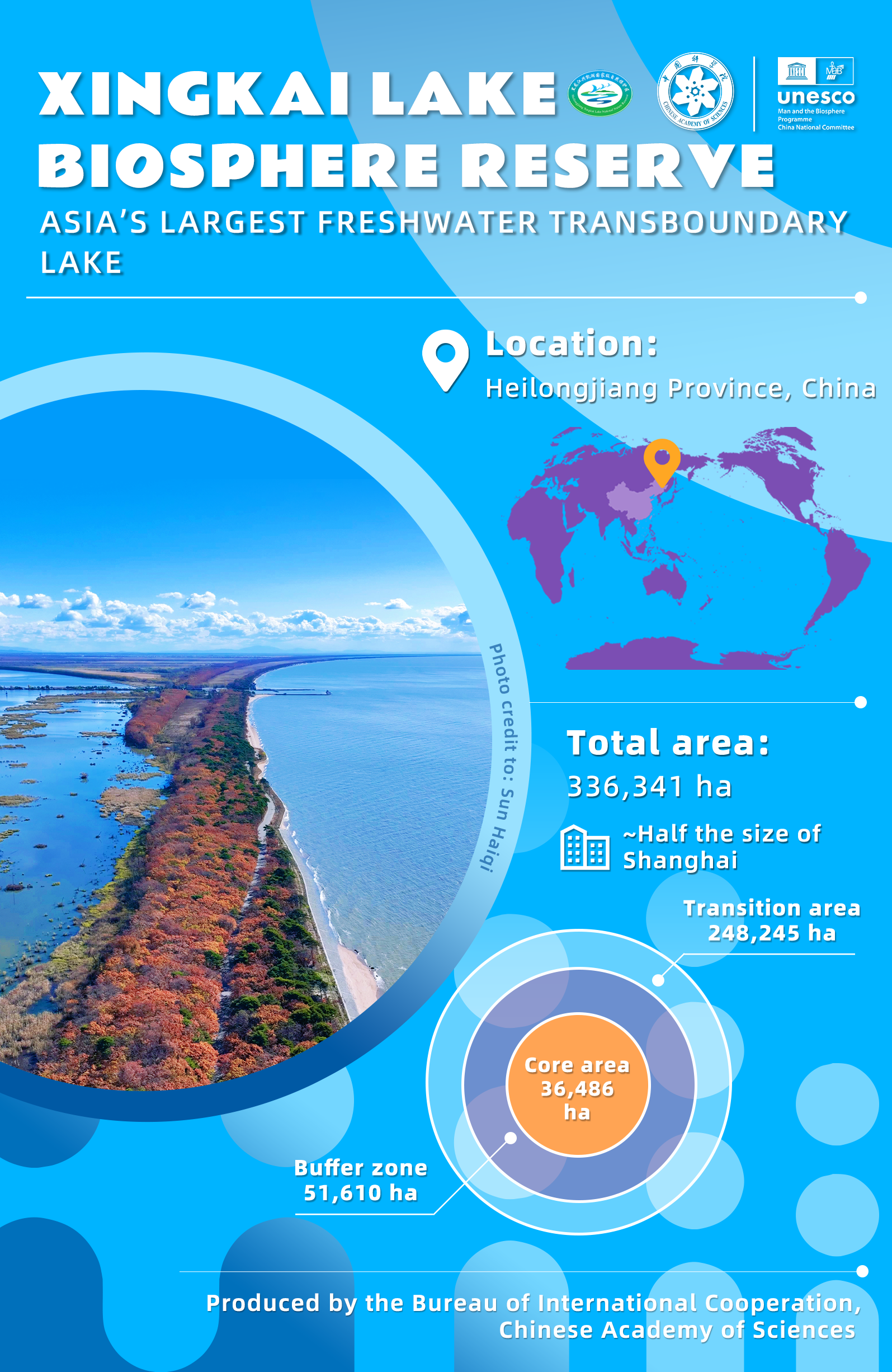
The Xingkai Lake Biosphere Reserve, located in Heilongjiang Province, China, covers an area about half the size of Shanghai. It was designated by UNESCO in 2007.

Xingkai Lake consists of two lakes — the larger Greater Xingkai Lake and the smaller one — both tectonic lakes formed long ago through volcanic eruptions, mountain-building, and crustal subsidence. Greater Xingkai Lake, the largest freshwater lake in Asia, spans both China and Russia, while the smaller lake lies entirely within China. Together with the surrounding wetlands and forests, they form a rare and complex natural ecosystem.
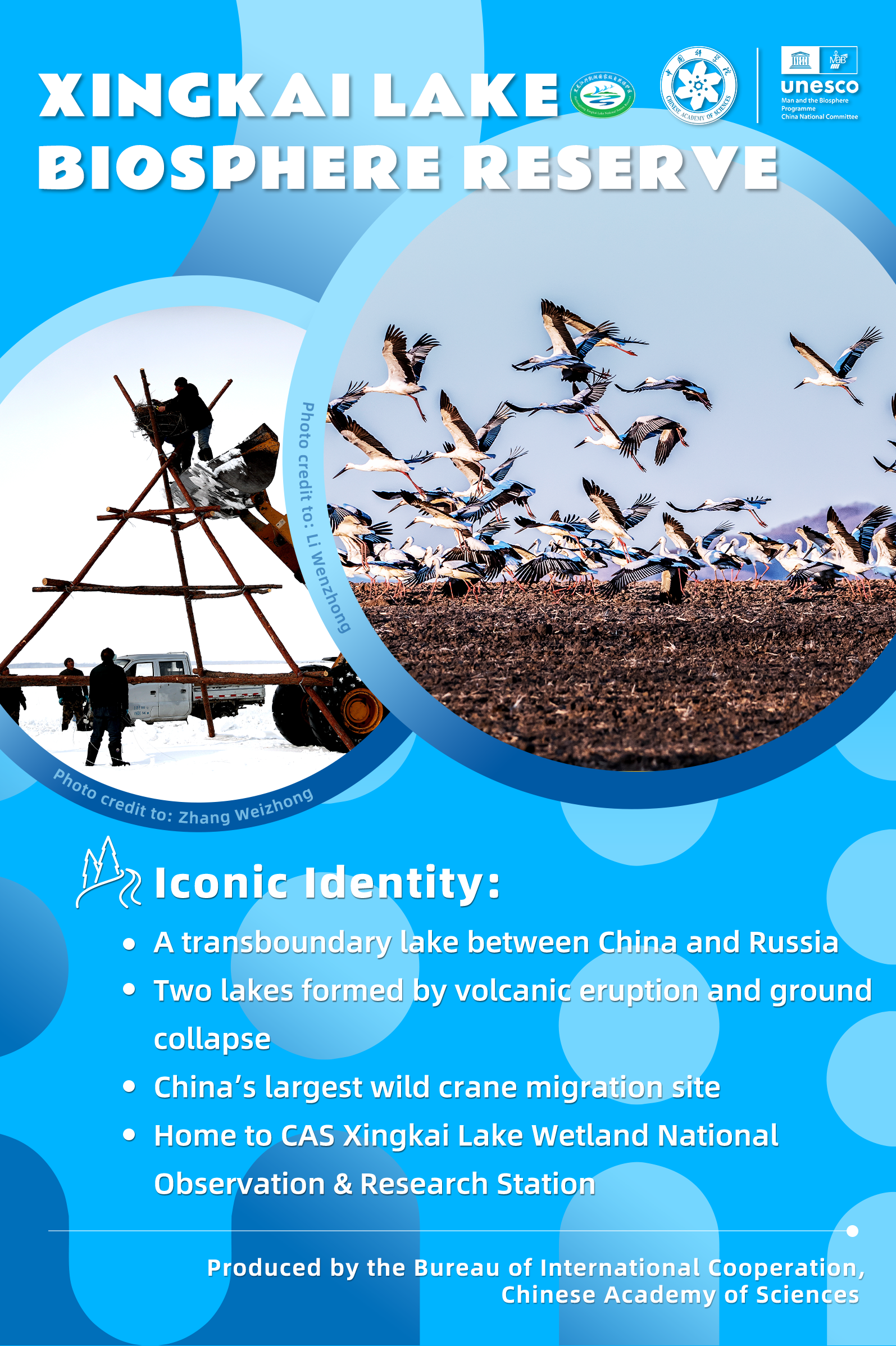
The reserve is known as a "paradise for migratory birds." Each year, around 1.5 to 2 million migratory birds pass through Xingkai Lake, making it an important flyway in the East Asian–Australasian Flyway. It is also a key breeding ground for important species in China, including the Oriental stork and red-crowned crane.
The lake's vast waters are home to 90 fish species. Among them, the bighead carp has developed a distinct local population due to the lake's unique aquatic environment. This "Great White Fish of Xingkai" is as renowned as the Yellow River carp, Songjiang perch, and Songhua River mandarin fish.
This wetland is not only a treasure of nature but also a cradle of culture. As early as 6,500 years ago, ancient peoples on the northern shore of Xingkai Lake developed the distinctive Xinkailiu Culture, a "fishing-hunting Neolithic culture" characterized by settled life, pottery, and a mixed economy of fishing and hunting. Over the centuries, northeastern fishing and hunting tribes flourished here, leaving behind a rich cultural and historical legacy.