Newsroom


Zebrafish has become an important animal model for life sciences, health sciences and environmental sciences. In the history of zebrafish research, European and American scientists have performed several large-scale mutagenesis projects based on random mutation to conduct “from phenotype to genotype” forward genetic screening, which has laid an important foundation for zebrafish as an international recognized animal model.
The completion of zebrafish whole genome sequencing and the development of genome editing technologies such as CRISPR/Cas9 in zebrafish have enabled scientists to construct large-scale targeted gene knockout library in order to perform “from genotype to phenotype” reverse genetic screening.
Recently, the “Zebrafish All-gene Knock Out Consortium on Chromosome 1 (ZAKOC)”, which consists of the scientists from 24 Chinese institutions including Institute of Hydrobiology (IHB) of the Chinese Academy of Sciences (CAS) and Institute of Zoology of CAS, published the results of zebrafish chromosome 1 all-gene knockout project, the first large-scale zebrafish mutagenesis and genetic screening project based on the approach of reverse genetics, in Genome Research.
The consortium used CRISPR/Cas9 technology to systematically knock out 1,333 genes on zebrafish Chromosome 1, successfully mutated 1,029 of them, and obtained 1,039 mutant alleles from 636 genes. All the fish lines and genetic information were published on the website of China Zebrafish Resource Center (http://www.zfish.cn/TargetList.aspx), a member of the National Aquatic Biological Resource Center.
Besides, this project has generated the largest experimentally validated library of positive and negative guide RNA (gRNA) sequences. Through big data analysis, the knockout efficiency of gRNA showed high correlation with its GC content. Of all the mutants, about 1/4 are related to human diseases.
In addition, this paper presented several representative mutants and their phenotypes, which further enriches the recently discovered "genetic compensation effect" theory.
This research, lasting for more than six years, has achieved the first systematic gene knockout of an entire chromosome of a vertebrate. It also generated the China's first large-scale zebrafish mutant library, showing significant social benefits and application prospects.

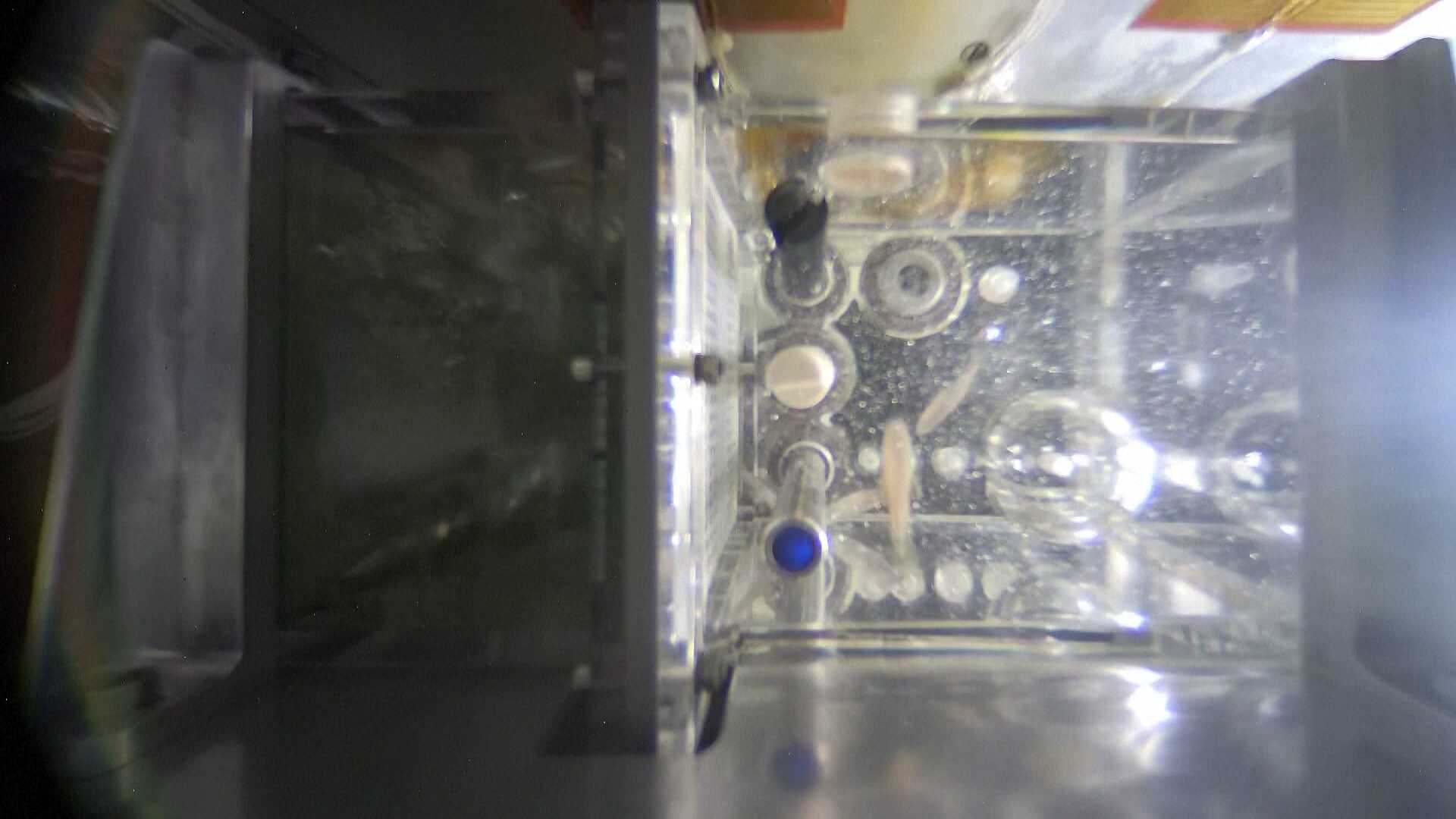
Chinese scientists announce the research results of zebrafish all-gene knockout project on Chromosome 1 (Image by IHB)